

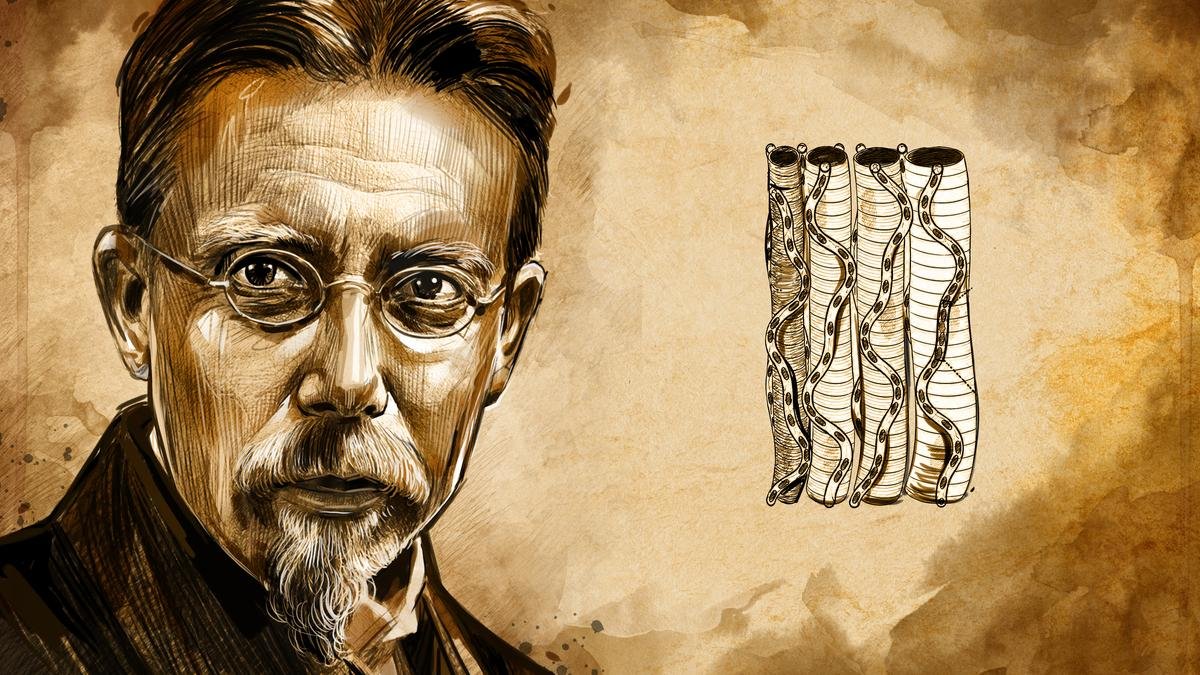
In 1920, Danish physiologist August Krogh was awarded the Nobel Prize in Physiology or Medicine “for his discovery of the capillary motor regulating mechanism.”
His work addressed a fundamental question: how does muscle receive enough oxygen when its demand rises sharply during exercise? Krogh showed how changes in the capillary circulation could help meet this increased demand by bringing blood closer to muscle fibres and increasing the surface available for oxygen exchange.
The work had important implications for medicine because understanding how oxygen reaches tissues is central to conditions in which blood supply is impaired, including cardiovascular disease, peripheral vascular disease, diabetes and wounds that fail to heal. The principles of microcirculation and tissue oxygenation that Krogh helped establish are now relevant to understanding tissue injury, wound healing, exercise physiology and the effects of impaired blood flow.
From zoology to physiology
Schack August Steenberg Krogh was born on November 15, 1874, in Grenaa, Denmark. He entered the University of Copenhagen in 1893, initially studying medicine before turning to zoology.
At the university, he joined the laboratory of physiologist Christian Bohr and became interested in respiration and the exchange of gases in living organisms. He obtained his zoology degree in 1899 and continued working in Bohr’s laboratory.
Krogh combined experimental biology with quantitative measurements and developed instruments for studying physiological processes. His research included respiration, gas exchange and water and electrolyte regulation.
In 1916, he became professor of zoophysiology at the University of Copenhagen.
The oxygen supply problem
Krogh focused on how oxygen moves from blood to tissue.
Muscles can increase their oxygen consumption considerably during exercise. Oxygen carried in the blood must diffuse from capillaries through surrounding tissue before reaching individual cells. The distance between a cell and a perfused capillary therefore affects oxygen delivery.
Krogh investigated capillary distribution in muscle and compared resting and active tissues. He observed that more capillaries appeared to contain blood when muscles were active.
In papers published in The Journal of Physiology in 1919, he combined these observations with mathematical calculations of oxygen diffusion. He proposed that bringing additional capillaries into functional use during activity would increase the available exchange surface and shorten the distance oxygen had to travel through tissue.
This work formed the basis of what became known as the Krogh cylinder model, a conceptual model describing oxygen diffusion from a capillary into the surrounding tissue.

The Nobel-winning discovery
Krogh went further than describing differences in capillary perfusion. He proposed a capillary motor regulating mechanism, through which capillary diameter and blood content could change according to the functional needs of tissue.
The Nobel Committee recognised this work in 1920.
In his Nobel lecture, Krogh described how the number of blood-filled capillaries varied with the activity of tissue. He argued that additional capillaries were brought into use during muscular activity, helping increase the area available for oxygen exchange.
The discovery shifted attention towards the microcirculation — the network of small vessels responsible for delivering oxygen and nutrients to tissues and carrying away metabolic products.
What modern physiology says
Some elements of Krogh’s original explanation have since been revised.
Modern studies do not support the simple idea that skeletal-muscle capillaries are routinely switched between completely closed and open states. Nor are capillaries considered the principal site of active blood-flow regulation.
Much of that regulation occurs upstream, particularly in arterioles. Modern microscopy has also shown that many muscle capillaries are already perfused at rest.
Capillary recruitment is therefore understood more precisely as changes in the pattern and extent of capillary perfusion rather than simply the opening of previously closed vessels.
Krogh’s central insight, however, remains important: the organisation of the capillary network and the distance oxygen must travel through tissue are crucial determinants of oxygen delivery.

From capillaries to insulin
Krogh’s career later intersected with another major medical development — insulin.
In 1922, he and his wife, physician Marie Krogh, travelled to North America. Marie had diabetes and encouraged him to investigate the newly developed insulin treatment.
During the trip, Krogh visited Toronto, where Frederick Banting, Charles Best and their colleagues had developed methods for producing insulin. Krogh subsequently obtained permission to produce insulin using the Toronto method in Scandinavia.
Back in Denmark, he worked with physician Hans Christian Hagedorn and pharmacist August Kongsted. The first Danish patient was treated with insulin in March 1923, and Nordisk Insulinlaboratorium was established that year.
Scientific legacy
Krogh continued studying physiology after receiving the Nobel Prize. His work on respiration, gas exchange and the microcirculation demonstrated how physical principles and quantitative measurements could be used to understand biological processes.
The Krogh cylinder remains a useful conceptual model for studying oxygen diffusion, although modern research has refined the model using more detailed knowledge of blood flow, oxygen gradients and the three-dimensional structure of capillary networks.
Krogh retired from the University of Copenhagen in 1945 but continued his research. He died in Copenhagen on September 13, 1949, aged 74.
More than a century later, oxygen delivery to tissues is understood to involve cardiac output, blood flow, arteriolar regulation, capillary perfusion, blood oxygen content, diffusion and tissue metabolism.
Krogh’s original explanation has evolved, but his decision to study circulation at the microscopic level changed the understanding of how blood supplies individual tissues. His work established the capillary network and oxygen diffusion as central to the study of tissue oxygenation and microcirculation.
Published – August 09, 2026 07:08 pm IST