

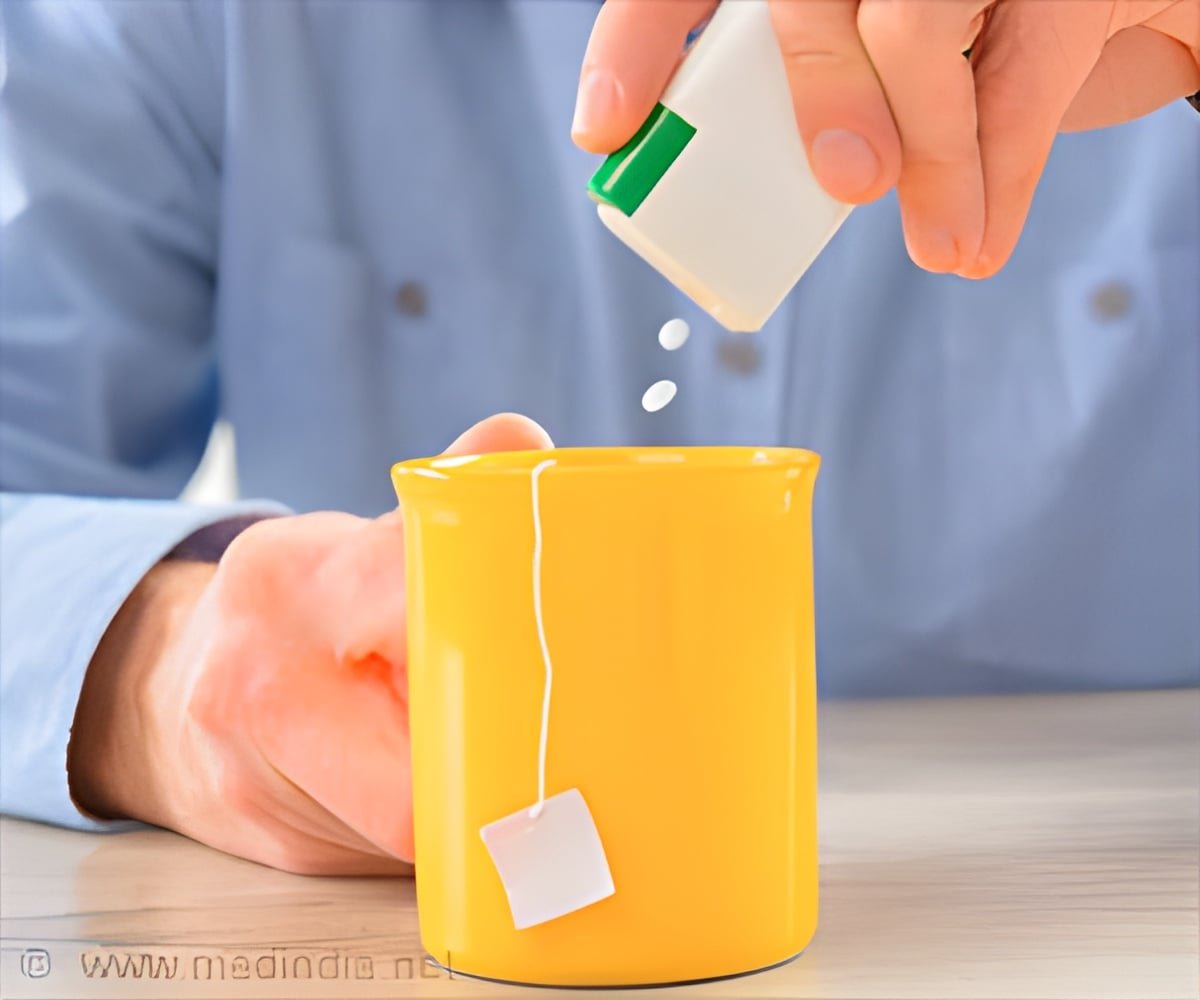
Sugar-free isn’t always harmless. Researchers found that common artificial sweeteners may disrupt beneficial gut bacteria in laboratory tests.
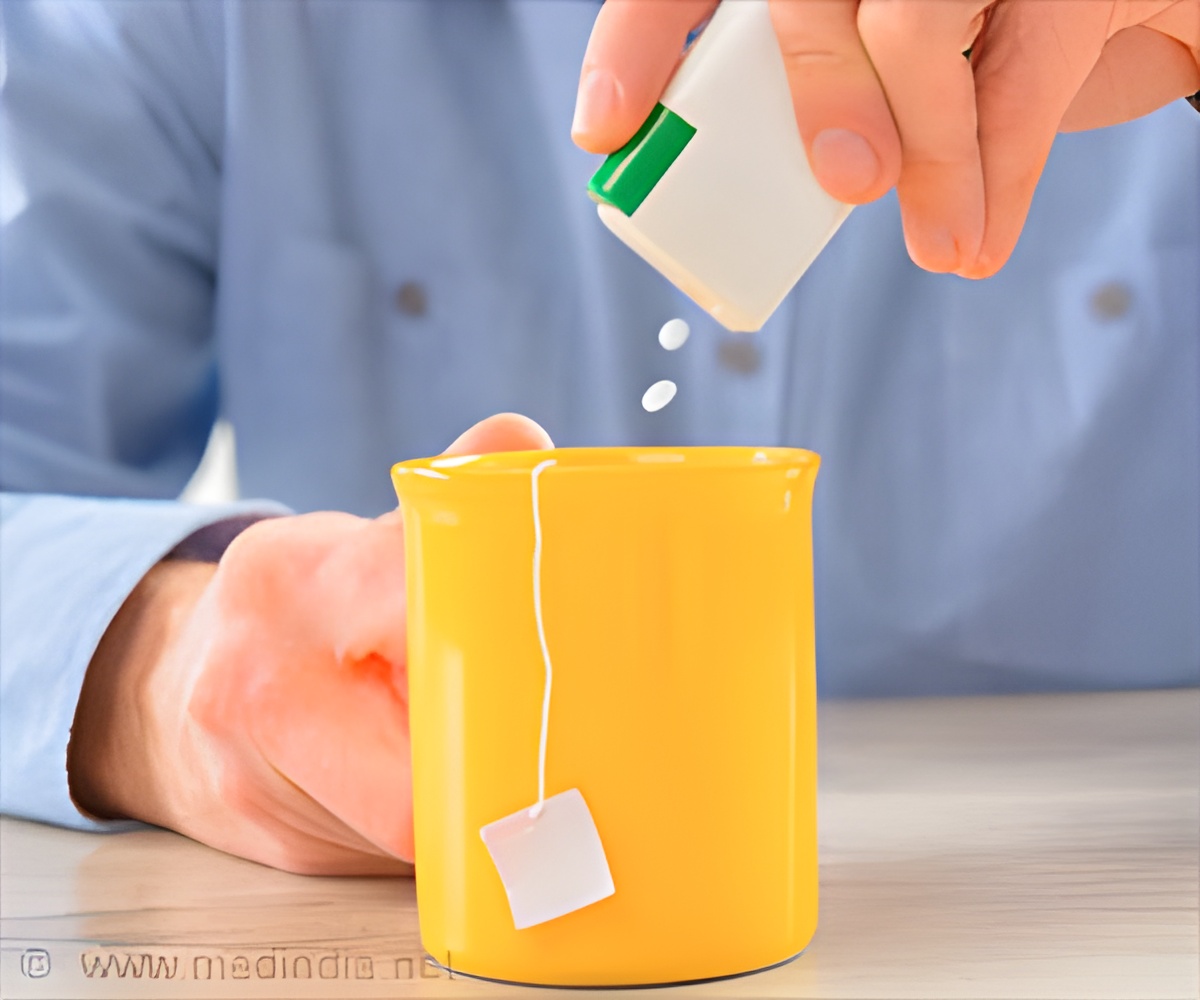
A stevia-derived sweetener commonly used in sugar-free foods and beverages may have unexpected effects on gut health when taken alongside a widely prescribed antidepressant, according to a new study from the University of Cambridge (1✔ ✔Trusted Source
Common xenobiotics modulate gut microbial responses to low-calorie sweeteners in vitro
).
Researchers found that isosteviol, when combined with duloxetine, significantly suppressed two beneficial gut bacteria involved in maintaining digestive health, regulating blood sugar, and supporting immune function.
The findings come from one of the first laboratory studies to directly examine how artificial and low-calorie sweeteners interact with gut bacteria—and how these effects change when sweeteners are consumed alongside medicines and other commonly used substances. The research was published in Molecular Systems Biology.
Advertisement
Why Researchers Looked Beyond Sugar Substitutes Alone
Artificial and low-calorie sweeteners have become a regular part of modern diets. They are found in soft drinks, desserts, cereals, chewing gum, snacks, and even medicines, where they are used to improve taste without adding calories.
Although these sugar substitutes are often promoted as healthier alternatives to sugar, growing evidence has linked their long-term use to conditions such as obesity, type 2 diabetes, and certain metabolic disorders. However, scientists still know surprisingly little about how sweeteners directly affect the trillions of microbes that live in the human gut.
Most previous studies have relied on animal experiments or large population surveys, making it difficult to determine whether sweeteners themselves alter the gut microbiome or whether other dietary and lifestyle factors are responsible.
Researchers at the University of Cambridge wanted to answer a more specific question: Can sweeteners directly influence gut bacteria, and do these effects change when they are consumed with other substances people use every day?
Advertisement
How Researchers Tested Sweeteners Against Gut Bacteria
To investigate this, the researchers developed a laboratory model of the human gut microbiome using 25 bacterial species representing beneficial, neutral, and potentially harmful microbes commonly found in the digestive tract.
Each bacterial species was exposed individually to 39 commercially available sweeteners, including both artificial and naturally derived products. The team then measured how well the bacteria grew in the presence of each sweetener.
Because people rarely consume sweeteners in isolation, the researchers also examined how the sweeteners behaved when combined with caffeine, vanillin (a commonly used flavouring agent), another sweetener called advantame, and eight widely prescribed medications.
Advertisement
Three-Quarters of the Sweeteners Affected Gut Bacteria
The results revealed that nearly 75% of the sweeteners altered the growth of at least one bacterial species. While some slowed bacterial growth, others completely prevented certain beneficial bacteria from multiplying (2✔ ✔Trusted Source
Sweeteners shown to slow growth of important gut bacteria in lab tests
).
When the sweeteners were combined with other substances, the effects became even more complex. The researchers identified more than 100 significant interactions. In 34 combinations, the effects on gut bacteria became stronger, while 68 combinations reduced the sweeteners’ impact.
These findings suggest that sweeteners may not behave the same way once they enter the body, where they are constantly interacting with foods, beverages, flavouring agents, and medications.
Isosteviol and Duloxetine Emerged as the Most Concerning Combination
Among all the combinations tested, one stood out.
The stevia-derived sweetener isosteviol, when paired with the antidepressant duloxetine, produced the strongest effect on the gut microbiome. Together, they significantly suppressed two beneficial bacterial species—Roseburia intestinalis and Parabacteroides merdae.
These bacteria play important roles in maintaining the intestinal lining, producing health-promoting short-chain fatty acids, supporting blood sugar regulation, and helping regulate immune function.
The finding is particularly relevant because duloxetine is one of the most commonly prescribed antidepressants. In the United States alone, more than 4.2 million people received duloxetine prescriptions in 2023, suggesting that many individuals could unknowingly consume this combination.
The Combination Reduced Microbial Diversity
The researchers then moved beyond individual bacterial species and created a synthetic gut community containing all 25 bacteria to better mimic the human gut.
When exposed to the isosteviol-duloxetine combination, the microbial community became less diverse. Since microbial diversity is considered a hallmark of a healthy gut microbiome, this reduction could potentially affect digestive and metabolic health.
The combination also changed the balance of bacterial species, allowing some microbes to flourish while reducing others that are generally considered beneficial.
Effects Extended Beyond the Gut Microbiome
The researchers observed that the interaction between isosteviol and duloxetine affected more than bacterial growth.
Laboratory experiments showed increased toxicity toward certain host cells and disrupted cellular pathways involved in inflammation and immune responses. Although these findings were obtained under laboratory conditions, they suggest that the biological effects of sweetener-drug interactions could extend beyond the gut itself.
According to lead researcher Dr. Sonja Blasche, sweeteners are often marketed as metabolically neutral, but the findings indicate that they can directly influence gut bacteria, particularly when combined with medications or food additives that people consume every day.
Senior author Prof. Kiran Patil added that sweeteners do not simply pass through the digestive system unchanged. Instead, they actively interact with gut microbes, and these interactions may be amplified or altered depending on what else is present in the gut.
What Do the Findings Mean?
The researchers caution that the study was conducted entirely under laboratory conditions using cultured bacteria and a synthetic gut microbiome. The findings therefore should not be interpreted as proof that sweeteners cause the same effects in humans.
Nevertheless, the study offers valuable insight into how food ingredients and medicines may work together to shape the gut microbiome. It also highlights the need for future clinical studies to determine whether these interactions influence long-term health.
Until more evidence becomes available, the findings reinforce the importance of looking beyond individual food ingredients and considering how diet and medications interact within the complex ecosystem of the human gut.
References:
- Common xenobiotics modulate gut microbial responses to low‑calorie sweeteners in vitro – (https://link.springer.com/article/10.1038/s44320-026-00225-6)
- Sweeteners shown to slow growth of important gut bacteria in lab tests – (https://link.springer.com/article/10.1038/s44320-026-00225-6)
Source-Medindia