

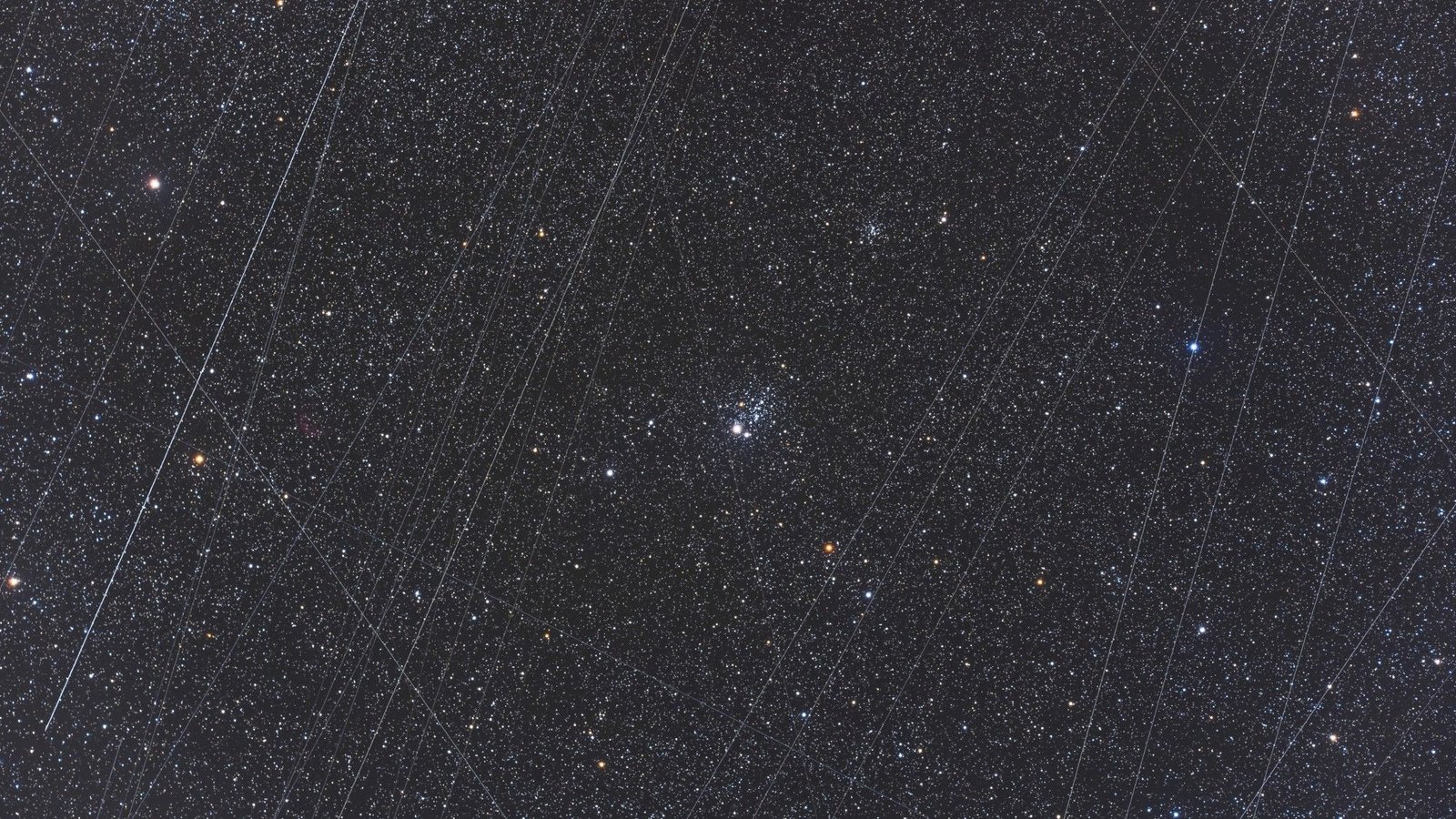
The U.S. Federal Communications Commission (FCC) can single-handedly green-light massive spaceflight projects that could completely change the view of the night sky for the entire world. Despite the outcry these projects have caused, space law experts say there is very little other nations and the international community can do to thwart them if the FCC were to grant them licenses.
On July 10, the FCC approved an application by California-based Reflect Orbital to launch a 59-by-59-foot (18-by-18 meters) space mirror to test how to reflect sunlight onto solar farms on Earth after dusk. The decision has sparked outcry among astronomers and environmentalists who are concerned about the impact on global light pollution levels that Reflect Orbital’s plans might have.
Opponents see the FCC’s approval, despite hundreds of objections filed in response to the application, as an indication that the agency might eventually grant Reflect Orbital a license to fly an entire constellation of 50,000 such sun-reflecting mirrors. On top of Reflect Orbital’s plans, companies including SpaceX, Blue Origin and Starcloud are awaiting the FCC’s decisions on respective applications to deploy their own massive fleets of orbiting data centers and internet-beaming satellites. If all those projects come to fruition, the view of the night sky could change beyond recognition all over the world.
“The technology is outpacing the regulatory environment.”
The United Nations’ Outer Space Treaty conceived in the late 1960s lays down the international framework for the use and exploration of outer space. The document states that approvals for satellite projects are the domain of the nation in which those satellites are registered.
“The U.N. Treaty for Uses of Outer Space very well specifies that how many satellites are shot into space and how they are registered is a prerogative of the country in which they are registered,” a source familiar with the operations of the United Nations Office of Outer Space Affairs (UNOOSA), who didn’t wish to be named, told Space.com.
The states from which they launch, however, are responsible for any damage the satellites registered under their flags cause to other countries. But Ruskin Hartley, the CEO and Executive Director of the advocacy group DarkSky International, told Space.com that this liability provision only covers physical damage such as satellites colliding in space or spacecraft crashing down on Earth and damaging property.
“It hasn’t been tested at all but most people don’t think this damage extends to optical interference,” Hartley said. “It would have to be physical damage. If a satellite reflects sunlight down and damages someone’s observatory, that probably doesn’t count as damage under the Outer Space Treaty.”
In its Article I, the Outer Space Treaty states that “the exploration and use of outer space, including the moon and other celestial bodies, shall be carried out for the benefit and in the interests of all countries.” But what exactly that means and what could be done if there is no consensus about those benefits is not clear at all.
The anonymous source told Space.com that UNOOSA and the UN-wide Committee on the Peaceful Uses of Outer Space (COPUOS) may discuss the issue, but despite the global consequences, are unlikely to come up with a mechanism to stop the corporations from doing what they want if the FCC backs them.
“These UN institutions were all started in the last century and are very slow,” the source said. “They require unanimous consensus to pass anything and that obviously hardly ever happens. So nothing gets passed. By the time UN COPUOS and UNOOSA are done discussing anything, SpaceX will have launched another thousands satellites.”
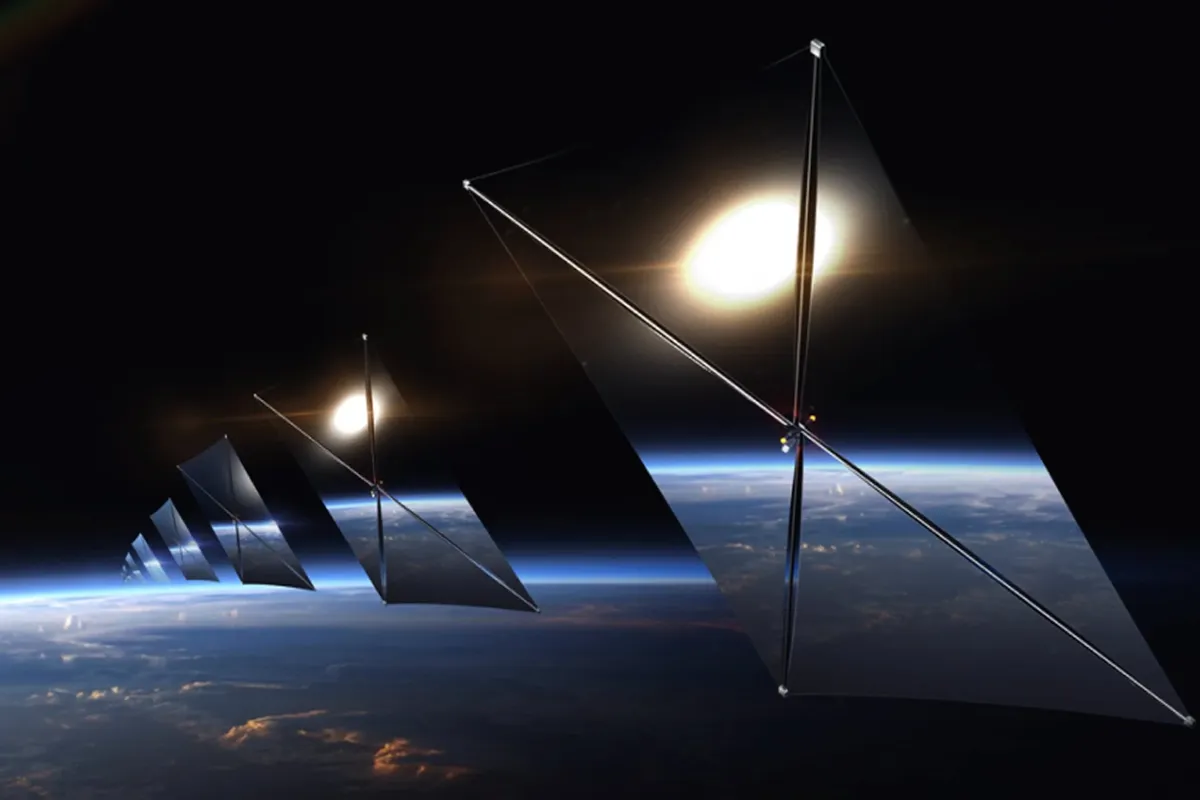
The European state of Slovakia in cooperation with the International Astronomical Union (IAU), in fact, submitted a paper to UN COPUOS in June calling for a “general prohibition on the use of space mirrors” or the development of “strong oversight mechanisms.”
Aaron Boley, an astronomer at the University of British Columbia, who has been involved with the initiative, admits that these efforts are not likely to progress fast enough.
“There is indeed a major challenge right now with single states being able to create large changes to the sky and the orbital environment,” Boley told Space.com in an email. “At the U.N. COPUOS, there are important steps being taken. But these agreements can be slow to achieve.”
Hartley added that the companies pushing for grandiose space projects are taking advantage of existing legal loopholes that are not being effectively closed.
“These entrepreneurs that are pursuing these projects, either in the U.S. context as private entrepreneurs or in some instances in Europe and in China as government-level projects, clearly demonstrate that the regulatory environment and regulatory framework has significant gaps and holes in it,” Hartley said. “Essentially, the technology is outpacing the regulatory environment.”
Unilateral U.S. decisions
According to international space law and policy expert and former NASA legal council Robin J. Frank, this is not the first time the U.S. has pushed ahead with its agenda regardless of the concerns of the international community.
“This is not the first time the FCC has started down the route of unilateral decisions,” Frank told Space.com. “Recently, for example, the FCC has approved direct-to-cell communication systems, which connect from a satellite directly to your phone, to use parts of the radio frequency spectrum that have not been authorized for that use by the International Communications Union. Their argument is that they are giving the U.S. industry a leg up.”
The U.S., responsible for roughly 25 percent of the global GDP, has historically been reluctant to agree to binding international mechanisms that could restrict its actions, Frank added. Other major global powers, such as China or Russia tend to have a similar attitude, she said.
Currently, the U.S. is not even a party to the Paris Agreement, an international treaty that binds nations to work toward reducing their greenhouse gas emissions in order to curb global warming.
Frank added that individual nations could, for example, take action against constellations of orbiting mirrors by banning them from beaming light onto their territory at a threat of hefty fines. That however, is still not going to stop the development and mitigate the overall light pollution these satellites cause as they inadvertently reflect light as they zoom around Earth.
DarkSky International previously sued the FCC at the District Court of Columbia, challenging its decision to grant SpaceX a license to launch tens of thousands of satellites without conducting an environmental review. The court eventually rejected the non-profit’s arguments, but Hartley said the advocacy group would consider filing another lawsuit if the FCC were to green-light the full Reflect Orbital constellation of 50,000 space mirrors or SpaceX’s million orbiting data centers.
Despite the massive growth in the past decade, the satellite industry is exempt from the U.S. National Environmental Policy Act, meaning neither the FCC nor the satellite companies are obliged to prove their technologies will not be detrimental to the environment. That exclusion was put in place in the 1980s when satellite launches were few and far between. Many argue it’s more than a high time to do away with it.
“It’s a regulatory failure,” Hartley said. “The ultimate fix is probably a legislative fix, or an administration that directs them to act differently. But this administration is not going to do that.”

“This is an issue that’s going to affect the quality of life for everybody on Earth.”
A recent study by astronomers from the European Southern Observatory found that the brightness of the night sky would rise by up to 300 percent if all the currently planned constellations were to get deployed. That, the astronomers say, would be an end to astronomy as we know it.
Other experts pointed out that the need to have access to constant sunshine would force all orbital data center operators into a single narrow region of space, creating a bright “Saturn’s ring” of satellites around the planet.
In its justification for granting the Reflect Orbital test flight license, the FCC stated that arguments about light pollution are outside its merit to judge. No other U.S. government agency, however, currently has a say over granting licenses to satellite companies.
Hartley added the issue far exceeds the interests of astronomers. The brightening of the sky would affect the entire world, including indigenous communities who rely on stars as part of their cultural heritage. The excessive light pollution is also likely to confuse wild animals and affect ecosystems.
On top of that, the air pollution from large quantities of re-entering satellites and the rockets that launch them risks damaging the ozone layer and altering the thermal balance of Earth’s atmosphere, according to ongoing research. Greenhouse gas emissions released during launch and the manufacturing of the satellites may offset the advantages of putting data centers to space, extolled by the companies behind those plans.
“The industrialization of space is going to impact carbon in the atmosphere, through the launch phases of all these rockets, and it’s very clear that the deorbit of these satellites is likely to change the composition of the atmosphere,” Hartley said.
“This is more than just a niche issue for astronomers. This is an issue that’s going to affect the quality of life for everybody on Earth.”