

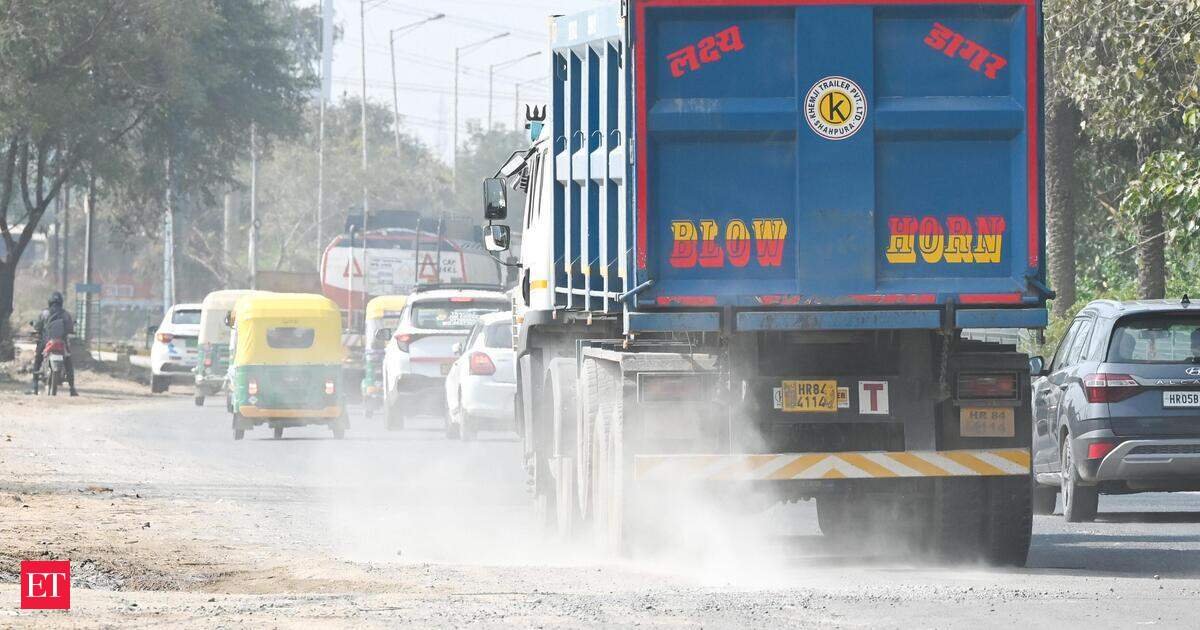
In FY2026, the penetration of alternate fuels in the Indian CV industry was at 27 per cent, ICRA said in a statement.
The CNG/LNG penetration in the CV industry is expected to increase to 30-35 per cent by 2029-30, while the same for electric vehicles is projected to rise to 10-15 per cent, it added.
The rise in EV penetration in the commercial vehicles (CV) industry is led primarily by the bus segment within the M&HCV (medium and heavy commercial vehicle) category, ICRA said.
CNG/LNG penetration in CVs has increased steadily to 25 per cent in 2025-26 from 7 per cent in 2020-21, emerging as a viable alternative to conventional petroleum fuels, it noted.

On the other hand, the share of diesel as a fuel for the CV industry in India has gradually declined to 67 per cent in 2025-26 from 86 per cent in 2020-21 owing to progressively stricter emission control norms and declining total cost of ownership (TCO) of alternative fuel technologies (CNG, LNG and EV), driven by regulatory support, it added.
Petrol adoption in CVs remained limited at less than 10 per cent in 2025-26, with usage largely confined to the light commercial vehicle (LCV) segment, ICRA said.The rating agency said incentives provided under the PM E-Drive Scheme have significantly reduced the procurement cost, thus serving as a catalyst to accelerate the adoption of e-trucks going forward.
Adoption of EV and hybrid technologies, while remaining modest at 2 per cent in 2025-26, is expected to gain momentum over the medium term, backed by government policies (incentives, subsidies and tax waivers) and an evolving EV ecosystem, which are likely to support affordability, going forward, it noted.
“While the focus remains on increasing alternative fuel penetration, adoption in the Indian CV industry continues to face key challenges including high upfront vehicle costs and infrastructure gaps. TCO (total cost of ownership) remains a key factor for fuel technology adoption in a cost-sensitive market like India,” ICRA Senior Vice President & Co-Group Head Kinjal Shah said.
Besides, other factors such as infrastructure readiness, range anxiety, sales and service network, route patterns and operating requirements are equally important in determining the pace of adoption of fuel technologies across CV sub-segments, Shah noted.
“The Indian CV industry is gearing up for transition towards alternative fuels with several external and internal factors at play. While the industry growth in volumetric terms may remain largely unaffected with the said transition underway, the incremental rise is likely to be increasingly dominated by alternative fuels,” she said.
While these investments remain critical for a seamless transition towards alternative fuels, their impact on profitability and credit quality of the domestic CV OEMs remain monitorables, Shah added.