

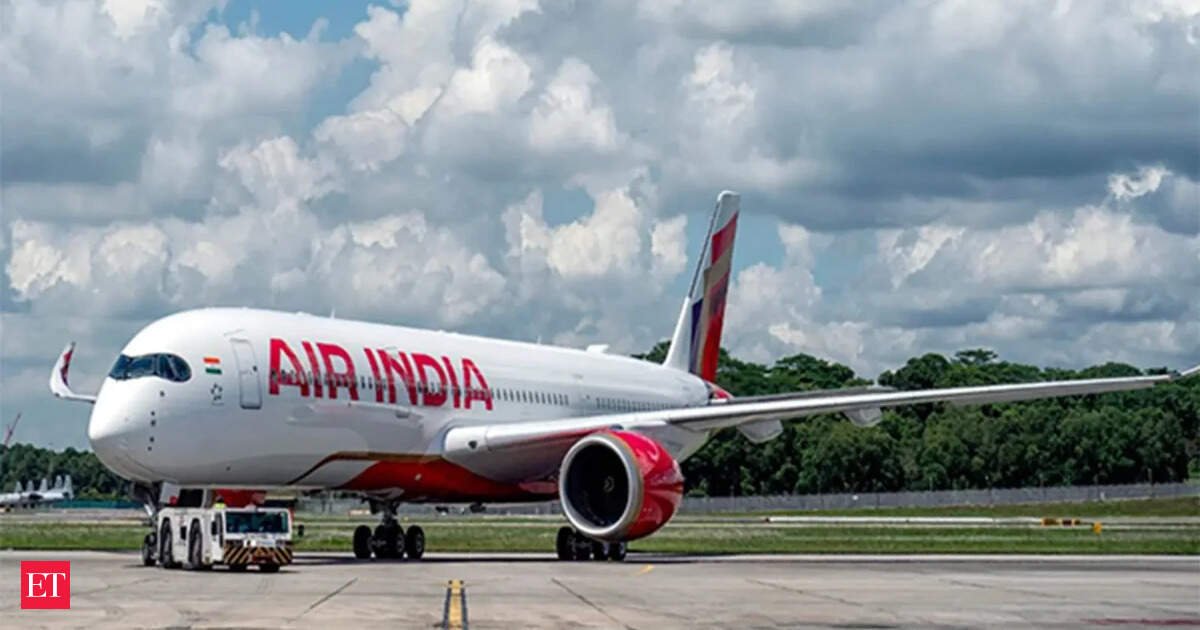
Aggarwal, Air India’s chief commercial officer and a key architect of the airline’s transformation strategy, is seen as a strong internal candidate, while Kannan, the former chief executive of Vistara, brings extensive airline leadership experience after steering the carrier before its merger with Air India.
However, the final decision remains elusive as an internal power struggle at Tata Sons casts a shadow over the succession process.
The search for a new chief gathered pace after Campbell Wilson announced his resignation in April.
Multiple people familiar with the discussions told the Financial Times that Aggarwal and Kannan have emerged as the two most prominent names under consideration.

Aggarwal is believed to enjoy the backing of Tata Sons chairman N Chandrasekaran, but sources told the news outlet that Chandrasekaran has been cautious about making a definitive choice as questions remain over his own future at the conglomerate.
Among the two contenders, supporters view Aggarwal as a disciplined executive focused on costs and operational efficiency. Critics, however, question whether he has sufficient experience running a global full-service airline.One person familiar of the matter told FT that the troubled airline needed “financial discipline, to lead the company you need other skills as well.” A former Air India director further said Aggarwal had “no experience” running the kind of full-service airline that Air India aspired to be.
That has kept Kannan firmly in the race.
The former Vistara chief is widely respected within the aviation industry for overseeing the premium airline before its merger with Air India in 2024 and is seen by some as a candidate with stronger operational airline experience.
The uncertainty stems from an ongoing debate within Tata Sons over Chandrasekaran’s tenure, which is due to end in February 2027.
While most board members are reportedly supportive of extending his term, Noel Tata, who chairs Tata Trusts — the principal shareholder of Tata Sons — has opposed another stint for the veteran chairman.
Wilson’s early exit
The leadership search also comes amid questions over Wilson’s relatively early departure.
A person familiar with discussions around his exit told the Financial Times that New Delhi’s choking air pollution was one of the reasons he had cited to Chandrasekaran when he expressed his willingness to step down as far back as December.
Another person said Wilson, who was hired shortly after Tata’s acquisition of Air India, had always intended to stay for only four years.
“You do not have a person within the airline or within the Indian aviation industry to head Air India,” said Jitender Bhargava, a former executive director of Air India.
“There’s been nobody who you can say was groomed from the Indian aviation industry and they are helming the airline, so the choice is rather restricted.”
Air India’s troubled times
Whoever takes charge of Air India will inherit an airline grappling with multiple challenges.
The carrier has been forced to reduce flight capacity by up to 20 per cent this year as geopolitical tensions in West Asia disrupted operations and pushed up fuel costs.
The closure of Pakistani airspace to Indian airlines following last year’s military conflict has further strained operations, with Air India reportedly telling the government that the restriction could cost it nearly $600 million annually because of its extensive international network.
The airline is also continuing to deal with the aftermath of last year’s Boeing 787 Dreamliner crash in Ahmedabad, one of the deadliest aviation accidents in recent Indian history.
The crash claimed 260 lives and dealt a severe blow to the airline’s reputation at a time when Tata was attempting to rebuild the brand after acquiring it from the government in 2022.
India’s Aircraft Accident Investigation Bureau is yet to release its final findings.
In a statement marking the first anniversary of the crash, the agency said the report would be published only after all investigative procedures, international reviews and consultations are completed.
A preliminary report had found that fuel supply to the aircraft’s engines was cut off moments after take-off, triggering speculation about possible pilot action. The findings have been contested by a pilots’ association and family members of one of the pilots, who have approached the Supreme Court seeking what they described as an impartial and comprehensive investigation.
The challenges facing Air India extend beyond safety concerns.
The airline has embarked on an ambitious fleet modernisation programme, ordering 570 aircraft as part of its long-term expansion plans. But supply chain disruptions and rising costs have delayed deliveries, while operational pressures continue to weigh on profitability.
Air India reported a loss of about $2.8 billion for the financial year ended March, though Singapore Airlines, which owns a 25% stake in the carrier, said the airline continued to make progress in refurbishing aircraft and renewing its fleet.