

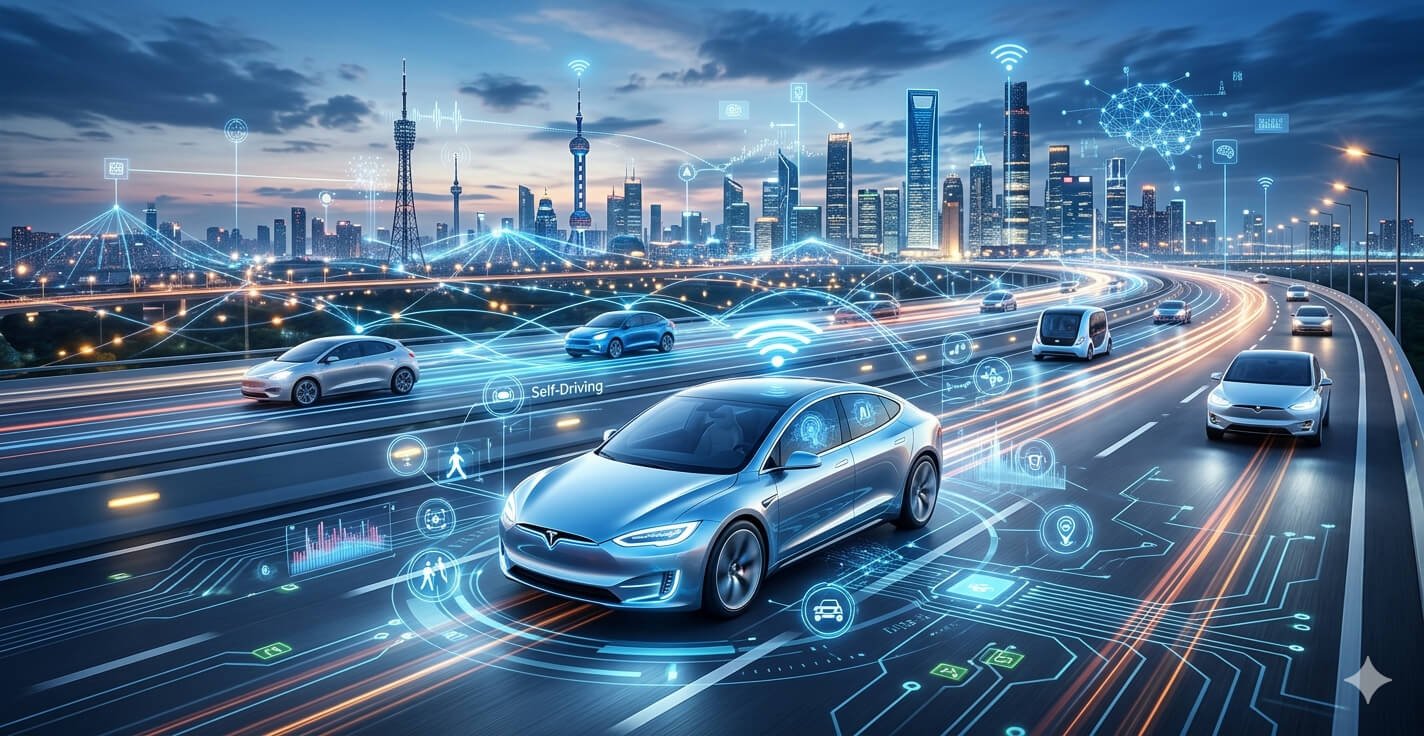
The automobile industry is undergoing one of the most significant transformations in its history, and at the center of this change is Artificial Intelligence (AI). From enhancing driver safety to enabling fully autonomous vehicles, AI is redefining how we design, build, and experience cars. What once seemed like science fiction is now becoming a reality, as smart cars and self-driving technology continue to evolve rapidly.
In this blog, we’ll explore how AI is reshaping the automobile industry, the technologies behind it, and what the future holds for drivers and manufacturers alike.
The Rise of AI in the Automotive World
Artificial Intelligence refers to machines and systems that can mimic human intelligence—learning from data, making decisions, and improving over time. In the automobile industry, AI is used to process vast amounts of data from sensors, cameras, and connected systems to enhance vehicle performance and safety.
Modern vehicles are no longer just mechanical machines—they are intelligent systems equipped with advanced computing capabilities. AI helps these systems understand their surroundings, predict potential risks, and respond in real-time.
Smart Cars: The New Standard
Smart cars are vehicles equipped with AI-powered features that improve convenience, safety, and efficiency. These features are already widely available in many modern vehicles and are becoming standard in the industry.
1. Advanced Driver Assistance Systems (ADAS)
AI plays a crucial role in ADAS technologies such as:
- Lane departure warning
- Adaptive cruise control
- Automatic emergency braking
- Blind-spot detection
These systems use sensors and cameras to monitor the environment and assist drivers in making safer decisions.
2. Voice Assistants and Personalization
AI-powered voice assistants allow drivers to control navigation, music, calls, and more using voice commands. Over time, these systems learn user preferences, offering a personalized driving experience.
3. Predictive Maintenance
AI can analyze vehicle data to predict when a component might fail. This helps drivers avoid unexpected breakdowns and reduces maintenance costs.
Self-Driving Cars: The Future of Mobility
Self-driving or autonomous vehicles are one of the most exciting applications of AI in the automobile industry. These vehicles use a combination of technologies such as machine learning, computer vision, and sensor fusion to navigate without human intervention.
How Self-Driving Cars Work
Autonomous vehicles rely on several key components:
- Sensors (LiDAR, radar, cameras): Collect data about the surroundings
- AI Algorithms: Process data and make driving decisions
- Mapping Systems: Provide real-time location and navigation
- Control Systems: Execute actions like steering, braking, and acceleration
AI enables the car to detect obstacles, recognize traffic signs, and make split-second decisions—just like a human driver, but often faster and more accurately.
Benefits of AI in the Automobile Industry
1. Improved Safety
Human error is the leading cause of road accidents. AI-powered systems can reduce accidents by detecting risks early and responding instantly.
2. Enhanced Efficiency
AI helps optimize fuel consumption, route planning, and traffic management, leading to more efficient driving.
3. Better User Experience
From smart infotainment systems to personalized settings, AI enhances comfort and convenience for drivers and passengers.
4. Reduced Traffic Congestion
AI can analyze traffic patterns and suggest optimal routes, helping reduce congestion in urban areas.
AI in Manufacturing and Supply Chain
AI is not just transforming vehicles—it’s also revolutionizing how they are made.
1. Smart Manufacturing
Automobile manufacturers use AI-powered robots and automation to improve production efficiency and reduce errors.
2. Quality Control
AI systems can detect defects in real-time during the manufacturing process, ensuring higher quality standards.
3. Supply Chain Optimization
AI helps manage inventory, predict demand, and streamline logistics, reducing costs and improving delivery times.
Challenges and Concerns
Despite its many advantages, AI in the automobile industry comes with challenges:
1. Safety and Reliability
While AI systems are highly advanced, they are not perfect. Ensuring the safety of autonomous vehicles remains a top priority.
2. Legal and Regulatory Issues
Governments are still working on regulations for self-driving cars, including liability in case of accidents.
3. Data Privacy
AI systems collect vast amounts of data, raising concerns about how this data is stored and used.
4. High Costs
Developing and implementing AI technologies can be expensive, which may increase the cost of vehicles.
The Role of Big Tech and Automakers
Leading technology companies and automobile manufacturers are investing heavily in AI to stay competitive. Collaborations between tech firms and automakers are accelerating innovation in areas like autonomous driving, connectivity, and electric vehicles.
Companies are also focusing on integrating AI with other technologies such as the Internet of Things (IoT) and 5G to create fully connected smart vehicles.
The Future of AI in Automobiles
The future of the automobile industry is undoubtedly AI-driven. Here are some trends to watch:
- Fully Autonomous Vehicles: Level 5 autonomy, where no human intervention is required
- Connected Ecosystems: Cars communicating with each other and infrastructure
- AI-Powered Electric Vehicles: Smarter energy management and battery optimization
- Mobility as a Service (MaaS): Ride-sharing and autonomous taxi services
As AI continues to evolve, vehicles will become safer, smarter, and more efficient, transforming not just transportation but also urban living.
Conclusion
Artificial Intelligence is revolutionizing the automobile industry in ways we could only imagine a decade ago. From smart features that enhance daily driving to self-driving cars that promise a future without human intervention, AI is at the forefront of this transformation.
While challenges remain, the benefits of AI far outweigh the drawbacks. As technology advances and regulations evolve, we can expect a future where intelligent vehicles dominate the roads, making transportation safer, more efficient, and more convenient for everyone.
FAQs
1. What is AI in the automobile industry?
AI in the automobile industry refers to the use of intelligent systems and algorithms to improve vehicle performance, safety, and user experience.
2. Are self-driving cars completely safe?
While self-driving technology is improving, it is not yet 100% safe. Ongoing testing and advancements are being made to enhance reliability.
3. How does AI improve car safety?
AI detects potential hazards, assists drivers, and can take automatic actions like braking to prevent accidents.
4. What are smart cars?
Smart cars are vehicles equipped with AI-powered features such as navigation systems, voice assistants, and driver assistance technologies.
5. Will AI replace human drivers?
In the future, fully autonomous vehicles may reduce the need for human drivers, but widespread adoption will take time.
6. Is AI expensive in cars?
Currently, AI features can increase vehicle costs, but prices are expected to decrease as technology becomes more common.