

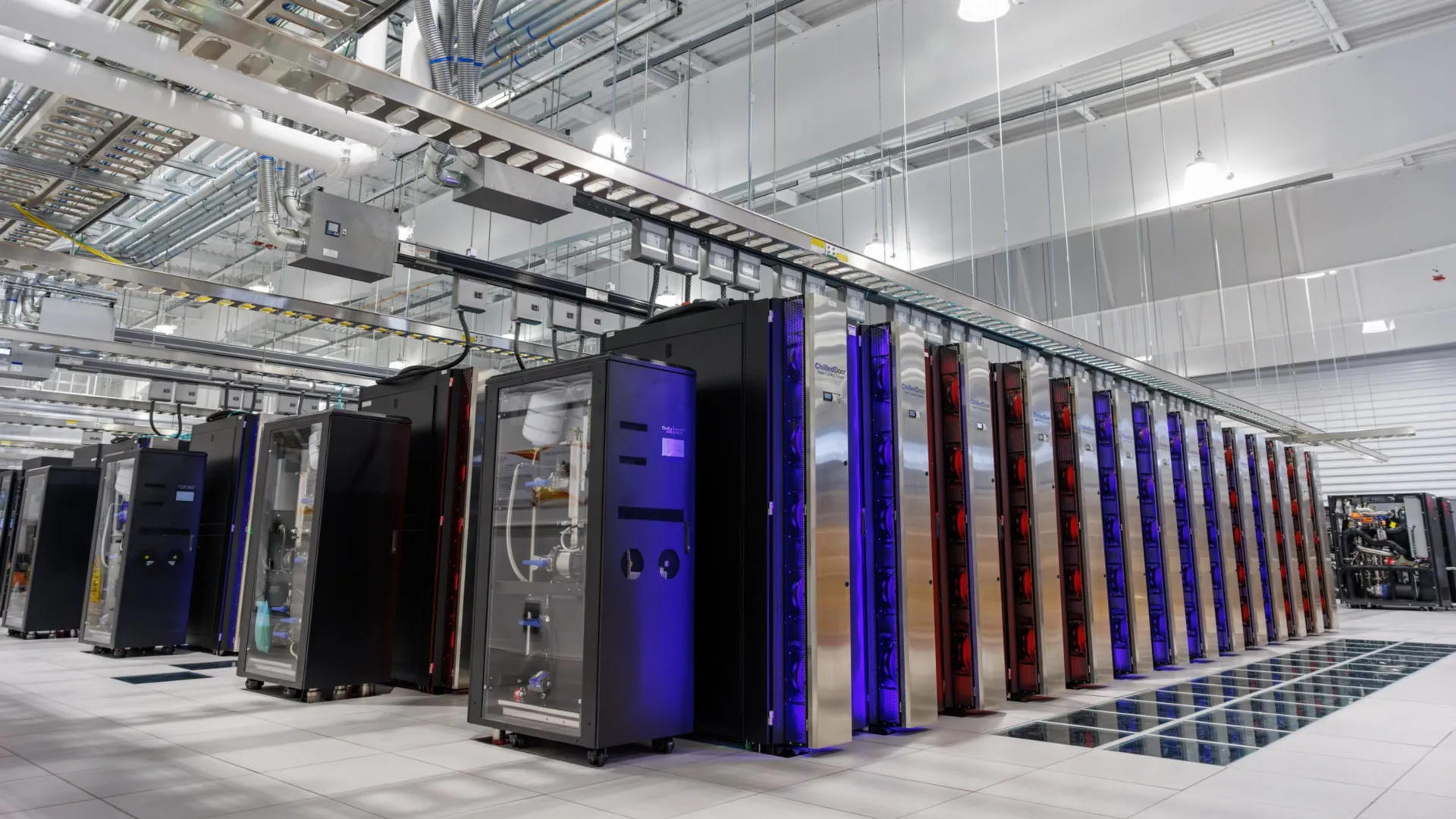
Artificial intelligence is consuming enormous amounts of electricity in the United States. According to the International Energy Agency, AI systems and data centers used about 415 terawatt hours of power in 2024. That accounts for more than 10% of the country’s total electricity production, and demand is projected to double by 2030.
This rapid growth has raised concerns about sustainability. In response, researchers at a School of Engineering have created a proof-of-concept AI system designed to be far more efficient. Their approach could reduce energy use by up to 100 times while also improving performance on tasks.
A Hybrid Approach Called Neuro-Symbolic AI
The research comes from the laboratory of Matthias Scheutz, Karol Family Applied Technology Professor. His team is developing neuro-symbolic AI, which combines traditional neural networks with symbolic reasoning. This method mirrors how people approach problems by breaking them into steps and categories.
The work will be presented at the International Conference of Robotics and Automation in Vienna in May and will appear in the conference proceedings.
Teaching Robots to See, Understand, and Act
Unlike familiar large language models (LLMs) such as ChatGPT and Gemini, the team focuses on AI systems used in robotics. These systems are known as visual-language-action (VLA) models. They extend LLM capabilities by incorporating vision and physical movement.
VLA models take in visual data from cameras and instructions from language, then translate that information into real-world actions. For example, they can control a robot’s wheels, arms, or fingers to complete a task.
Why Traditional AI Struggles With Simple Tasks
Conventional VLA systems rely heavily on data and trial-and-error learning. If a robot is asked to stack blocks into a tower, it must first analyze the scene, identify each block, and determine how to place them correctly.
This process often leads to mistakes. Shadows may confuse the system about a block’s shape, or the robot may place pieces incorrectly, causing the structure to collapse.
These errors are similar to the problems seen in LLMs. Just as robots can misplace blocks, chatbots can generate false or misleading outputs. Examples include fabricating legal cases or producing images with unrealistic details such as extra fingers.
How Symbolic Reasoning Improves Accuracy and Efficiency
Symbolic reasoning offers a different strategy. Instead of relying only on patterns from data, it uses rules and abstract concepts such as shape and balance. This allows the system to plan more effectively and avoid unnecessary trial and error.
“Like an LLM, VLA models act on statistical results from large training sets of similar scenarios, but that can lead to errors,” said Scheutz. “A neuro-symbolic VLA can apply rules that limit the amount of trial and error during learning and get to a solution much faster. Not only does it complete the task much faster, but the time spent on training the system is significantly reduced.”
Strong Results in Puzzle Tests
The researchers tested their system using the Tower of Hanoi puzzle, a classic problem that requires careful planning.
The neuro-symbolic VLA achieved a 95% success rate, compared with just 34% for standard systems. When given a more complex version of the puzzle that it had not encountered before, the hybrid system still succeeded 78% of the time. Traditional models failed every attempt.
Training time also dropped sharply. The new system learned the task in only 34 minutes, while conventional models required more than a day and a half.
Massive Energy Savings in Training and Use
Energy consumption was reduced dramatically as well. Training the neuro-symbolic model required only 1% of the energy used by a standard VLA system. During operation, it used just 5% of the energy needed by conventional approaches.
Scheutz compared this inefficiency to everyday AI tools. “These systems are just trying to predict the next word or action in a sequence, but that can be imperfect, and they can come up with inaccurate results or hallucinations. Their energy expense is often disproportionate to the task. For example, when you search on Google, the AI summary at the top of the page consumes up to 100 times more energy than the generation of the website listings.”
The Growing Strain of AI on Power Infrastructure
As AI adoption accelerates across industries, demand for computing power continues to climb. Companies are building increasingly large data centers, some of which require hundreds of megawatts of electricity. That level of consumption can exceed the needs of entire small cities.
This trend has sparked a race to expand infrastructure, raising concerns about long-term energy limits.
A More Sustainable Path for AI
The researchers suggest that current approaches based on LLMs and VLAs may not be sustainable in the long run. While these systems are powerful, they consume large amounts of energy and can still produce unreliable results.
In contrast, neuro-symbolic AI offers a different direction. By combining learning with structured reasoning, it may provide a more efficient and dependable foundation for future AI systems.