

HAIGLER, Neb.—The far southwestern corner of this state unfurls in a rolling sea of dusky-green prairie where cattle have outnumbered people for generations.
A sign along U.S. Highway 34, just before the road crosses into Dundy County from Colorado, reads “Welcome to Beef Country.” Another along State Highway 27, which wanders north from the shortgrass hills of northwest Kansas, declares Dundy a “livestock friendly county.”
Nearly everything here—the farm supply stores, the corn fields, the gas stations, the hotels, the schools, the bars—operates, one way or another, in service of the great American beef machine. Every grumbling cattle-hauling semi-truck, every gust of manure-saturated wind, is a reminder that this vast plain, beyond the comprehension of most Americans, feeds their appetites nonetheless.
Decades ago, most cattle raised in the United States grazed on grasslands like these, taking several years to reach their optimal slaughter weight, their most profitable girth. But in the 1950s ranchers figured out that if cattle spend their final months in pens and are fed a highly fattening grain-based diet, that timeframe shrinks.
This was the beginning of a concept that has produced its own regulatory term of art, a concentrated animal feeding operation, or CAFO, where beef cattle, dairy cows, hogs and poultry are raised in confinement and fed high-energy grains before slaughter. For beef cattle, these facilities are colloquially referred to as feedlots or feedyards.
This system of intensified confinement has made the American meat industry widely and increasingly emulated. It makes money. It has abundantly served growing global appetites for cheap burgers, hot dogs and chicken wings.
But here, in a part of the country where many people can trace their roots back to the early days of ranching and where raising cattle is practically a birthright, there’s a point where even they say that concept goes too far.
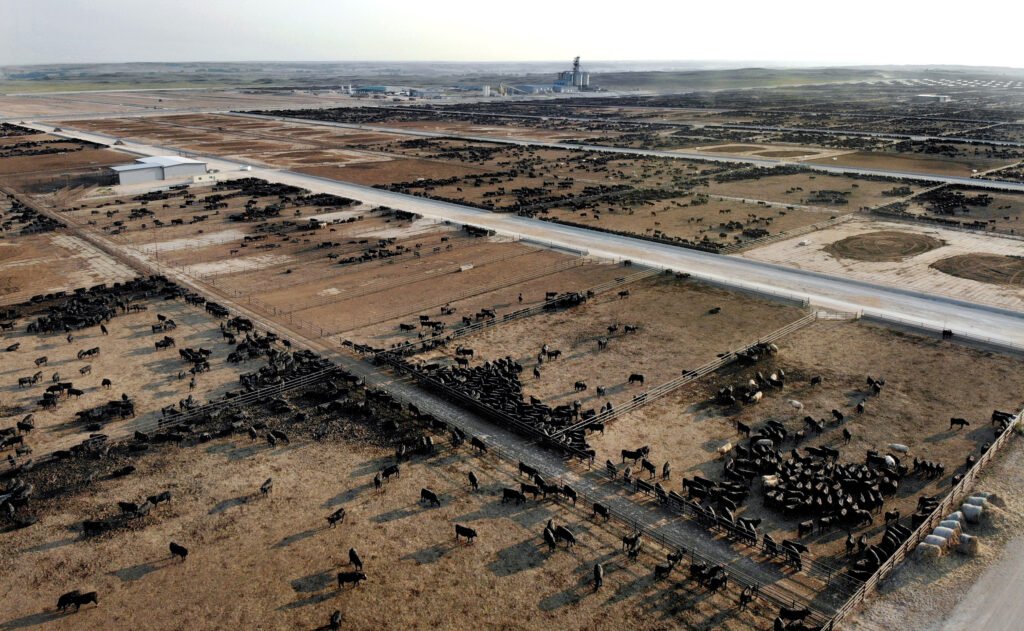
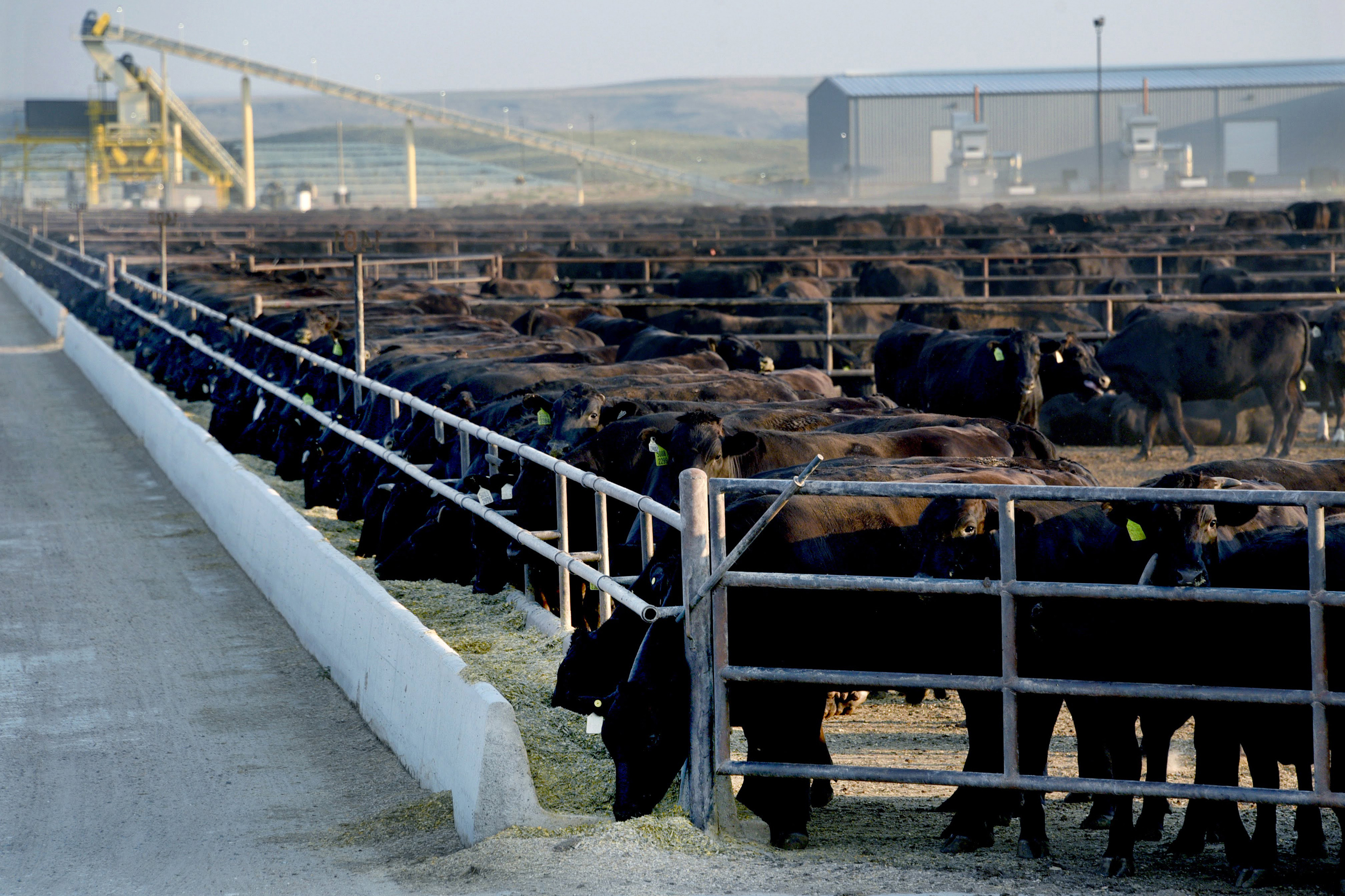
Within a year or two, nearly 700 acres of this county—an expanse larger than one square mile and twice the size of the country’s largest contiguous asphalt-covered parking lot, at the Astrodome in Houston—will be covered in concrete, and on it, 200,000 head of cattle will live their last months until being trucked to slaughter. They will eat roughly 20 pounds of grain a day, reaching 1,400 pounds or more each. They will consume, by some estimates, 20 gallons of water a day or more—nearly 1.5 billion gallons a year collectively. They will bake under the increasingly hot Nebraska sun during daylight hours, and spend their nights under an array of high-powered lights so bright that people 15 miles away mistake the illumination for a city.
They will have the distinction of being raised in the country’s largest single-site feedlot.
Over the past 50 years the livestock industry, in the United States and around the world, has consolidated, with fewer companies owning larger and larger facilities with more animals. This very American invention, the factory farm, has become the global standard. Today more than 90 percent of the animals consumed as food in the U.S. are raised in industrial confinement, including cattle that start their lives on pasture but are “finished” in feedlots. Globally, that number is about 75 percent.
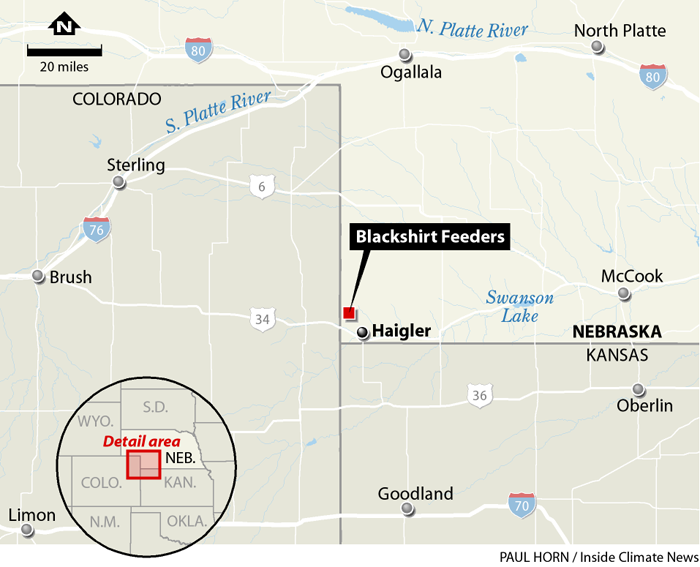
This gigantification has come at a cost. Communities across the country, like the small village of Haigler, which sits about 6 miles from the Blackshirt feedlot, have become sacrifice zones for the pursuit of efficient meat production. In many places near CAFOs the water has become undrinkable. The stench makes it impossible to be outside. The air is making people sick.
A large CAFO in your backyard is akin to living next to a power plant or waste treatment facility, especially if it’s a singular massive one or many clustered in one area. In North Carolina and Iowa, the epicenters of the American hog industry, noxious odors travel miles and excess manure, when applied to fields, poisons drinking water. In some areas of California, the country’s leading dairy producer, families need special medical equipment to breathe. In the “Broiler Belt” states of the Southeast, toxic brews of manure, urine, bedding and feathers wash into waterways, choking off oxygen and creating aquatic “dead zones.”
The consequences, when multiplied, reach a global scale.
As the industry has replicated the factory farm model across the world, the number of livestock has swelled, leading to more livestock-related planet-warming greenhouse gas emissions. The production of livestock globally accounts for somewhere between 16.5 and just under 20 percent of total greenhouse gas emissions. Researchers have determined that, even if the world stopped using fossil fuels, the largest source of heat-trapping gases, there’s no way to meet global climate goals without reducing emissions from the food system, including from cattle.
Dairy and beef cattle are the biggest source from agriculture, responsible for more than one-third of the world’s emissions of methane, an especially potent greenhouse gas. In the U.S., even with fewer cattle than at the peak numbers of the 1970s, methane emissions have climbed. The estimated greenhouse gas emissions from beef cattle in the U.S. is about 4 percent of the country’s total, which sounds small but puts the industry’s emissions on the same level as the total emissions of some developed countries, approaching that of Spain.
The primary source of methane from cattle comes from enteric emissions—their burps. More animals means more burps. But the main driver of the methane increase from CAFOs is the way manure is handled: When it’s mixed with liquid and stored, it becomes a methane bomb. Since 1990, methane from manure management systems has risen more than 65 percent. Enteric emissions represent the largest of any sector, including official but likely undercounted estimates of emissions from the oil and gas industry, and have risen 5 percent.
Despite its significant generation of greenhouse gases, the industry is hardly regulated in the U.S., the world’s largest producer of beef and second biggest producer of dairy. The powerful agriculture lobby and its allies in Congress continue to beat back any attempt to monitor greenhouse gas emissions from livestock, let alone curtail them. The beef business has long been aware of its greenhouse gas impacts and, like the oil and gas industry, has worked to downplay its role and confuse the public.
Large livestock producers are required to get permits under the Clean Water Act, but these are handled by state environmental agencies and are notoriously porous and unenforced. Meanwhile, greenhouse gas emissions from CAFOs are largely unmeasured and unpoliced.
“Most factory farms in the country remain unregulated under our bedrock environmental laws, including the Clean Water Act,” said Tarah Heinzen, the legal director at Food & Water Watch, an advocacy group that has filed dozens of lawsuits, attempting to push regulators and the industry to limit pollution from CAFOs. “Our lax system is making this country a waste magnet for this industry. We will take all of the harmful impacts and export the products all over the world, and now we’re exporting the model.”
The U.S. Environmental Protection Agency (EPA), which administers the Clean Water Act, has said only 36 percent of the country’s CAFOs have permits under the law—and the agency’s total number of CAFOs is likely a massive undercount because in many states, regulators have no idea where the operations even are.
The first and second Trump administrations have continued to ease the already weak regulations on agriculture, exempting agricultural sources from reporting hazardous air pollutants, shortening environmental review times, reversing restrictions on potentially dangerous agricultural chemicals and narrowing the definition of what constitutes a navigable waterway, which allows farms to drain runoff into waters and apply fertilizers and pesticides without permits.
As regulators have taken a mostly hands-off policy toward livestock, CAFOs have crept towards monstrous proportions. The EPA defines a 1,000-animal cattle CAFO as “large” and imposes no extra protections or provisions for facilities that have ballooned to 200 times that size.
“The law is completely size neutral. It has absolutely no mechanism to say: You know what? Producing as much waste as a large American city with no wastewater treatment plant is a different issue—a bigger threat—than the waste of 1,000 cows,” Heinzen added. “There are literally no guardrails against the expansion of the scale of these facilities.”
Heinzen explained that state regulators could, technically, put limits on the size of CAFOs, but she’s not aware of a state that has done so.
Few politicians or regulators seem willing to say huge is too big, or to stand up to deep-pocketed livestock companies with skilled lawyers. Today, at least five states, in addition to Nebraska, have or are permitted to have individual beef CAFOs with 100,000 head of cattle or more: Texas, Kansas, Idaho, Arizona and California.
In Nebraska, where license plates once read “The Beef State” and where livestock is the largest industry, the permissive culture runs from the governor’s office all the way down to county zoning boards and commissions, which critics say have been steamrolled by big players in the industry.
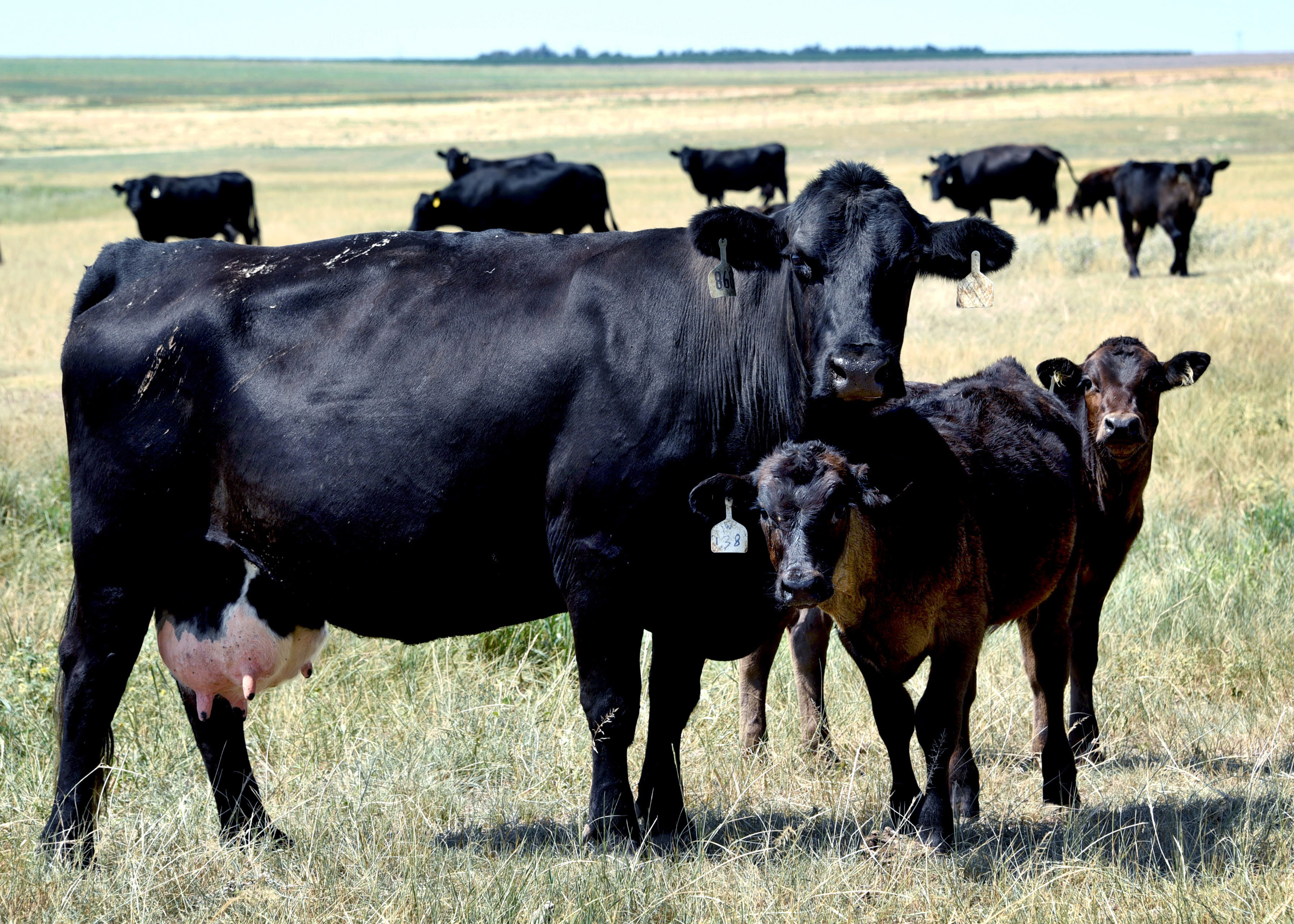
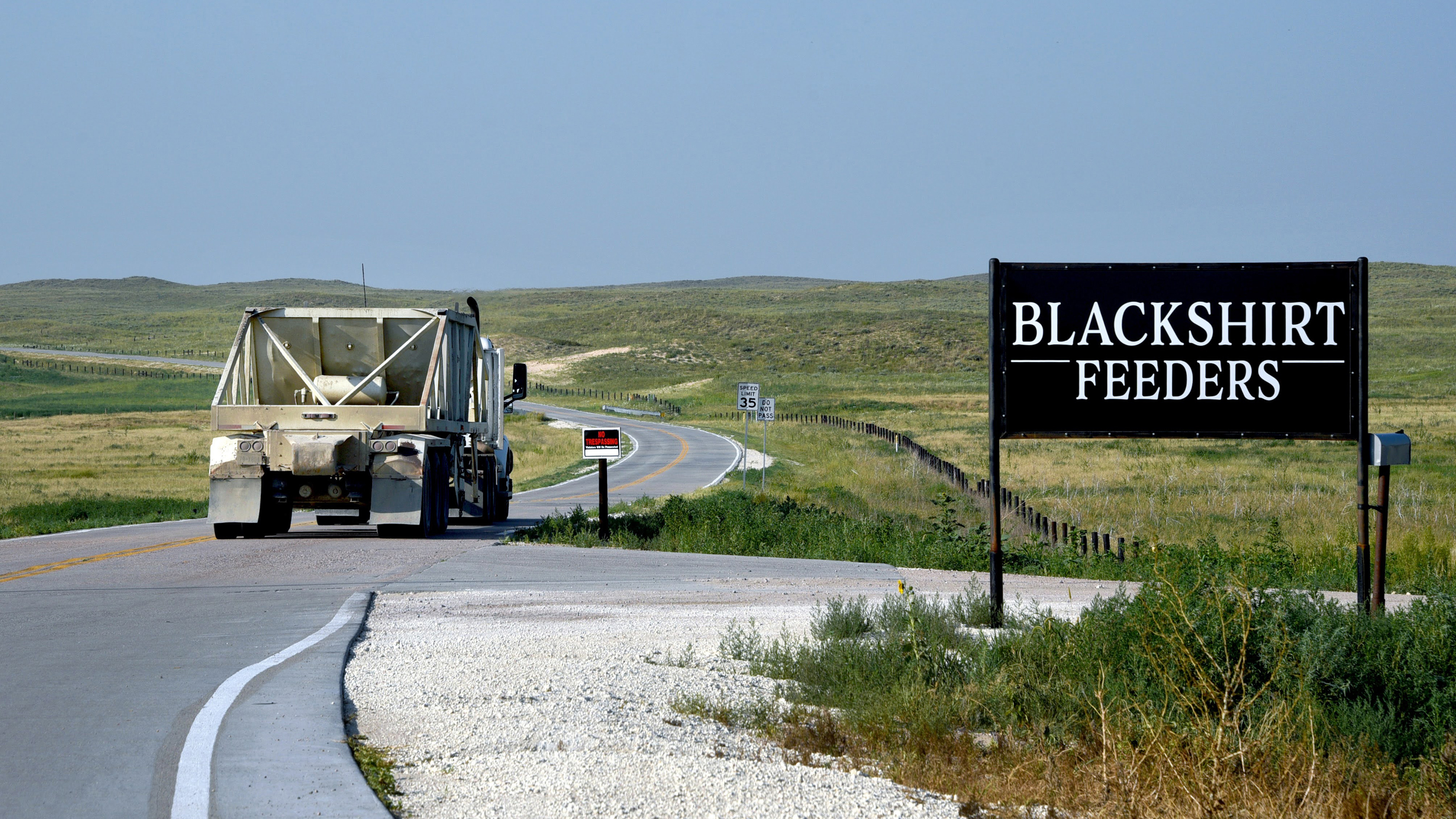
Blackshirt Feeders, LP, founded by a trio of investors based in Canada, first broke ground here in 2023, promising to build a state-of-the-art facility. Today the sprawling operation, tucked behind some low hills and invisible from Highway 34, is an ongoing construction project, a seemingly ever-expanding complex of concrete, covered with 95,000 beasts whose flesh will be cut and boxed in one of the major slaughterhouses located strategically nearby.
Very few people here are happy about it. Some fought against it.
Brad Dixon, who grew up in the area and raises cattle himself, put it bluntly: “They’re destroying Dundy County.”
Dixon and his fellow critics rattle off a list of concerns: odors, flies, increased traffic, out-of-town investors. Highest among their worries, though, is the operation’s massive water needs. Much of Nebraska lies above the Ogallala Aquifer, the nation’s largest, a critical source of drinking water for millions of people and irrigation water for more than one quarter of the entire country. Decades of overuse, largely for agriculture, have threatened the aquifer’s supply and an ongoing drought is speeding the declines.
Water here has always been a closely guarded commodity. These days, with the entire county facing “abnormally dry” conditions and parts of it veering regularly into “extreme drought,” it’s even more so.
“Well, I have to probably tone my rhetoric down a little,” said rancher Stan Jones as he launched into his thoughts with a deliberate understatement that many people here seem to share. “I’m very concerned about the water.”
Yet even in Nebraska, where cattle ranching is deeply woven into the culture, economy and psyche of the state, some people are doing things another way.
Kevin Fulton, a rancher and outspoken critic of the industry’s trend toward confinement and expansion, grazes his cattle on pasture about 150 miles east of Dundy County.
“Let me make it clear that I make my living farming and raising livestock, so you know, I’m not like some whack-tivist,” he said. “But there’s a right way to do things and there’s a way that’s disgraceful to the industry, and that’s what I consider something like Blackshirt Feeders and other similar facilities. They’re a disgrace to the industry that I’m a part of.”
The Best Place
When Eric Behlke returned to Dundy County he had a mission.
A native of Benkelman, the county seat, he eventually went to Iowa State University for veterinary school and then decamped to Canada to join Feedlot Health Management Services, a consulting firm that helps companies build CAFOs across the world.
Now he was back with a goal: to build the state’s largest feedlot.
He and two fellow investors called their new enterprise Blackshirt Feeders, after the nickname for the University of Nebraska Cornhuskers defensive line.
“We looked all over the U.S. and we came to the conclusion that somewhere in Dundy County was the best site in America to build a large-scale feedlot,” said Kee Jim, one of Behlke’s partners and longtime feedlot developer, noting the proximity of 11 major slaughterhouses in the region and the abundance of corn in the county. “Cattle eat corn and in order to have the lowest cost feed input, that’s a great choice.”
Jim also mentioned another key factor: regulatory certainty.
Nebraska Gov. Jim Pillen, who has acknowledged the state’s drinking water problems, has tried to make it easier for CAFOs to gain permits. According to an investigation by the Flatwater Free Press, Pillen’s administration was behind a bill that would have banned counties from factoring potential water pollution into their CAFO reviews and would have shuttered public hearings at local zoning commissions, often the first hurdle in getting the necessary permits for CAFOs.
Ultimately the bill died, but this year Pillen got the next best thing when he signed into law another bill designed to force county boards to make decisions on CAFO permits within 90 days. The law, according to the Platte Institute, which was instrumental in crafting and passing it, will eliminate “subjective considerations” by county officials when deciding whether to permit a CAFO.
Jim, who is based in Alberta, Canada, recently told a Canadian agricultural trade publication the regulatory environment was part of the reason Blackshirt set its sights on Nebraska.
“I can guarantee you, there’s no place in Alberta that you will ever get a 200,000-head feedlot permitted, end of story,” Jim said. “Also, if you want to build a biodigester, and you don’t want to go through a four-year fight, you aren’t doing that in Alberta, either.”
Nebraska’s Department of Water, Energy, and Environment (DWEE), which oversees CAFO permitting in the state, has approved a biodigester at the site—a facility which would turn manure and effluent from the feedlot into natural gas. Jim said he hopes construction of the biodigester will begin later this year.
“The regulatory environment is more favorable because of the certainty that it offers when you meet all of the requirements,” Jim added, in an interview with Inside Climate News. “Even for a non-lawyer, it’s very black and white: if you meet the requirements, you shall get a permit.”
Still, Blackshirt may have anticipated local resistance.
Deb Frasier, whose family has owned land north of Benkelman since the 1880s, remembers getting a call from Behlke a few years ago. He told her he was interested in buying about 650 acres from her and opened with an intriguing line.
“He said he wanted to save Dundy County,” Frasier recalled. “I said I don’t think Dundy County needs saving.”
Frasier immediately told Behlke that the land wasn’t suited for the project he had in mind.
“I said that’s the worst place in the world to put a feedlot,” she said, noting that the road leading there is impassable in the winter and during heavy rains. “You’re going to have runoff. It runs off on [my property], it’s going to run off on my neighbors. You’re going to have to pump the poop uphill. You don’t have rail service. You don’t have roads.”
Frasier and a cohort of fellow county landowners and residents began to organize a campaign against the feedlot based on a list of concerns, mostly to do with water use and quality. They enlisted the help of a rancher named Mike Callicrate who runs a pasture-based beef business and has been a burr in the side of the industry for decades. In the 1990s Callicrate sued beef and pork giant IBP, accusing the company of cornering the market for beef and fixing prices. In 2012 he sued the U.S. Department of Agriculture and the National Cattlemen’s Beef Association, the cattle industry’s biggest lobby group, accusing them of misusing funds collected from ranchers by a federally administered program to promote large-scale industrial livestock operations and disadvantage smaller family ranches.
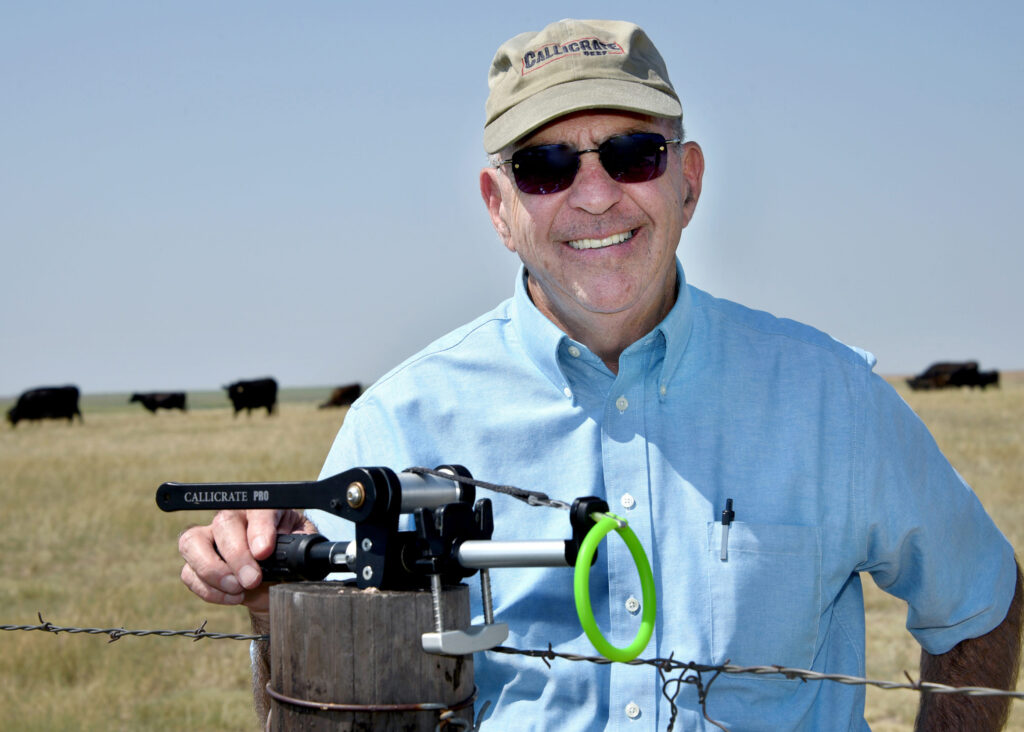
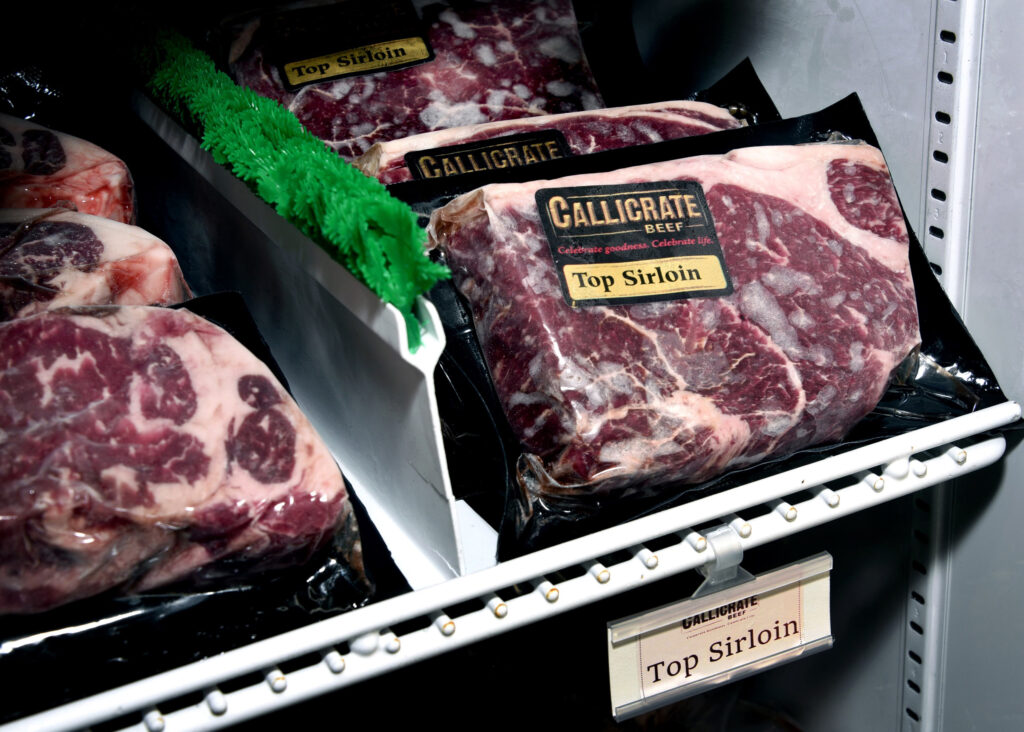
In his offices in St. Francis, Kansas, about 18 miles south of Haigler, Callicrate bounds around, introducing his employees, pointing to beef products in a small on-site shop and displaying a product that has helped keep him afloat: his version of a device called a bander that castrates bulls without surgery.
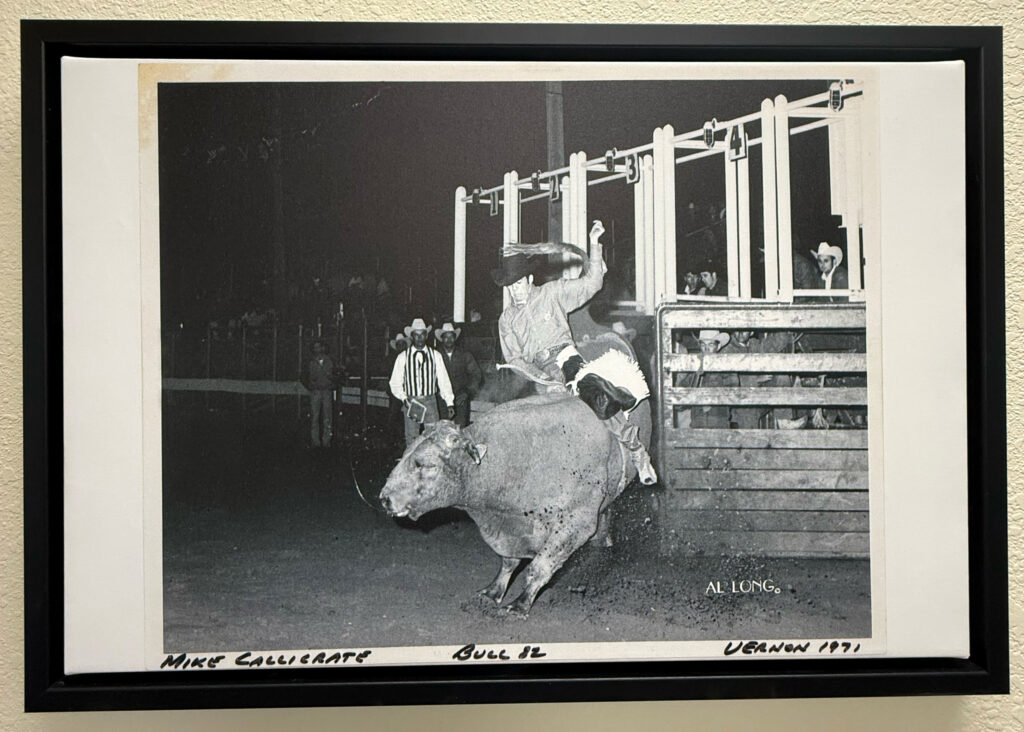
On the wall above his desk hangs a black-and-white photo from 1971 of Callicrate riding a bull, from his days of competitive rodeo. He is part rancher-philosopher, part businessman and a hero to many small-scale ranchers for his efforts to bust up the ever-consolidating beef industry.
He spares no words about Blackshirt. “It’ll be way worse than your worst nightmare,” Callicrate says. “Who would’ve thought they’d put 200,000 animals on concrete?”
Callicrate pointed to another of the state’s massive feedlots, in Broken Bow. “Talk about environmental destruction,” Callicrate says. “I mean, they built that yard for up to 85 or 100,000 cattle. Broken Bow was under a shit cloud. Whenever the wind came out of the south, it was unlivable. Totally unlivable.”
Callicrate is on the board of the Socially Responsible Agriculture Project, which runs a hotline for people trying to keep CAFOs out of their backyards and provides legal help toward those efforts. With their help, Frasier and some of her fellow Blackshirt critics succeeded in persuading county board members to vote against the massive feedlot proposal.
But after a series of contentious public hearings, the board members ultimately changed their minds. In 2022, they said that if Blackshirt’s application met all zoning requirements, they had no choice but to vote yes.
Critics of the feedlot say Blackshirt’s lawyers threatened to sue. When asked about this, Behlke told Inside Climate News “I don’t ever remember a threat to sue or pursue litigation.”
Other critics say the board members were swayed by the major infusion in taxes and the promise of new jobs. This year Blackshirt is projected to pay nearly $440,000 in taxes, of which more than $250,000 will go toward county schools. Blackshirt also promised it would buy all the corn grown in the area to feed its cattle.
“Once we’re at capacity, at 200,000 head, we will use about 20 million bushels,” Behlke said “That comes to about $95 million.”
A month after the board approved the proposal, Blackshirt decided against the original site, instead moving its plans to a more remote location with fewer residents nearby. And there they decided to get even bigger, upping their proposed headcount from 100,000 to 150,000. In the application for the new site, near Haigler, Blackshirt said the new location would address concerns about the original one.
“We are trying really hard to be good neighbors and make opportunities,” Behlke said.
The board voted to approve the new location. Then, in the summer of 2025, the board approved an expansion to 200,000 animals at the site. Authorities at DWEE said the agency had not received Blackshirt’s application to expand as of mid-July of this year, but Behlke said he plans to submit that later this year.
Today, at least one of the county board members who approved the feedlot has some regrets.
“My biggest concern is about the land degradation—and they’re still creating concrete up there,” said Richard Bartholomew, who was perhaps the most vocal critic on the board. “My feelings at the time—and I still feel this way—I would rather have some small operations that would be involved with the community. I mean, this is a huge operation.”
Praying for Rain
In June of this year, after a prolonged stretch with little to no rain, the governor, one of the state’s biggest hog producers, urged a group of people to gather and pray at the state capitol.
A few days later, on X, Pillen wrote, “in a year when farmers and ranchers have dealt with drought, fires, floods, and wind. We specifically prayed for rain.”
Under the post, was a graphic of a storm cell sweeping across the state. “This is Nebraska rainfall in the days that followed,” Pillen added. “Prayer works, and we need more of it.”
But, despite the few days of rain, the drought persists. As of late July, more than 60 percent of the state was suffering severe drought and more than 20 percent, extreme drought, with pockets in exceptional drought.
Water has long been a preoccupation in Nebraska, where the Ogallala and a web of rivers supply the lifeblood of the agricultural economy. For more than 50 years, the state has divided its water regulation by watersheds, giving local control to bodies called Natural Resources Districts. There are 23 of them today, including the Upper Republican River Natural Resources District, which covers Dundy County and two of its neighbors.
The landscape here, seen from the air, looks like some kind of modern quilt, a repeating pattern of circles within squares, punctuated by the odd rectilinear box. This geometry means nothing to the non-farmer. But think of it this way: The circles form around a central irrigation pivot. This is where the grain is grown. The occasional brown rectangle in that sea of circles are the feedlots where much of that grain is consumed.
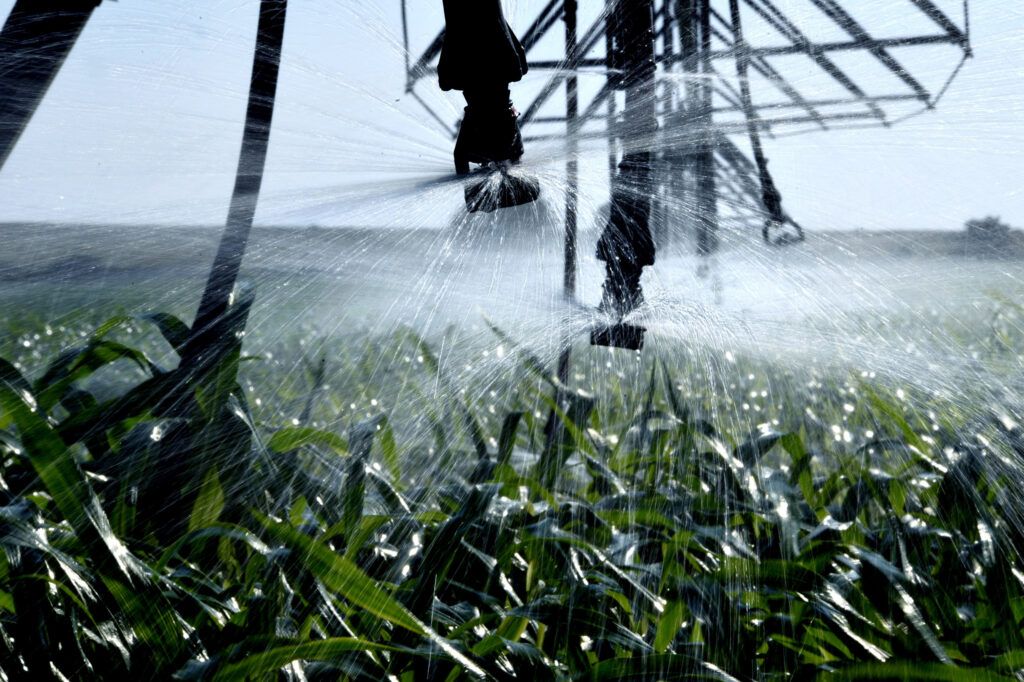
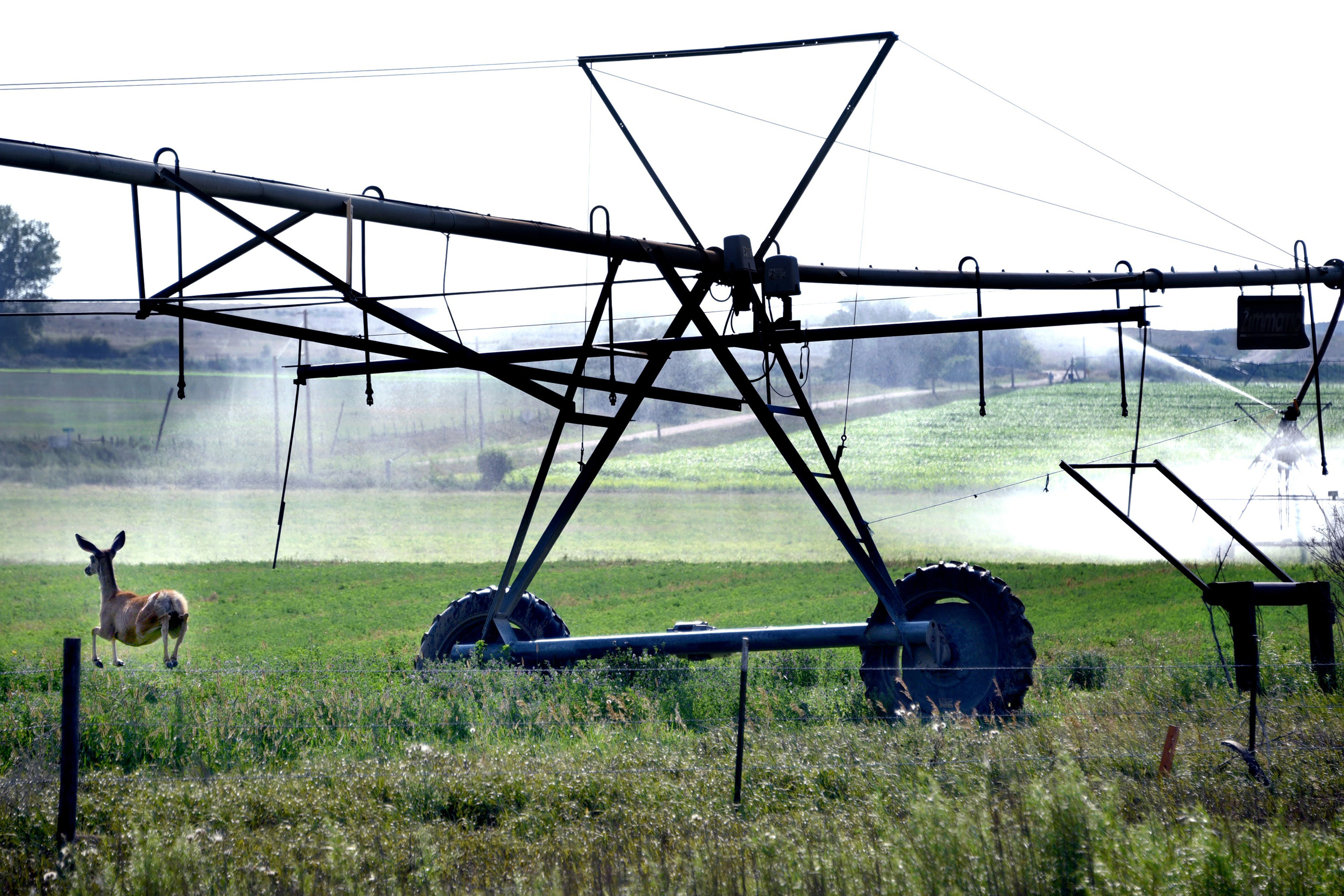
This is the system that has, in some places, gobbled up the state’s groundwater. The state’s most recent survey notes that, with the exception of two small areas in the northwestern part of the state, Dundy and neighboring Chase and Perkins County have experienced the highest levels of water depletion in the state, largely because of irrigation. The district’s irrigation system is almost entirely reliant on groundwater. Irrigation on about 1,500 acres of Upper Republican River district comes from surface water—rivers and creeks—while irrigation for 450,000 acres comes from groundwater linked to the aquifer.
Lack of rainfall and continued drought has meant the aquifer can’t recharge, requiring strict management from local officials. Aquifer levels in that corner of the state continue to decline.
When the Blackshirt team made its case for the feedlot, it had to address its projected water use. Cattle are huge consumers of water, both directly and indirectly. They drink a lot, especially in extreme heat. Washing away their manure takes yet more water. Growing the corn they eat takes even more.
The county allows a certain amount of water use for feedlots, but if a facility needs more than that amount, they have to essentially trade for it. Blackshirt bought 13 fields with wells that feed center pivot irrigators in one part of the county and is retiring those wells and returning the land around them to native prairie to offset the feedlot’s water use at the new site. Upper Republican River district officials then approved the swap. So far Blackshirt has retired four of these wells, with plans to retire more if necessary.
“They were good acres to take out of production,” said Jasper Fanning, the general manager of the district, noting that the land in that area was in poor shape anyway.
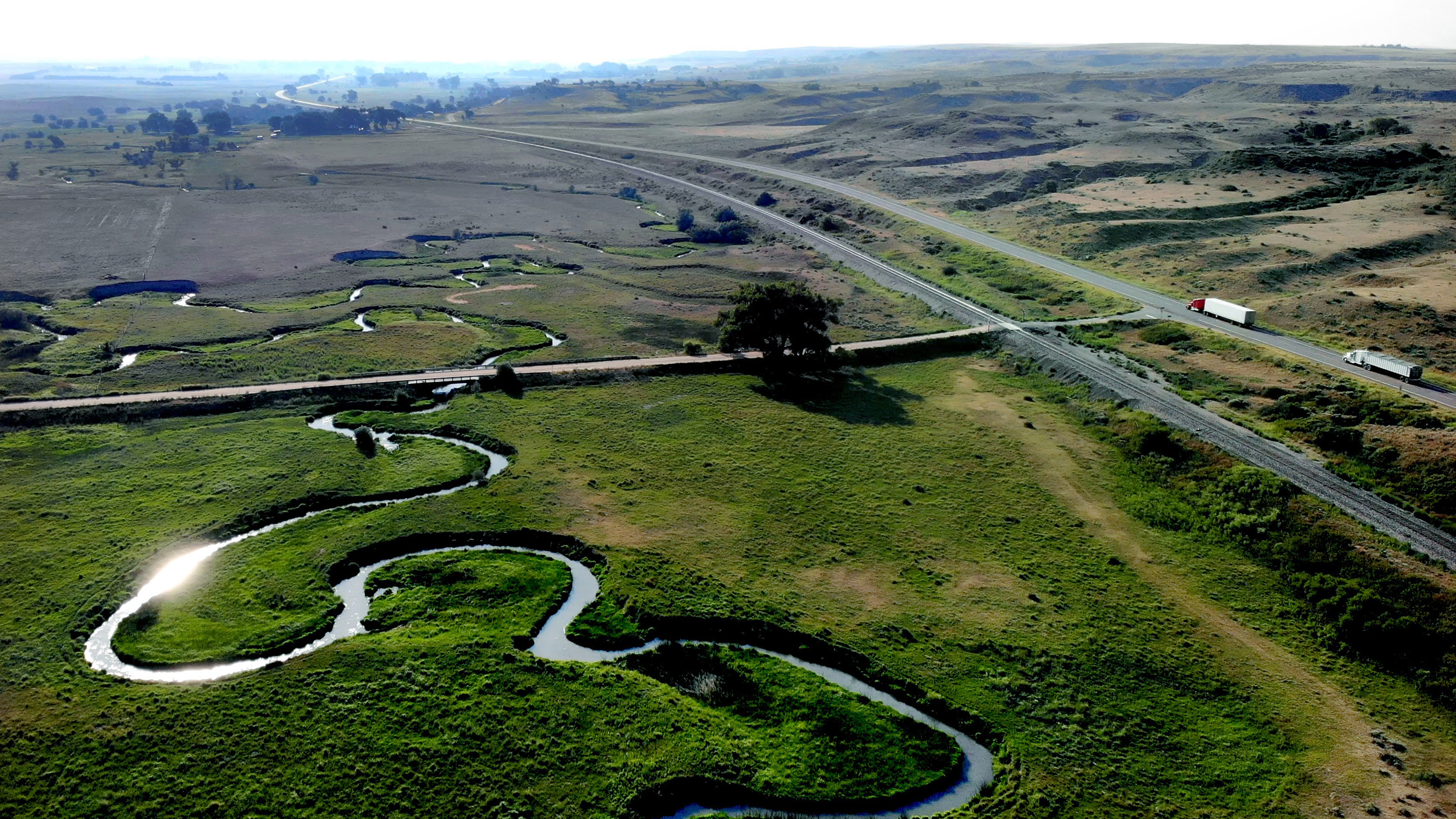
But local ranchers and growers, who have been careful to conserve water for generations, were suspicious of the arrangement. They refer to the deal as “paper water”—having a legal right to pump water in one place and then transferring that right to another location and potentially pumping more water there. Many of them criticised Blackshirt’s assertion—and the district’s acceptance—that each animal would drink six gallons of water a day.
“They’re going to use so much water and that’s already a depleted area,” said Dixon, the outspoken local opponent. “Jasper let them get away with a planned projection of six gallons of water. It’s just ludicrous they came up with six gallons.”
Blackshirt hired an engineering firm to analyze the potential future impacts of the feedlot’s water use, and it found that, based on the “saturated thickness” of the aquifer in the area of the feedlot “it is reasonable to infer that there is sufficient aquifer thickness to sustain the drawdown from the feedlot operation for up to 50 years, possibly longer.”
The firm’s report also acknowledged that its estimates were limited by several factors including “that the model used in this report is based on previous climatic, evapotranspiration, and pumping datasets and assumes that these water budget items will be the same going forward.”
Fanning said he’s aware of the complaints and of the suggestions that he’s gotten chummy with Blackshirt. “Here’s how our district approaches it,” he explained. “We set an allocation and we have the offset—the requirement to retire. If you’re going to use 100-acre feet [of water], you have to retire 100-acre feet. … So I don’t care how much water those cattle end up consuming versus what Blackshirt said they would. From a regulatory standpoint, it’s their responsibility. They’re either going to have to feed fewer cattle or they’re going to have to find more offset.”
Blackshirt is now—by far—the largest single consumer of water in the district and that will rise with more cattle. In 2024, the year it started feeding cattle, the feedlot consumed about 138-acre feet of water, according to the district. By 2025, when the headcount had grown to 88,000, it consumed almost 647-acre feet of water.
That’s roughly equivalent to 320 Olympic-sized swimming pools, not factoring in the massive amount of water used to grow the corn the animals eat. A full accounting would include that water, too. As of May this year, it had already used nearly 1,100-acre feet, according to well readings—and that’s before the heat of summer or the construction of the biodigester, which will use another 500-acre feet a year.
But Behlke said there will be no overall water loss. “Additional acres of irrigated farmground will be retired as needed to ensure that there is no net increase in the draw on the aquifer in any scenario,” he explained.
A Problem of Scale
Blackshirt’s water use is not the community’s only water-related concern.
Blackshirt anticipates that 150,000 cows will generate 3 billion pounds of manure a year, but that its state-of-the-art construction better enables it to handle that huge volume. At its full capacity of 200,000 cows, that volume could reach at least 4.4 billion pounds, based on U.S. Department of Agriculture estimates of per-cow manure generation.
As Behlke explained to the county board and the public, the feedlot would be constructed on a square-mile stretch of roller-compacted concrete, a non-reinforced surface used to pave World War II airfields. The surface, Blackshirt says, provides better traction for the cattle and eliminates mud. The company also claims it will reduce dust, flies and odor.
Importantly, the company said, the surface would allow manure and waste to more efficiently flow into polyethylene-lined containment ponds and from there into the biodigester. Under the state permit, additional leftover waste is allowed to be deposited onto more than 30,000 acres of adjacent farmland.
Last year, according to records provided to the state by Blackshirt’s engineering company, more than 100 million gallons of waste were applied to nearby fields, and more than 18,000 tons were transferred offsite.
Behlke explained that this application of waste is being done at “approved agronomic rates.”
Despite this system, the state cited Blackshirt for nitrate violations in its two main wells in early January of this year, and measurements taken in April show nitrate levels at two and three times the legal limit of 10 milligrams per liter in two monitoring wells.
Sampling data on DWEE’s database shows that Haigler’s highest nitrate level in 30 years was 4.1 milligrams per liter in 1996, but people here worry that could go up as more waste from Blackshirt ends up on farm fields in the area.
As with its ag-heavy neighbors in Kansas and Iowa, Nebraska has an ongoing problem with nitrate pollution, which comes largely from over-application of manure and the heavy use of synthetic fertilizer essential for growing corn. In southwestern Kansas, an area referred to as the “Golden Triangle of Meatpacking” because of its high volume of feedlots and slaughterhouses, the nitrate concentration in water is four times the legal limit. Research has shown that nitrate pollution tends to concentrate in CAFO-dense areas.
This story is funded by readers like you.
Our nonprofit newsroom provides award-winning climate coverage free of charge and advertising. We rely on donations from readers like you to keep going. Please donate now to support our work.
An extensive series by the Flatwater Free Press documented widespread nitrate contamination throughout Nebraska, finding major gaps in regulatory oversight.
Nitrate pollution has been linked to certain types of cancer, reproductive problems and “blue baby syndrome,” a potentially fatal illness affecting infants.
State regulators require CAFOs to have what are known as nutrient management plans under their water permits, and those plans allow the facility to spread manure and effluent on properties beyond the CAFO itself. But once that manure is applied elsewhere, the state no longer polices it, the Flatwater Free Press found. State and local regulators disagree over who, exactly, bears oversight responsibility for the massive amount of manure generated in CAFOs once it’s shipped off the property.
A department spokesperson told Inside Climate News that Blackshirt has not violated its nutrient management plan. For “transfers of manure the CAFO must keep records of the person who received the manure, their mailing address, the amount of manure transferred, the date of the transfer and document that the receiver was provided a nutrient analysis of the manure.”
The department checks these records “every two to three years,” the spokesperson said, adding that it does not make them available online.
The state also requires that CAFOs have plans to dispose of dead animals as part of their nutrient management plan, but it does not require the facility to share mortality records.
Critics of CAFOs say that Blackshirt’s innovations at the site—to dispose of billions of pounds of manure, control water use or consume millions of pounds of corn—are merely solutions to a problem it has created.
“These are technical fixes to problems created by scale,” said Andrew deCoriolis, executive director at Farm Forward, an advocacy group that works to stop factory farms. “The novelty of one square mile of concrete—that’s about being able to capture digestate. It’s about economics, ultimately, but it’s also about being able to massively increase density.”
Along the CAFO Superhighway
Highway 34 runs from Haigler, across the slope-shouldered hills of the Republican River valley, then across the blond flats of eastern Colorado, all the way to Greeley, where the plateau of the high plains stop abruptly at the foot of the Rocky Mountains. Greeley is home to a massive meat-packing plant run by the world’s biggest beef company, JBS, which is just one of the major slaughterhouses within a few hours’ drive.
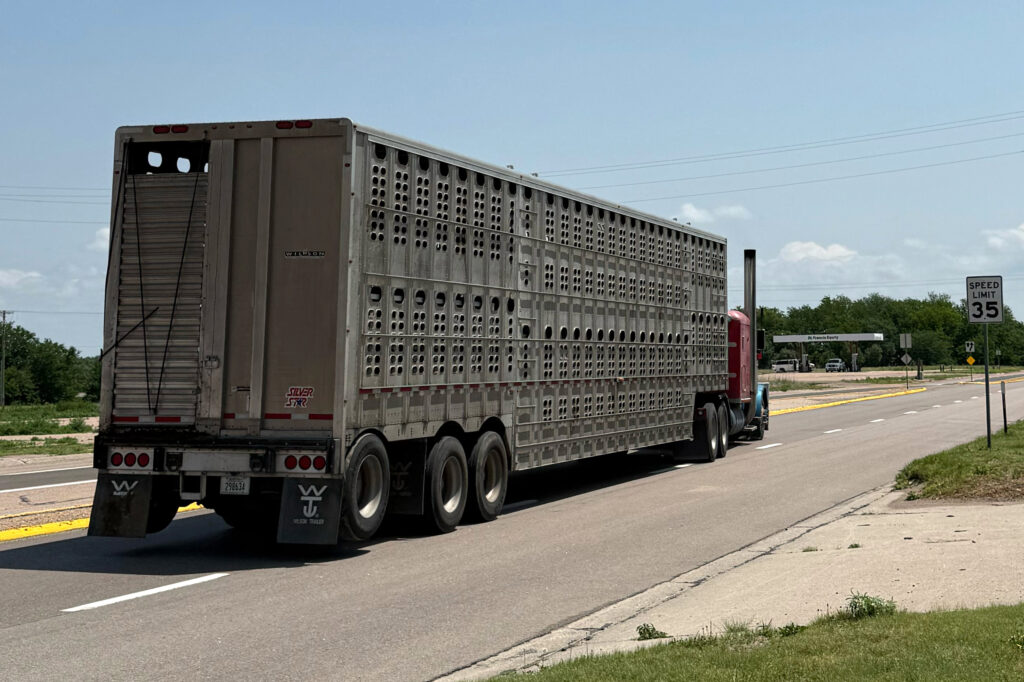
Along this 160-mile band of road sit some of the region’s biggest CAFOs, each a sprawling brown stretch of closely packed cattle. Every other vehicle whooshing by is either a “cattle pot”—the aluminum double-decker trailers specifically designed to haul cattle and named for their deep central chamber—or a semi, hauling feed.
But, unlike the other feedlots, Blackshirt Feeders isn’t visible from the road and is instead hidden by some low hills with only the top of its towering, high-tech feed mill poking into the sky like some kind of antenna. To see the full breadth of the place, you have to travel around the back on small dirt roads. The seemingly clandestine siting, the scale, the anonymous white pick-up trucks shuttling around, all make it feel like a secret government test site.
This obscurity is just as well for some of the people in Haigler.
The feedlot’s grand opening in October 2024 drew hundreds, including Pillen and U.S. Sen. Pete Ricketts.
Ricketts told the crowd that the feedlot represented “fantastic economic development” and was a “big deal for our state,” according to Scoop Media News.
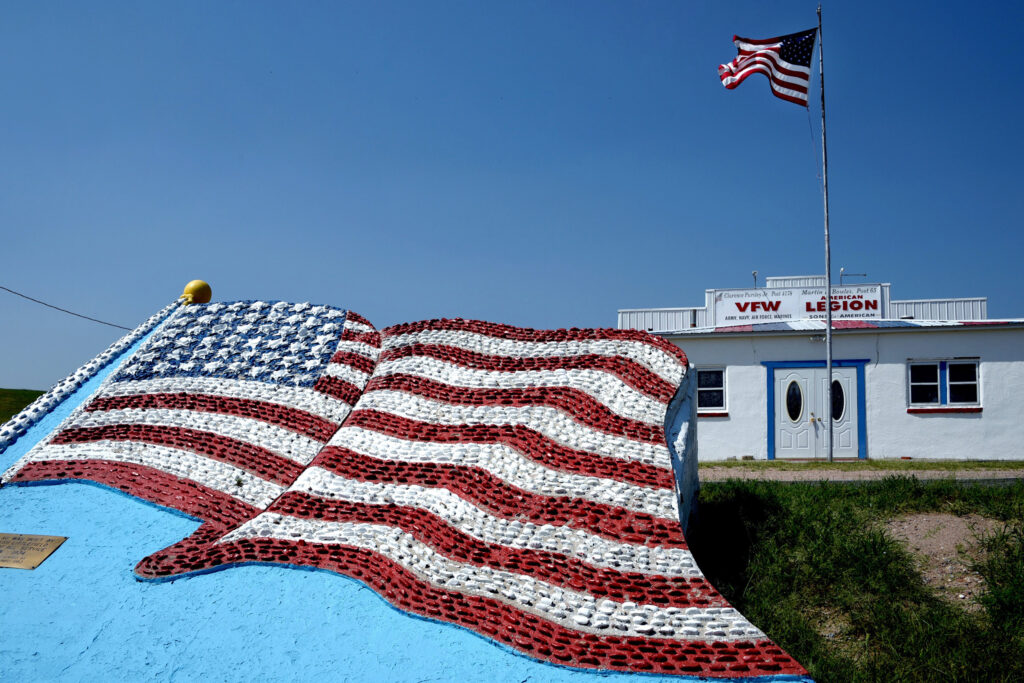
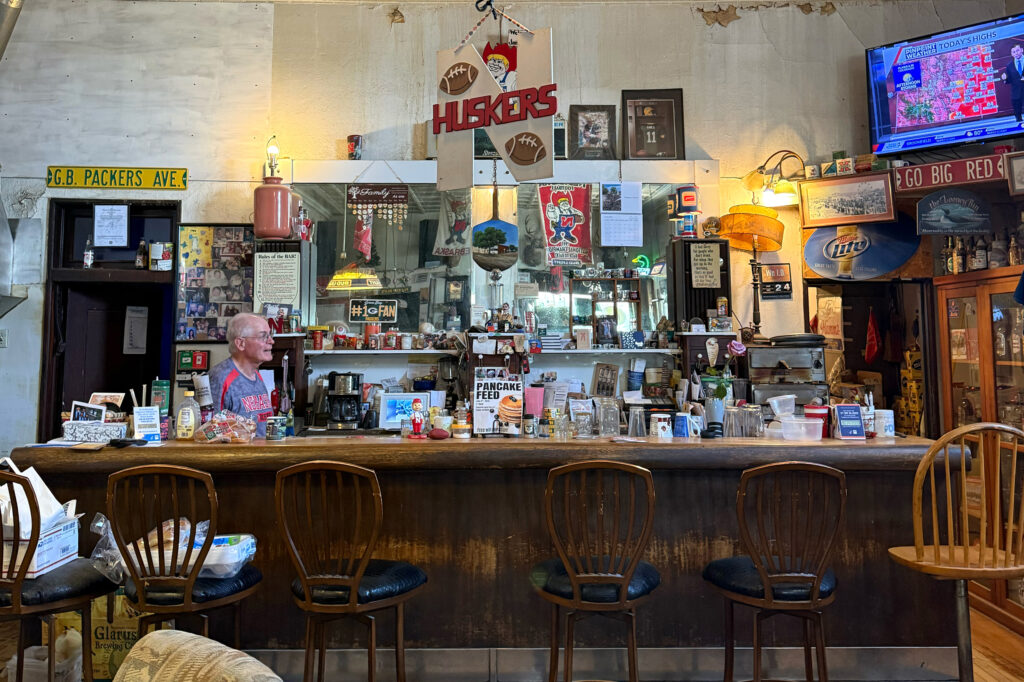
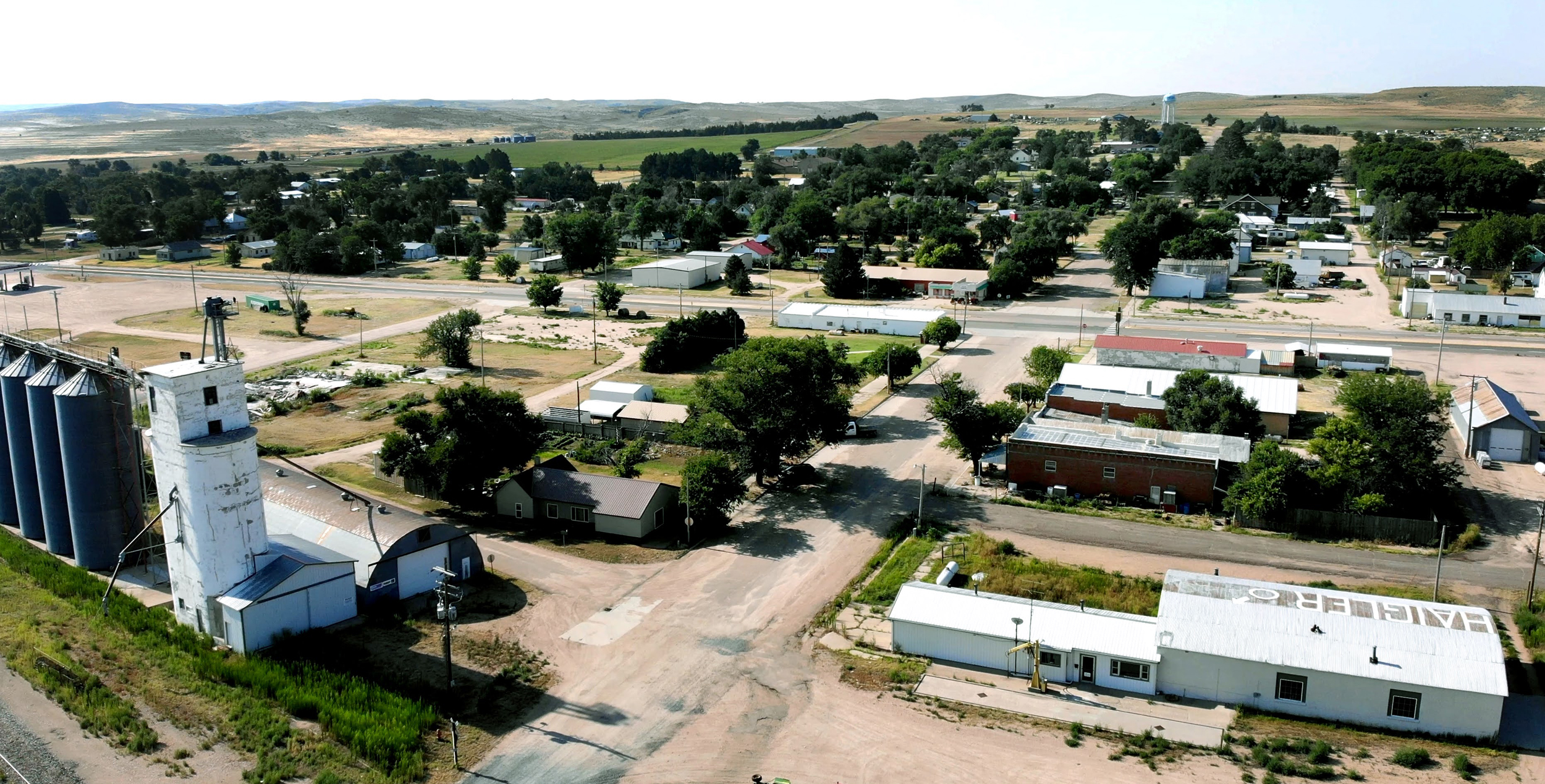
In Haigler, population 145, Behlke bought a yellow house on the hilltop above town. At the Haigler Country Cafe or at Jake’s Place, the local bar festooned with Cornhusker memorabilia, people grumble about him and the giant feedlot he brought to town.
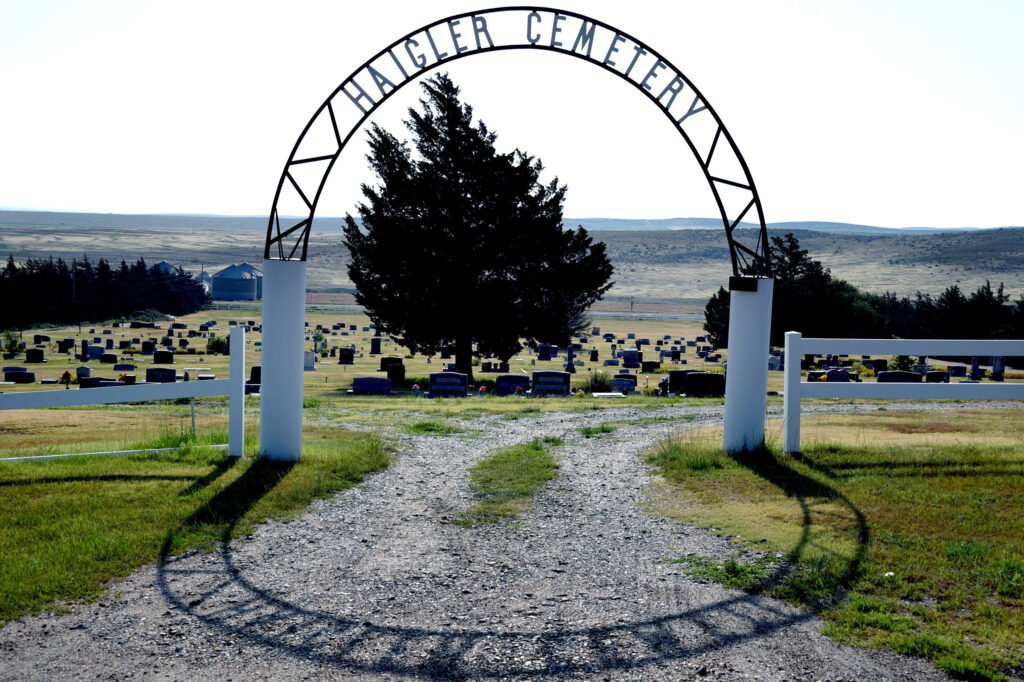
Of course, everyone knows everyone here. People don’t just leave their keys in the ignition, they leave their pick-ups running. In the cemetery—or what people here refer to as “the hill”—the headstones bear the names of everyone’s ancestors in an unbroken trail to the past.
The tables at the cafe were crowded on a recent June morning as customers drank coffee out of green glass mugs, with old, faded newspaper clippings on the walls behind them, along with an almost-obligatory picture of John Wayne.
“When you come to a small town and you shake someone’s hand, that’s your word,” said Lori Reed, sitting with friends, her apricot-colored hair swooped up with a rhinestone-spangled clip. “You’re looking at five, six generations here. Our families are on the hill. You don’t talk unless you mean it.”
Reed lives in Wyoming now, but her family goes way back, she said. Her friends still live here and like many people, they’re reluctant to openly criticize the biggest business in town. But people in Haigler feel let down and embittered. They weren’t formally promised jobs or an economic jolt, but that’s what they expected—and that’s what county and Blackshirt officials told them would arrive. Instead, the feedlot workers came from outside of the area and many of them live in Wray, Colorado, just across the border, spending their incomes on housing and services there.
“Eric brought in people from Australia,” Reed said, emphasizing the point. Reed calls the feedlot “the meth plant”—for methane.
Korrie Bush says she’ll rely on her part-time job at the fire department now. Earlier in the month, she had to close the tire and convenience store she opened along Highway 34, expecting a boost in patrons from the feedlot. But the gravel trucks that drive in and out of the feedlot all day, delivering the material for the new concrete pens, rarely stopped at her store.
“I ran it proudly for three years,” she said. “We sold it two weeks ago.”
Bush has mixed feelings. Friends put together a benefit auction to help her family when her husband was diagnosed with throat cancer. Blackshirt donated a television.
“They helped my family,” she said, picking up her coffee, a tattoo of black horses galloping up her forearm. “They didn’t help my business.”
Dan Leinin meets regularly at the cafe with a group of friends. A longtime rancher, he says he lives “eight miles south of that stinkhole.”
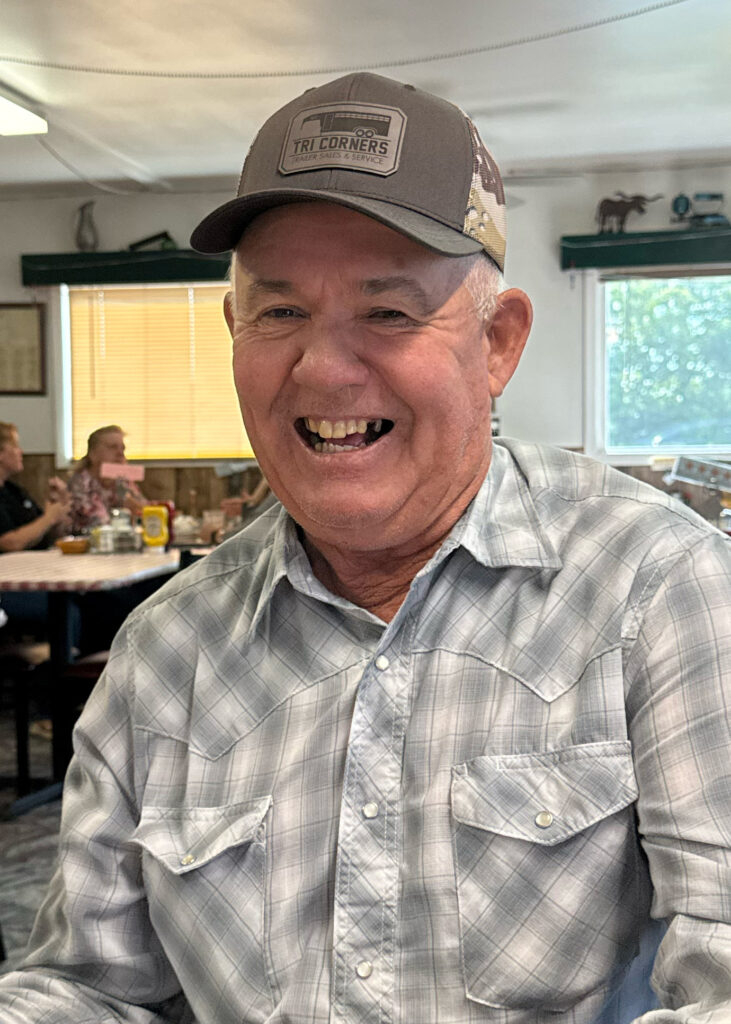
Leinin, like others, resents that county officials gave the feedlot the green light to build near Haigler. “They say they couldn’t stop it,” he said, a ready smile on his face contradicting his sentiments. “We question that.”
Leinin says a lot of things bother him. The smell. (“I raise cattle. Cattle stink,” he said. “They say it doesn’t smell. Trust me, it smells. We have a ranch 9 miles north and we smell it there.”) The additional truck traffic. The loss of the night skies.
“We’re used to darkness around here,” he said.
But here’s what bothers him the most: “Well, the volume!” he exclaimed, referring to the sheer number of animals.
About four miles east of Haigler, there’s yet another sign marking the county, this one rising up out of a grassy patch, next to a big ravine.
“After the slaughter of the buffalo and the last of the Indian hunts, ranchers moved into this part of the Republican River country in 1875,” it says. “By 1881 this canyon was known as Texas Trail Canyon, and a checkpoint was established here in 1883-84, where the cattle were checked for brands and disease. It is said that 150,000 cattle were moved through here in 1886, the last year of the trail drives.”
By the end of this year, Blackshirt aims to have that many animals in just one feedlot. They will come and go in cattle pots along a sprawl of roadways still at the heart of the American cattle industry a century and half later. These genetic brethren of the wild buffalo will eat high-tech flaked corn, drink water from high-volume auto-refilled troughs and stand on patches of concrete until they are ready for market.
The ranchers whose ancestors are buried on the hill now wonder what’s left of this place for them.
“Everyone around here says we just have to live with it,” Leinin said. “They’re here.”
About This Story
Perhaps you noticed: This story, like all the news we publish, is free to read. That’s because Inside Climate News is a 501c3 nonprofit organization. We do not charge a subscription fee, lock our news behind a paywall, or clutter our website with ads. We make our news on climate and the environment freely available to you and anyone who wants it.
That’s not all. We also share our news for free with scores of other media organizations around the country. Many of them can’t afford to do environmental journalism of their own. We’ve built bureaus from coast to coast to report local stories, collaborate with local newsrooms and co-publish articles so that this vital work is shared as widely as possible.
Two of us launched ICN in 2007. Six years later we earned a Pulitzer Prize for National Reporting, and now we run the oldest and largest dedicated climate newsroom in the nation. We tell the story in all its complexity. We hold polluters accountable. We expose environmental injustice. We debunk misinformation. We scrutinize solutions and inspire action.
Donations from readers like you fund every aspect of what we do. If you don’t already, will you support our ongoing work, our reporting on the biggest crisis facing our planet, and help us reach even more readers in more places?
Please take a moment to make a tax-deductible donation. Every one of them makes a difference.
Thank you,
