

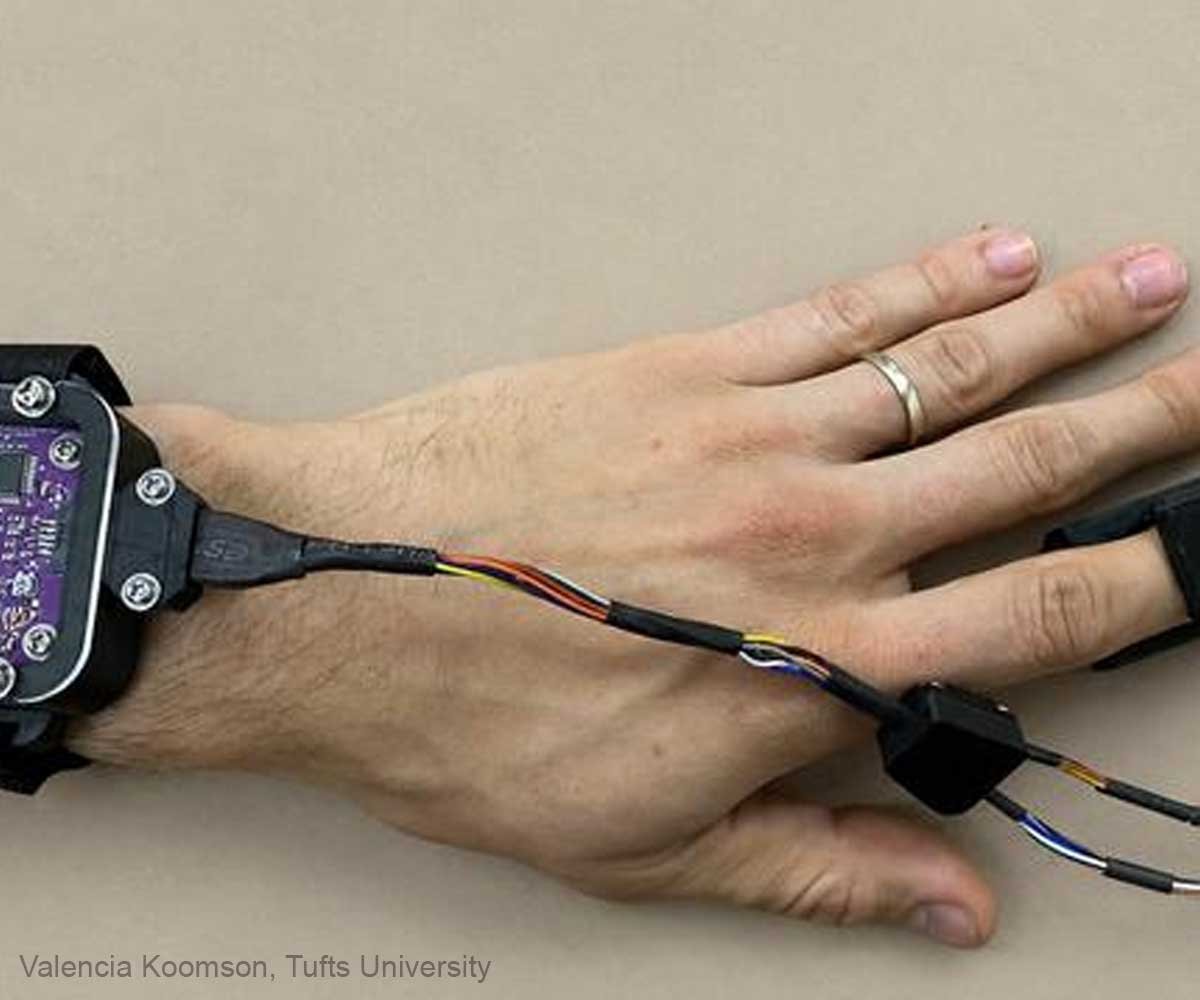
New wearable sensor called ChromaSense aims to make health monitoring more accurate and inclusive across different skin tones.

A tiny device on your finger can reveal a lot about your health—but does it work equally well for everyone?
Pulse oximeters are simple, familiar, and fast—but they may not work the same for every skin tone, highlights a new study.
For decades,
The technology is simple in concept: red and infrared light are passed through or reflected from tissue, oxygen-rich and oxygen-poor hemoglobin absorb those colors differently, and software turns the captured light into a measure of a patient’s health.
Advertisement
Can Skin Tone Change a Medical Reading?
But light does not pass through or reflect from each person in the same way. Variations in skin pigmentation, blood flow, and age can alter the faint optical signal that pulse oximeters and other wearable monitors using light depend on. That matters because a small error in oxygen saturation can become a significant clinical problem, especially when doctors are deciding whether a patient is sick enough to need oxygen, hospitalization, or intensive care.
Advertisement
Do Pulse Oximeters Work Equally Well for Everyone?
How pulse oximeters work—or don’t work—for different populations made the news early in the COVID pandemic. A 2020 New England Journal of Medicine study found that despite reassuring pulse-oximeter readings, as many as 17% of Black patients were dangerously misread and had occult hypoxemia – dangerously low arterial oxygen – a rate of misdiagnosis more than three times as that of white patients.
Advertisement
Improving Pulse Oximeter Accuracy Across Skin Tones
A new wearable system from the lab of Valencia Koomson, associate professor of electrical and computer engineering, aims to fix that problem. She and her colleagues have created a device that can
Called ChromaSense, it uses a watch-sized box attached to the wrist that measures reflected light from skin and tissue there rather than light transmitted through the finger, as is done with most pulse oximeters. Instead of assuming that one light setting fits all users, it first measures a person’s skin reflectance profile and then adjusts both the level of light that it emits and the signal-processing parameters used to measure the light reflected back.
The findings of the study are published in the journal Review of Scientific Instruments ().
ChromaSense: A New Approach to More Accurate Health Monitoring
In earlier testing across 50 participants with a range of skin tones, ChromaSense achieved an oxygen-saturation measurement accuracy within 1.4% of a standard reference oximeter, well within the limit required by the FDA.
Those measurements were taken at normal saturation levels. In a new study conducted at the Hypoxia Research Laboratory at the University of California, San Francisco, the device was tested under even more demanding conditions: oxygen levels were deliberately and very briefly lowered across a 70% to 100% saturation range and compared against a reference oximeter that reads directly from the blood, so not affected by skin tone.
That study included healthy adult volunteers with a range of skin tones, including Black, Asian, Hispanic, White and multiethnic participants. ChromaSense oxygen-saturation measurement accuracy was within 2.87% of a standard reference oximeter, meeting FDA performance requirements. There was no observable tone-dependent bias, including at lower oxygen levels.
The light-based technology used to measure what’s going on inside the body is called photoplethysmography (PPG). It begins with a simple physical fact: blood volume in the body’s microscopic blood vessels, called the microvasculature, rises and falls with every heartbeat. When light illuminates tissue, the light reflected back rises and falls in a pulsing pattern, representing arterial blood.
In pulse oximetry, the pulsing waveform is measured for differences in absorption of red and infrared wavelengths, which indicate levels of oxygenated and unoxygenated hemoglobin. But melanin, a pigment in the skin, also absorbs and scatters light. For people with darker skin, that extra absorption can weaken the signal or distort the ratio used to calculate oxygen saturation.
Koomson says the data picked up by PPG is “really a measure of how well your heart is actually pumping blood through your arteries to your extremities and back. The spacing between peaks gives heart rate, light absorption and reflection give oxygen levels, and a slower pattern of changes in pulse amplitude and frequency indicates breathing rate. All are tied to the movement of blood as the heart contracts and relaxes.”
She and her colleagues are looking to add
Decoding Blood Pressure Across Skin Tones
Her team used machine-learning models to parse out different subgroups by skin tone, age, and gender when estimating systolic and diastolic blood pressure from PPG waveforms found in large healthcare databases, using the width of different parts of the waveform to indicate the level of stiffness in arteries.
The team analyzed data from 2,315 adult ICU patients and examined performance across race, gender, age and subgroups with combinations of these characteristics. They reported accuracy up to 90% for systolic and diastolic blood pressure.
“The blood-pressure work is not yet built into ChromaSense,” Koomson emphasized, “but the goal is in the future to embed that machine learning model into the device.”
Koomson framed the issue plainly. “If you train a model that converts light signals to blood oxygen, pulse or pressure and you don’t ensure that the dataset that you’re training with is diverse enough in terms of age, race, and gender, it can affect the performance or accuracy of the model,” she said. “An apparently high-performing model can look far less impressive once broken down into specific groups.”
Reference:
- A Reflectance–based multimodal wearable photoplethysmography (PPG) sensor – (https://pubs.aip.org/aip/rsi/article-abstract/97/6/064708/3395963/A-Reflectance-based-multimodal-wearable?redirectedFrom=fulltext)
Source-Eurekalert