

Close Menu

    Subscribe to Updates

    Get the latest news information from worldwide businesses.

    What's Hot

    World Cup Power Rankings: Who are the front-runners with 30 days to go?

    May 12, 2026

    93% of Electric Truck Owners Say They’re Not Going Back

    May 12, 2026

    After cops failed to catch hooligan bike riders, state asks locals for help

    May 12, 2026
    Facebook Instagram YouTube LinkedIn X (Twitter)
    Trending
    • World Cup Power Rankings: Who are the front-runners with 30 days to go?
    • 93% of Electric Truck Owners Say They’re Not Going Back
    • After cops failed to catch hooligan bike riders, state asks locals for help
    • Scientists reversed biological age in older adults with a 4-week diet change
    • After 17 Years, BRD Medical College Student Clears MBBS Final Year
    • Spotify’s launches a Wrapped-style recap of your entire listening history
    • Generative AI analyzes medical data faster than human research teams
    • NEET UG 2026 cancelled: CBI probe begins, first arrest made | Do students need to register again?
    Newspublicly
    • About Us
    • Advertise & Partner with us
    • Pitch Your Story
    • Contact Us
    Facebook Instagram LinkedIn X (Twitter)
    Subscribe
    • Home
    • World News
      • Asia
      • India
      • USA
      • UK & Europe
      • Middle East
    • Economy & Business
      • Global Economy
      • Corporate & Industry
      • Finance & Markets
      • Policy & Trade
    • Technology
      • Gadgets & Devices
      • Software & Apps
      • AI & Machine Learning
      • Robotics & Automation
    • Health & Medicine
      • Fitness & Nutrition
      • Research & Innovation
      • Disease & Treatment
      • Doctors, Clinics & Patient Care
    • Travel & Tourism
    • Automobile
      • Electric & Hybrid Vehicles
      • Auto Industry Insights
    • Sports
    • More
      • Education
      • Real Estate
      • Environment & Climate
      • Space & Astronomy
      • War & Conflicts
    Newspublicly
    Home»More»Space & Astronomy»A hidden wildfire pollutant causes thousands of excess deaths per year, satellite data shows
    Space & Astronomy

    A hidden wildfire pollutant causes thousands of excess deaths per year, satellite data shows

    Divya SharmaBy Divya SharmaMay 12, 2026No Comments5 Mins Read0 Views
    Share
    Facebook Twitter LinkedIn Copy Link WhatsApp


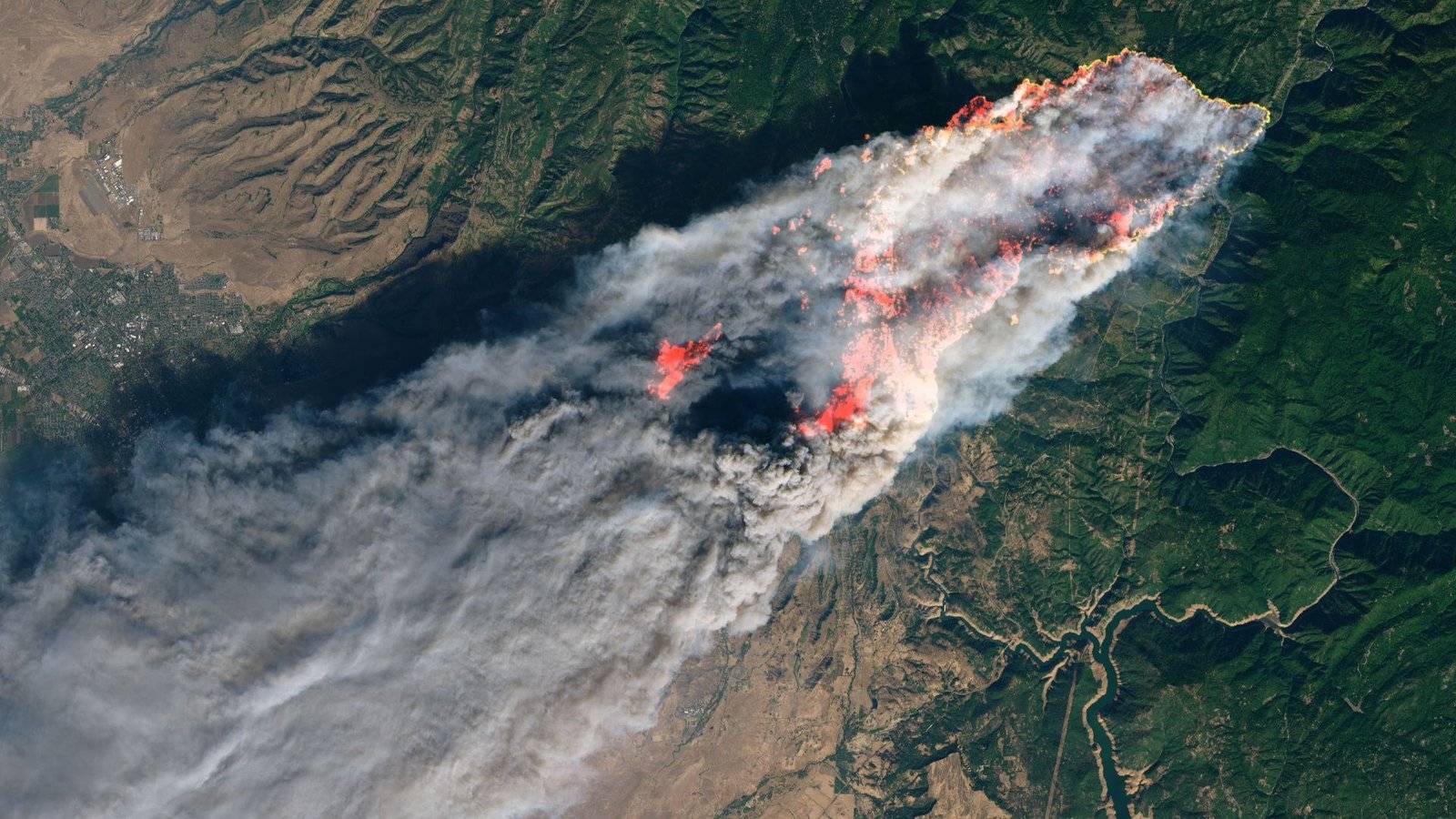
    When you think of air pollution from wildfires, you probably picture the thick plumes of smoke and ash that waft into the atmosphere during a blaze. And if you’ve lived in an area that’s been enveloped by these emissions, you know to stay inside or wear a mask when the light tints red and gets hazy.

    But this thick cloud isn’t the only component of wildfire smoke that carries a health risk. Now, new research based on satellite data helps quantify the impact of an “invisible” wildfire pollutant: ground-level ozone. It would appear the yearly human cost of this hidden consequence lies in the thousands.

    Over the past few decades, climate change — primarily driven by human activities like burning coal — has turned wildfire smoke from an occasional, regional-specific concern to a major source of air pollution in the U.S. Since the 1990s, the area burned by wildfires in the country each year has roughly doubled. This means the amount of pollution released by these fires is on the rise, too.


    You may like

    Researchers have therefore been scrambling to quantify what risk all that smoke poses for human health. So far, however, most of these efforts have focused on fine particulate matter, or PM2.5. This is made up of tiny bits of ash, dust, carbon or other material less than 2.5 microns across that get released into the air from fires or other sources, like industrial emissions. Scientists know that high PM2.5 exposure is hazardous to human health — it can exacerbate conditions like heart disease and asthma, and even damage lung tissue directly.

    But PM2.5 is not the only type of pollutant that fills the air during wildfires. The blazes generate a complex cocktail of compounds, including ground-level ozone, one of the main ingredients in smog. Like PM2.5, ozone can mess with people’s lungs and cardiovascular systems. But the two pollutants have very different pathways to formation. While fine particulate matter is made of charred bits flung directly into the atmosphere by wildfires, ozone forms after the fact, when nitrogen oxides and volatile organic compounds interact with light.

    “It’s what we call a secondary pollutant,” Minghao Qiu, an atmospheric scientist at Stony Brook University and co-author of the new study, told Space.com.

    While the health impacts of PM2.5 from wildfire smoke are pretty well-documented, fire-generated ozone has been overlooked. That’s a problem, Qiu says, because “high ozone days don’t necessarily coincide with high PM2.5 days.”

    Space

    To help determine the effects of smoke ozone on health, Qiu and his colleagues looked at nearly 20 years of satellite data, meteorological records and ozone measurements. Unlike fine particulate matter, ozone pollution is not visible to the naked eye, but scientists can detect it in the ultraviolet spectrum.

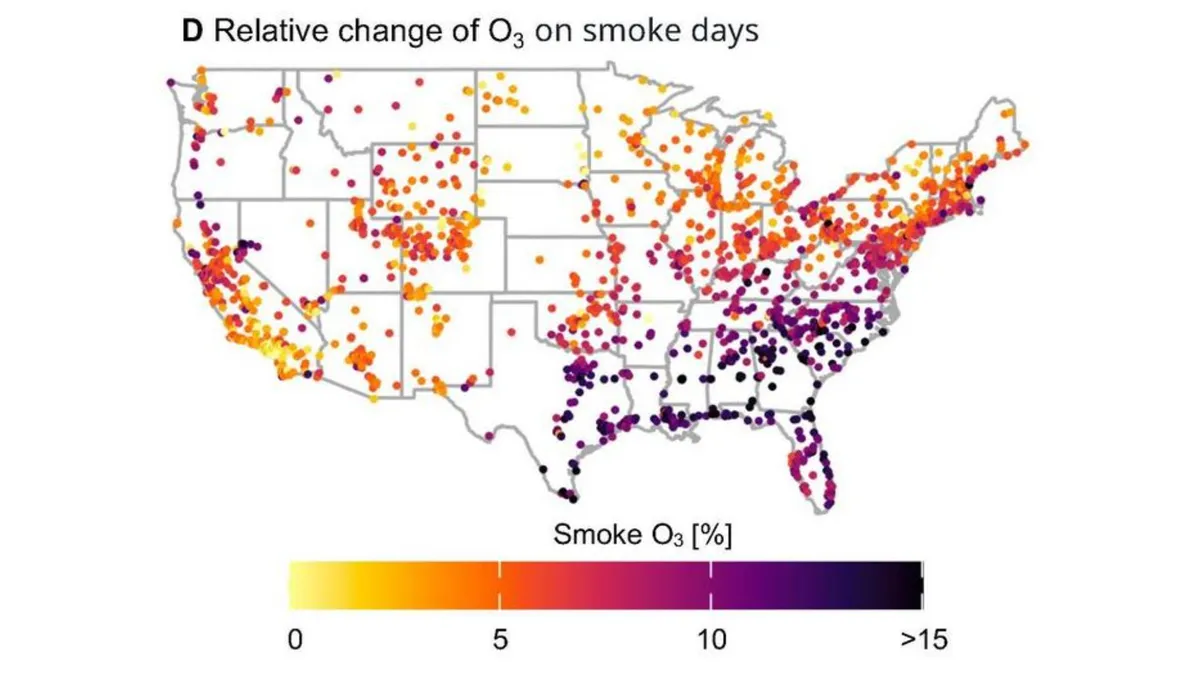
    The researchers found that certain regions of the U.S. were more likely to accumulate ozone from wildfires than others; states like Texas, Louisiana, Arkansas, Mississippi and Florida were at particular risk. They also estimated that wildfire-derived ozone was responsible for 2,045 excess deaths, on average, per year across the U.S. — nearly 16% of all deaths attributed to wildfire smoke.

    That number is also increasing. The estimated deaths from smoke ozone in 2006 alone was around 100; by 2023 it was close to 10,000.

    What to read next

    A diagram showing a map of the U.S. A bar at the bottom shows yellow (left) represents 0% ozone from smoke and purple (right) represents more than 15%. Purple dots are mostly toward southeast U.S.

    The surface O3 concentrations % increases on smoke days across the US. The relative change of O3 is calculated as the percentage change in the O3 content on smoke days relative to the baseline O3. (Image credit: Li et al., Sci. Adv. 12, eaec2903)

    This outcome appears to be undermining gains made from regulations around ozone emissions under the Clean Air Act. While overall ozone-related deaths in the U.S. have been trending downward for the last two decades, smoke ozone is starting to push those numbers back up.

    This study is a good start for establishing risk analysis for ozone, says Qiu, but there’s still a long way to go before researchers fully grasp the health impacts of wildfire smoke. For example, wildfires often release heavy metals like lead into the atmosphere, along with aromatic hydrocarbons and other pollutants. More research is needed to determine how these compounds affect mortality — and how they might compound with each other. “We don’t fully understand the impacts on health when you are exposed to all those chemicals together,” Qiu says. He and his colleagues are already working on follow-up studies.

    But future work may be hamstrung by federal funding cuts. Much of the data used in the new study was originally collected by satellites and monitoring stations operated by NASA and the National Oceanic and Atmospheric Administration (NOAA). Under the current Trump administration, NASA faces a proposed 47% cut to its science budget in 2027. NOAA faces a 26% reduction, focused largely on eliminating climate monitoring programs. Without these crucial projects, it will be much harder to disentangle the health costs of wildfire pollution, let alone predict future fire risk.

    The study was published on April 29 in the journal Science Advances.


    Source link

    Divya Sharma
    • Website

    Divya Sharma is a content writer at NewsPublicly.com, creating SEO-focused articles on travel, lifestyle, and digital trends.

    Related Posts

    SpaceX fuels up Starship V3 megarocket for 1st time ahead of crucial test flight (photos)

    May 12, 2026

    Blue Origin tests 1st moon lander ahead of lunar launch later this year (photo)

    May 12, 2026

    This is your best chance to spot the Milky Way’s core in May

    May 12, 2026
    Leave A Reply Cancel Reply

    Demo
    Top Posts

    “Inside Gemini Robotics 1.5: How Robots Learn to Reason & Act

    November 22, 202524 Views

    How US Tariffs Are Reshaping the Global Growth Landscape?

    November 21, 202518 Views

    Pakistani Journalist Laughing at Tejas Fighter Jet Crash at Dubai Airshow Sparks Massive Outrage Worldwide

    November 23, 202517 Views

    Vibe-Coding Boom: How Non-Coders Build Apps With AI Agents

    November 22, 202515 Views
    Don't Miss

    World Cup Power Rankings: Who are the front-runners with 30 days to go?

    May 12, 20261 Min Read0 Views

    With 30 days until the 2026 World Cup begins, our reporters ranked the top 15…

    93% of Electric Truck Owners Say They’re Not Going Back

    May 12, 2026

    After cops failed to catch hooligan bike riders, state asks locals for help

    May 12, 2026

    Scientists reversed biological age in older adults with a 4-week diet change

    May 12, 2026
    Stay In Touch
    • Facebook
    • Twitter
    • Instagram
    • YouTube
    • LinkedIn
    • WhatsApp

    Subscribe to Updates

    Get the latest creative news from SmartMag about art & design.

    Demo
    NEWSPUBLICLY
    Facebook X (Twitter) Instagram LinkedIn

    Home

    • About Us
    • Leadership & Certification
    • Advertise & Partner With Us
    • Pitch Your Story
    • Media Kit & Pricing
    • Career
    • FAQs

    Guidelines

    • Editorial & Submission
    • Partnership
    • Advertising & Sponsor
    • Intellectual Property Policy
    • Community & Comment
    • Security & Data Protection
    • Send Your Opinion

    Quick Links

    • Cookie Policy
    • Payment & Billing Terms
    • Refund & Cancellation
    • Copyright Policy
    • Complaint & Support
    • Sitemap
    • Contact Us

    Subscribe Us

    Get the latest news and updates!

    Copyright © 2026 Newspublicly (DIGITALIX COMMUNICATION). All Rights Reserved.
    • Privacy Policy
    • Terms of Use
    • Disclaimer