

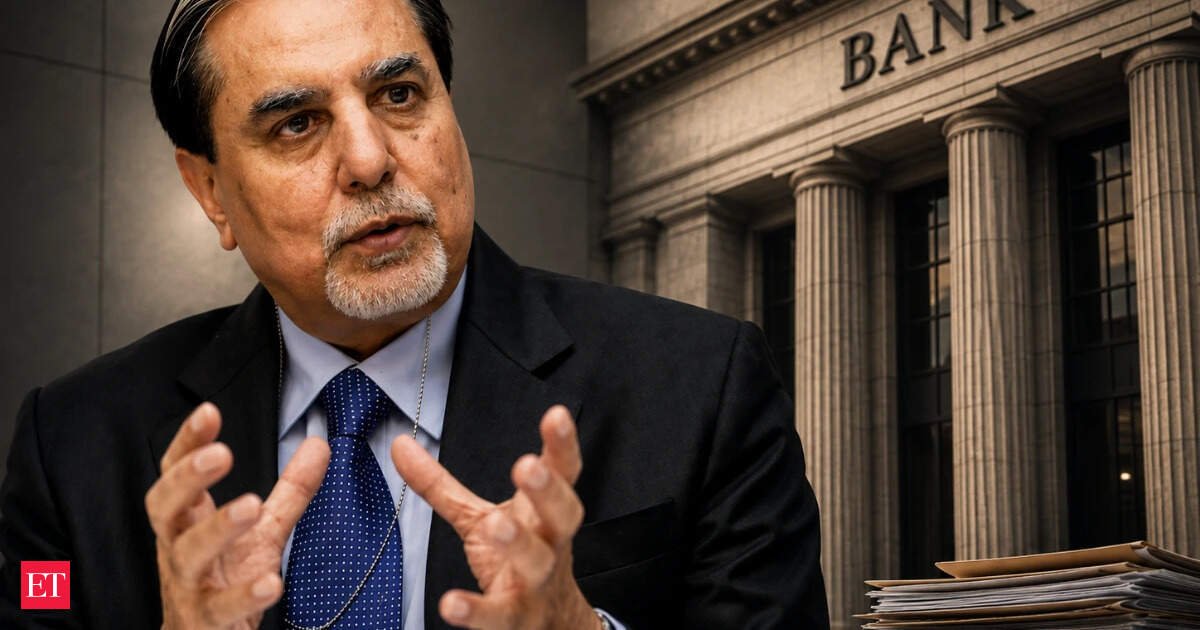
The order has drawn sharply different reactions: dissenting lenders call the payout unviable, government sources say the widely reported haircut figure is misleading, and Chandra himself disputes the size of the claim against him. Here’s how it played out.
What did the NCLT actually approve?
The Delhi bench of the tribunal approved the plan on Tuesday after a split verdict between two members was referred to a third, judicial member Nilesh Sharma, who cleared it under Section 114 of the Insolvency and Bankruptcy Code (IBC).
Also read: HDFC Bank, LIC Housing Finance to contest Zee resolution

The plan involves Rs 6.25 crore from Chandra personally as guarantor, plus about Rs 1,494 crore to be paid separately by the principal borrowing companies, according to a ET Bureau report. It was backed by creditors holding 80.8 per cent of the voting share. LIC Housing Finance (LICHFL), HDFC Bank, Axis Bank, Canara Bank, RBL Bank and Union Bank voted against it.
In his order, Sharma held that a Resolution Professional valuation showed Chandra’s personal estate was worth far less than what the plan offered, and that pushing him into bankruptcy instead would likely leave dissenting creditors worse off, not better.Why do officials say the ‘99.97% haircut’ figure is misleading?
Sources familiar with the tribunal’s order told PTI that the NCLT’s approval does not mean banks have written off 99.97 per cent of Rs 22,000 crore in loans. The Rs 22,006 crore figure, they said, represents claims admitted against Chandra in his capacity as a personal guarantor for loans taken by several Essel/Zee-linked companies, not debt he personally borrowed.
The sources said only about Rs 2,574 crore of the admitted claims relate to loans where Chandra’s guarantee was given at the time the loan was originally taken. Most of the other guarantees, they said, were furnished later as additional security.
The principal corporate borrowers remain liable for their debts, and creditors also retain the right to recover dues from those companies, their securities, and other available assets, independent of Chandra’s personal settlement.
Government sources echoed this in comments to ET Bureau as well, saying Chandra did not personally borrow Rs 22,000 crore, and that the reported haircut applies specifically to what can be recovered from him as guarantor, not to the broader corporate debt.
Why are lenders unhappy with the plan?
LICHFL, as a dissenting creditor, argued that against its admitted claims of about Rs 22,006 crore, the plan offered a mere Rs 6.25 crore to creditors, a proposal it called “unviable and unlawful.” HDFC Bank has said in a statement that it voted against the resolution and is exploring an appeal.
PTI’s sources said the low personal recovery was contested by creditors on another ground too. Historical net-worth certificates had shown Chandra’s net worth at about Rs 45,888 crore in 2017 and Rs 40,562 crore in 2018, compared with a currently disclosed net worth of around Rs 31.79 crore. Creditors sought deeper scrutiny of his assets over this decline, the sources said.
Also read: NCLT Subhash Chandra Case: Rs 22,000 crore is not bank loan write-off, sources on order
LICHFL and HDFC Bank are now preparing to challenge the ruling at the National Company Law Appellate Tribunal (NCLAT). LICHFL is also said to be planning to seek intervention from the National Housing Bank (NHB), according to people aware of the development cited by ET Bureau.
What has Chandra said in response?
Reacting to the criticism, Chandra said on Thursday that he “has not borrowed any money from any lender,” and that the claim raised specifically by the dissenting creditors, the objectors to the plan, is only Rs 3,992 crore, not Rs 22,000 crore.
Of this, he said Rs 620 crore has already been settled, and Rs 1,063 crore has been offered by the borrowing entities. He added that entities for which he provided guarantees have repaid Rs 43,000 crore to lenders to date, and that these entities would settle any remaining dues.
Does this case reflect how insolvency recoveries usually work?
Sources cited by PTI said the Chandra case is an exceptional personal-guarantor resolution and is not representative of how corporate insolvency recoveries typically work under the IBC. They pointed to broader data: creditors have recovered about Rs 4.32 lakh crore through approved resolution plans up to March 2026, amounting to 116.85 per cent of liquidation value and 94.56 per cent of fair value.
Separately, more than 32,000 cases involving assets worth about Rs 14 lakh crore have been settled even before formal admission into insolvency proceedings, which the sources said reflects the deterrent effect of the law.
Also read: Subhash Chandra clears air on Rs 22,000 crore personal insolvency claims against him
The sources also cited a fall in the banking system’s net non-performing assets, from 5.94 per cent in March 2018 to 0.48 per cent in September 2025, with the absolute figure dropping from about Rs 5.2 lakh crore to Rs 94,000 crore in the same period.
Citing an IIM Ahmedabad study, the sources added that companies resolved through insolvency have recorded 76 per cent growth in sales, 50 per cent growth in total assets, 50 per cent growth in employee expenses, and 130 per cent growth in capital expenditure.
What happens next?
The case now returns to the original division bench of the NCLT, which will pass a formal order reflecting the majority view, as required under Section 419(5) of the Companies Act, 2013. LICHFL and HDFC Bank are expected to move the NCLAT, while creditors’ claims against the underlying Essel/Zee companies and their assets remain separate and ongoing.
With inputs from PTI