

2 min readNew DelhiUpdated: Aug 21, 2026 07:20 PM IST
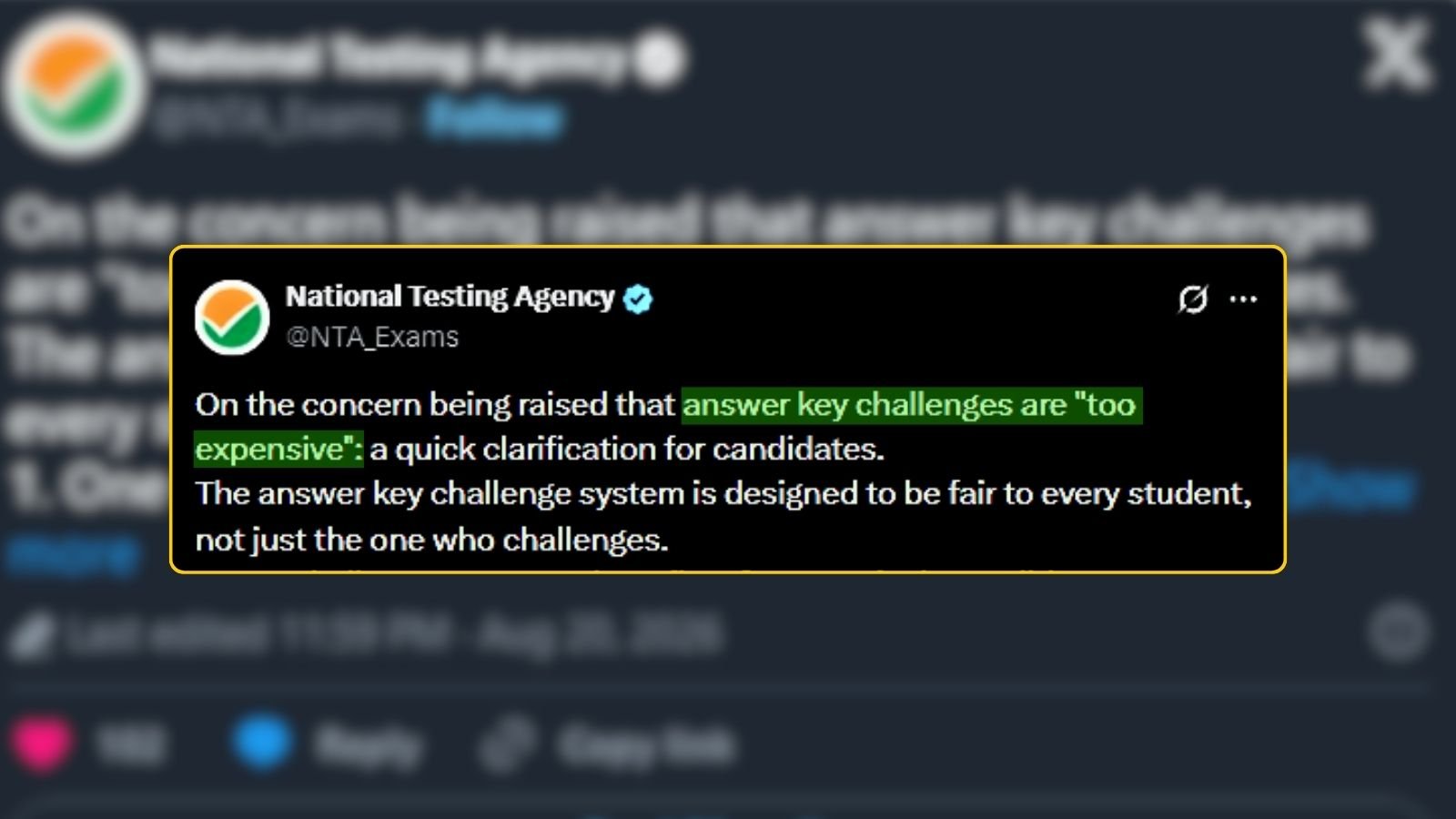
The National Testing Agency (NTA) has clarified concerns raised by candidates over the Rs 200 fee charged for challenging an answer key, saying the fee is “intended to discourage frivolous challenges”, indicating that can delay the result preparation process. The agency said the answer key challenge mechanism is designed to ensure that a valid correction benefits all candidates who appeared for the examination, rather than only the candidate who raised the objection.
NTA in a late night post on Thursday explained that if a candidate challenges a question and the subject experts uphold the objection, the revised answer key is applied to all candidates who appeared for that examination. This means a single valid challenge can lead to a correction in the evaluation of lakhs of candidates.

“Fee is refunded if you’re right. It exists to discourage frivolous challenges, not to profit.”
Addressing concerns over the cost of raising objections, the agency said the Rs 200 per question fee is refunded when the challenge is found to be correct and is upheld by the experts. NTA said the fee is therefore not intended to act as a charge for genuine objections, but as a measure to prevent candidates from filing claims without sufficient basis.
Also Read | UGC NET September retest: What’s the hidden cost of starting over?
In its clarification, NTA said the system is designed to be fair to every student, including those who do not personally raise an objection. The agency noted that a genuine challenge can correct the answer key for all candidates, making the objection process an important part of ensuring accuracy in examination results.
Also Read | ‘Faced with big mafia that tries to get them compromised’: NTA official on cutting experts’ term
The clarification comes as candidates have raised concerns about the financial burden of challenging multiple questions, particularly in examinations where several answer keys are open for objections. NTA has maintained that the existing mechanism allows candidates to flag errors while ensuring that only substantiated challenges are taken up for expert review.