

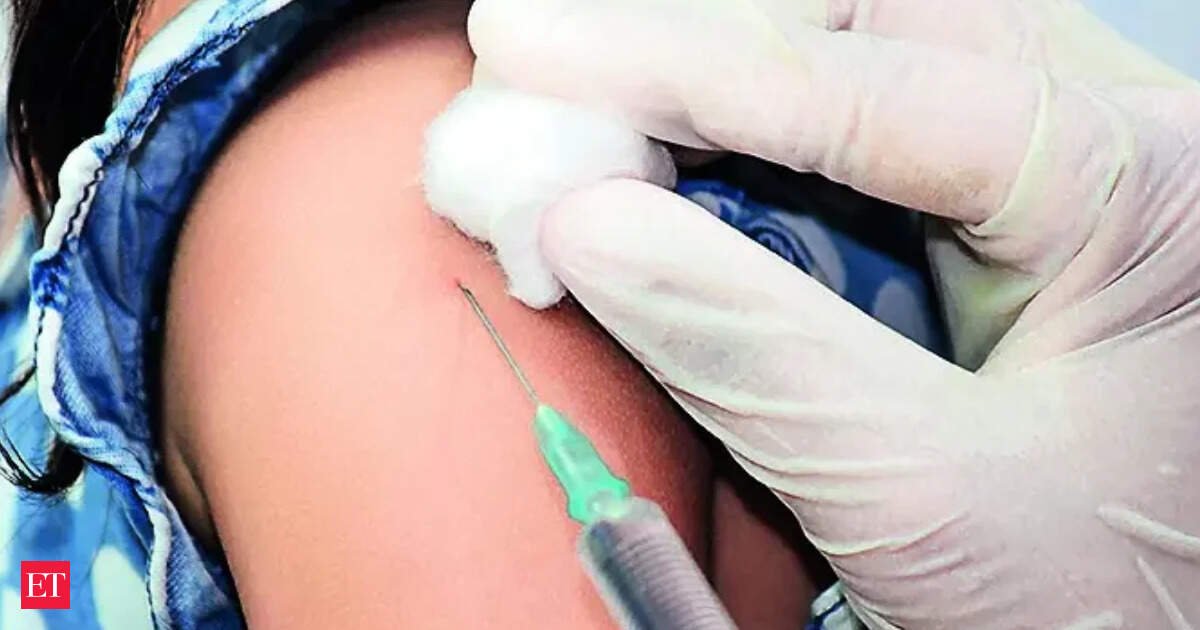
Sales are nearly three times higher than the same period last year and have more than doubled from July, leading to supply constraints in several cities, Manisha Mishra, vice-president and lead, specialty pharma, at Tata 1mg, told ET.
Tata 1mg, Apollo Homecare and PharmEasy have all rolled out at-home flu vaccination service, allowing users to book and receive flu shots from trained nurses at home.
Also read: DRL, Emcure get approval to make breakthrough HIV drug
“There is significant demand for flu shots this year, driven in part by the recently updated 2026-27 flu vaccine which has just reached the market,” Mishra said.

The vaccine is updated as per WHO recommendations to cover new and evolving influenza strains. This is critical as flu viruses change their form every year, experts said.
The rush comes as H1N1 cases this monsoon season have recorded a more than six-fold increase compared to previous years, prompting both individuals and corporates to act.Health experts such as Anurag Agrawal, dean of biosciences and health research at Ashoka University, recommend annual flu vaccination, particularly for high-risk groups. “The usual protection measures like masks in crowded spaces, respiratory hygiene, avoiding overcrowding, ventilation and washing hands will also help,” he said.
Mishra of Tata 1mg said demand across all major cities is roughly three times higher than the same time last year. “Both corporates and individuals are actively seeking flu shots, likely driven by higher awareness among doctors and patients alike, as well as elevated viral spread in many parts of the country,” she said.
The surge has led to supply constraints in many locations, she said.
There is also a sharp rise in demand for rapid molecular diagnostics, with testing requests coming in not just from metropolitan cities but increasingly from tier-2 and tier-3 locations.
Kuldeep Singh Sachdeva, president and chief medical officer at Molbio Diagnostics, said the company is seeing a gradual but clear rise in orders for influenza testing solutions covering influenza A, influenza B, and subtypes such as H3.
“This trend is not limited only to North India. In fact, the demand is picking up across other parts of the country and across different levels of the healthcare ecosystem,” he said.
The challenge this monsoon is not just the volume of sick patients but the difficulty of telling one illness from another.
H1N1, dengue, typhoid, and seasonal flu all present with overlapping symptoms including fever, cough, body ache and fatigue. Without a confirmed diagnosis, doctors are left making treatment decisions based on clinical suspicion alone.
“When testing can be completed within the same consultation window, physicians can quickly determine the appropriate course of action, reduce patient anxiety and provide timely guidance,” Sachdeva said.
India Council of Medical Research (ICMR) director general Rajiv Bahl said there is no cause for panic.
The seasonal influenza is generally mild, while certain individuals have a higher risk of developing complications including elderly people, young children, individuals with underlying medical conditions or co-morbidities, and people with compromised immunity.