

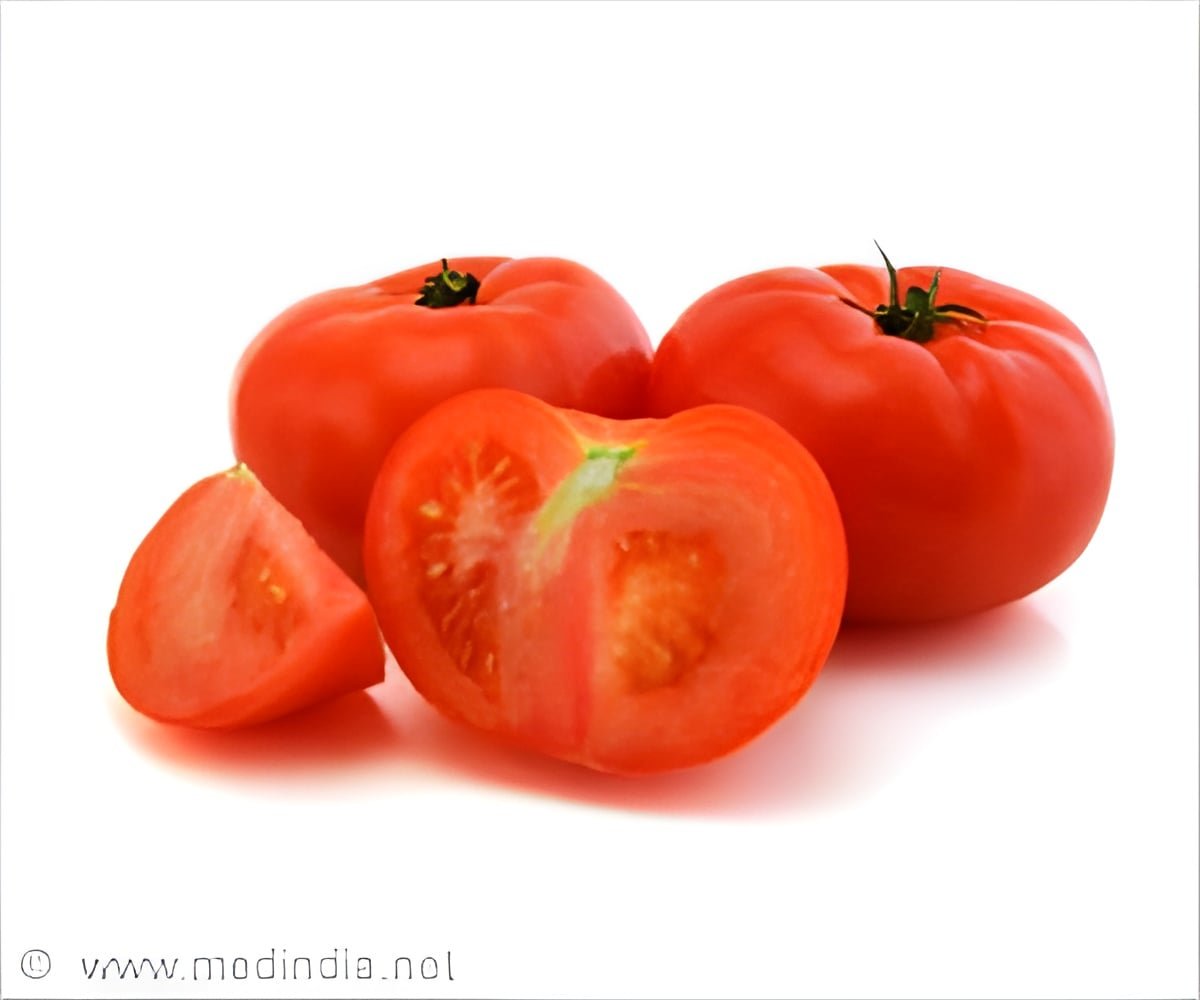
New research explores how phytoene from tomatoes affects liver fat metabolism and what the findings could mean for future fatty liver research.
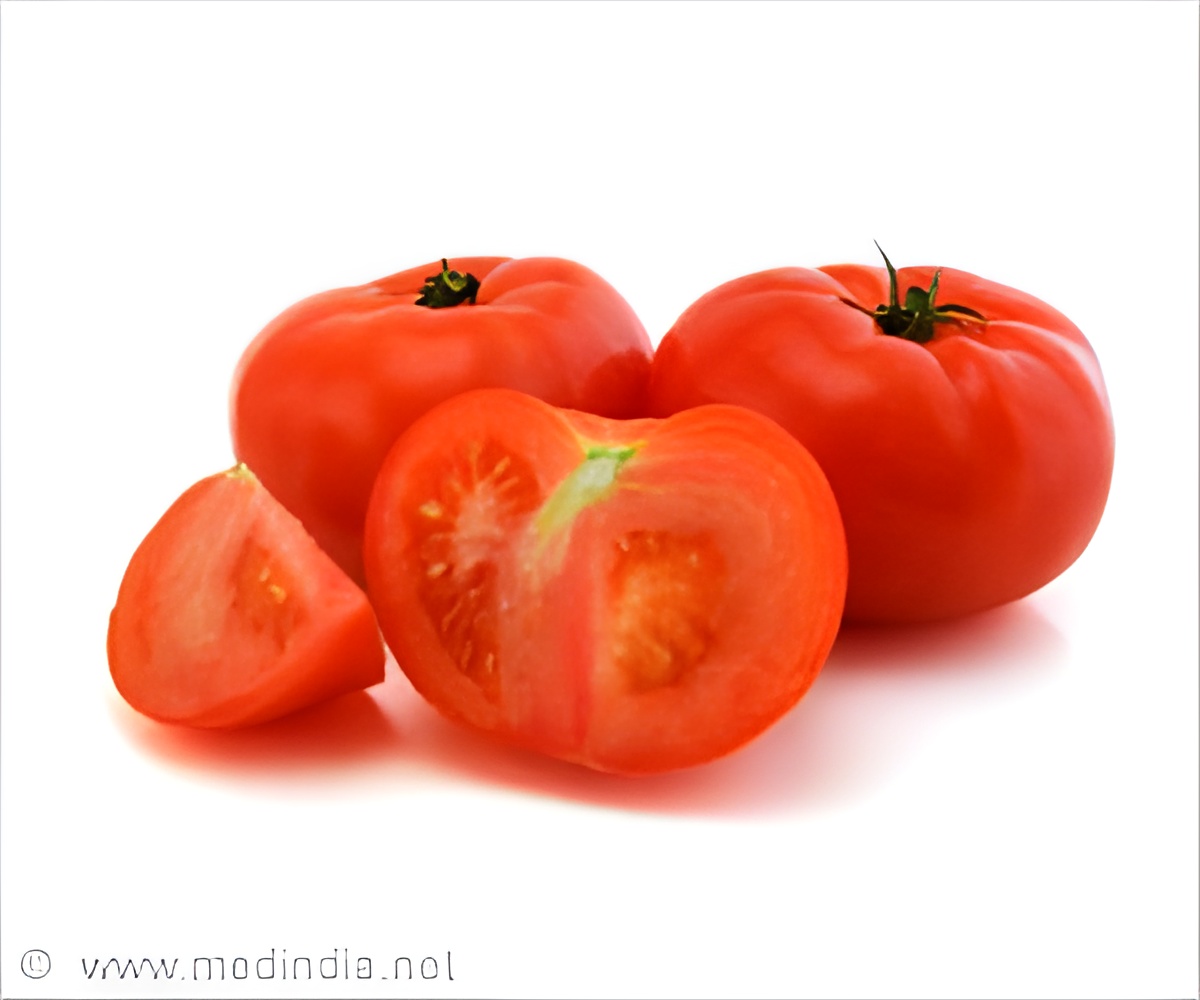
- Phytoene in tomatoes is a colorless compound and a natural precursor of lycopene
- Liver fat metabolism may be influenced by phytoene through pathways involved in fatty acid breakdown
- Fatty liver disease affects more than 1 billion people worldwide, highlighting the need for new prevention strategies
- Tomatoes are not a proven treatment for fatty liver, and human research is still needed to confirm phytoene’s benefits
A familiar tomato compound is attracting scientific attention for a reason that goes beyond the fruit’s red color. In a controlled 24-week animal study, researchers found that 15-cis-phytoene, a colorless compound found in tomatoes, reduced the severity of diet-induced metabolic dysfunction-associated steatotic liver disease (MASLD).
The finding suggests that phytoene may influence how the liver handles fat, but it does not show that eating tomatoes can prevent or treat fatty liver disease in humans (1✔ ✔Trusted Source
Phytoene, a Precursor of Lycopene in Tomatoes, Protects Against Metabolic Dysfunction-Associated Steatotic Liver Disease in Mice
).
This was an animal study, not a human clinical trial. Human studies are needed to confirm whether phytoene has similar effects on fatty liver disease in people.
The research is notable because tomatoes contain several bioactive compounds. Lycopene has received much of the attention, but phytoene is a precursor of lycopene and may also have biological effects of its own.
MASLD is a form of fatty liver disease associated with metabolic dysfunction. It involves excess fat accumulation in the liver and can, in some people, progress to liver inflammation and more serious liver damage. This has increased interest in dietary compounds that may influence the processes involved in liver fat metabolism.
Advertisement
What Is Phytoene in Tomatoes?
Phytoene is a naturally occurring carotenoid found in tomatoes. Unlike lycopene, it is colorless and does not give ripe tomatoes their familiar red appearance.
Phytoene is also a precursor of lycopene. A precursor is a substance that can be used to produce another compound. In plants, phytoene is part of the pathway that produces lycopene and other carotenoids.
The research examined 15-cis-phytoene rather than tomatoes as a whole food. This distinction is important because a specific compound studied under controlled conditions cannot automatically be assumed to have the same effect when consumed as part of an ordinary human diet.
Advertisement
What Did the Study Find About Fatty Liver?
The researchers fed mice a high-refined-carbohydrate diet for 24 weeks. Some animals received 15-cis-phytoene supplementation, while comparison animals did not. The researchers then assessed liver health, metabolism, phytoene levels and gut microbiota.
Mice receiving phytoene developed less severe diet-induced MASLD than those that did not receive the compound.
The researchers also studied animals genetically deficient in the carotenoid-cleaving enzymes BCO1 and BCO2. These animals accumulated substantially more phytoene in the liver and blood but did not show the same protective response against diet-induced MASLD.
This finding suggests that the way the body processes phytoene may be important to its biological effects.
The researchers also examined the gut microbiota. Their findings did not indicate that changes in gut microbial composition were the main explanation for the liver effect observed after phytoene supplementation.
Advertisement
How Could Phytoene Affect Liver Fat?
The researchers examined biological pathways involved in the liver’s handling of fatty acids.
Phytoene supplementation was associated with changes involving the SIRT1-PGC1α-PPARα axis and the AMPK/ACC pathway. These systems are involved in regulating energy use and fatty acid metabolism. The researchers also observed changes in genes involved in fatty acid oxidation, the process by which fatty acids are broken down for energy.
These findings offer a possible biological explanation for the lower severity of diet-induced MASLD observed after phytoene supplementation.
The BCO1 and BCO2 experiments provide another clue. Because animals lacking these enzymes accumulated phytoene but did not show the same protection, the researchers proposed that metabolites produced when phytoene is processed may contribute to its effects.
However, this does not establish that phytoene itself simply “burns liver fat.” The specific metabolites responsible for the observed effects have not been established in humans.
Phytoene and Fatty Liver: What the Evidence Shows
| Study finding | What it means |
|---|---|
| 15-cis-phytoene was tested | The experiment investigated a specific tomato compound rather than whole tomatoes (1✔ ✔Trusted Source Phytoene, a Precursor of Lycopene in Tomatoes, Protects Against Metabolic Dysfunction-Associated Steatotic Liver Disease in Mice ) |
| 24-week experiment | The findings came from a controlled animal study lasting 24 weeks |
| Reduced diet-induced MASLD | Phytoene was associated with less severe fatty liver disease in the study animals |
| SIRT1, PGC1α and PPARα changes | The findings point to pathways involved in liver fat and energy metabolism |
| AMPK and ACC changes | The findings were associated with regulation of fatty acid metabolism |
| BCO1/BCO2-deficient animals did not show the same protection | The finding suggests that phytoene metabolism may influence its biological activity |
| Gut microbiota did not explain the observed effect | The researchers did not identify gut microbial changes as the main mechanism behind the liver effect |
Can Eating Tomatoes Treat Fatty Liver?
The study does not provide evidence to make that claim.
The researchers did not conduct a human clinical trial in which people with fatty liver ate tomatoes and then had their liver fat measured. The experiment was conducted in animals and involved phytoene supplementation.
The researchers estimated that the supplementation used in the experiment corresponded approximately to a human intake of three to four medium-sized raw tomatoes or 100 grams of tomato paste per day. This comparison was used to relate the experimental dose to possible human dietary exposure. It was not a treatment recommendation.
This distinction is especially important. A whole tomato contains many nutrients and bioactive compounds, while the experiment was designed to examine the effect of one particular compound.
Therefore, people should not interpret the study as evidence that eating a certain number of tomatoes will reverse liver fat. There is also not enough human evidence to recommend phytoene supplements for fatty liver disease.
What Does This Mean for People With Fatty Liver?
For the general public, the finding should be viewed as an early research lead rather than a new treatment.
Tomatoes can be included in a varied and balanced diet, but no single food should be expected to prevent or reverse a complex metabolic condition by itself.
People who have been diagnosed with fatty liver disease should continue to follow advice from their healthcare professional. They should not replace medical assessment or recommended treatment with tomatoes or a phytoene supplement based on this animal study.
The findings raise important questions for future research. Scientists need to determine whether phytoene produces similar effects in people, whether normal dietary intake can provide meaningful exposure, and which compounds produced during phytoene metabolism are responsible for the observed effects.
The researchers also observed differences in phytoene accumulation between male and female animals. Whether similar differences occur in humans or affect the response to phytoene remains unknown.
What Comes Next for Tomato Phytoene Research?
The strongest conclusion from the research is not that tomatoes are a treatment for fatty liver. Instead, it identifies phytoene as a compound that may influence biological pathways involved in liver fat metabolism.
The study provides preclinical evidence that 15-cis-phytoene can reduce diet-induced MASLD and identifies metabolic pathways that may contribute to the effect.
But several steps remain before the finding can have clinical significance. Human studies are needed to determine whether the same biological effects occur in people and whether phytoene obtained from normal foods can produce a meaningful change in liver health.
For now, the practical message is straightforward: tomatoes can remain part of a balanced diet, but they should not be presented as a stand-alone treatment for fatty liver. The research is valuable because it identifies a lesser-known tomato compound for further investigation while keeping the boundary between promising preclinical research and proven human treatment clear.
An everyday food can give scientists new clues about liver health, while human research will determine whether those clues can become useful for patients.
Frequently Asked Questions
Q: What is phytoene in tomatoes?
A: Phytoene is a naturally occurring, colorless carotenoid found in tomatoes. It is a precursor of lycopene and is involved in the pathway through which plants produce carotenoids.
Q: Can eating tomatoes treat fatty liver?
A: No. The current study does not establish that eating tomatoes can treat fatty liver disease. It tested 15-cis-phytoene supplementation in mice rather than whole tomatoes in humans.
Q: What did the new phytoene study find?
A: The study found that 15-cis-phytoene reduced the severity of diet-induced MASLD in normal mice during a 24-week experiment. The researchers also observed changes in pathways involved in liver fat metabolism.
Q: How might phytoene affect fatty liver?
A: The researchers found changes in biological pathways involved in fatty acid metabolism and oxidation, including pathways involving SIRT1, PGC1α, PPARα, AMPK and ACC.
Q: Should I take phytoene supplements for fatty liver?
A: There is not enough human evidence to recommend phytoene supplements as a treatment for fatty liver disease. The current findings are from preclinical animal research.
Reference:
- Phytoene, a Precursor of Lycopene in Tomatoes, Protects Against Metabolic Dysfunction-Associated Steatotic Liver Disease in Mice – (https://onlinelibrary.wiley.com/doi/10.1002/mnfr.70596)
Source-Medindia