

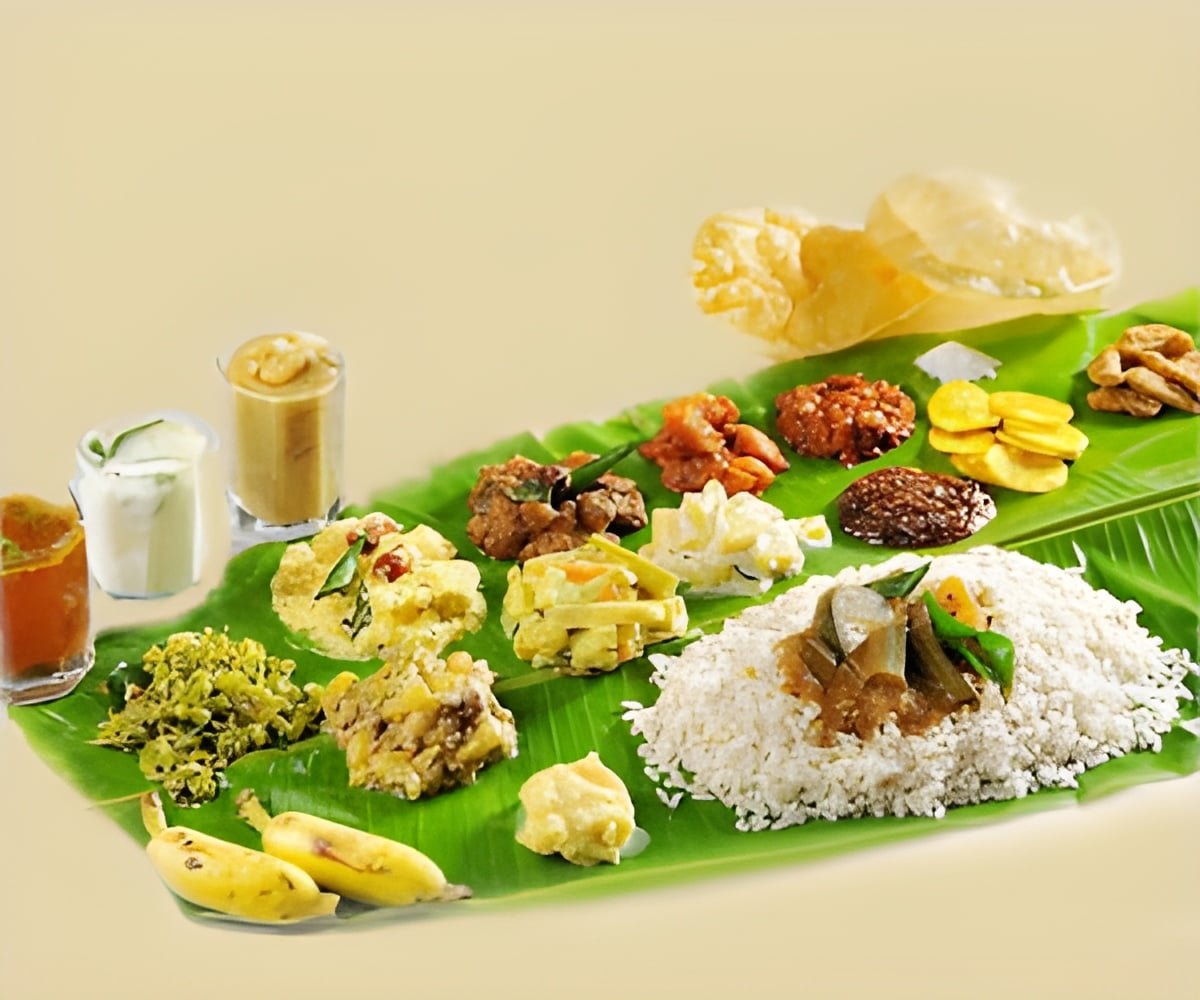
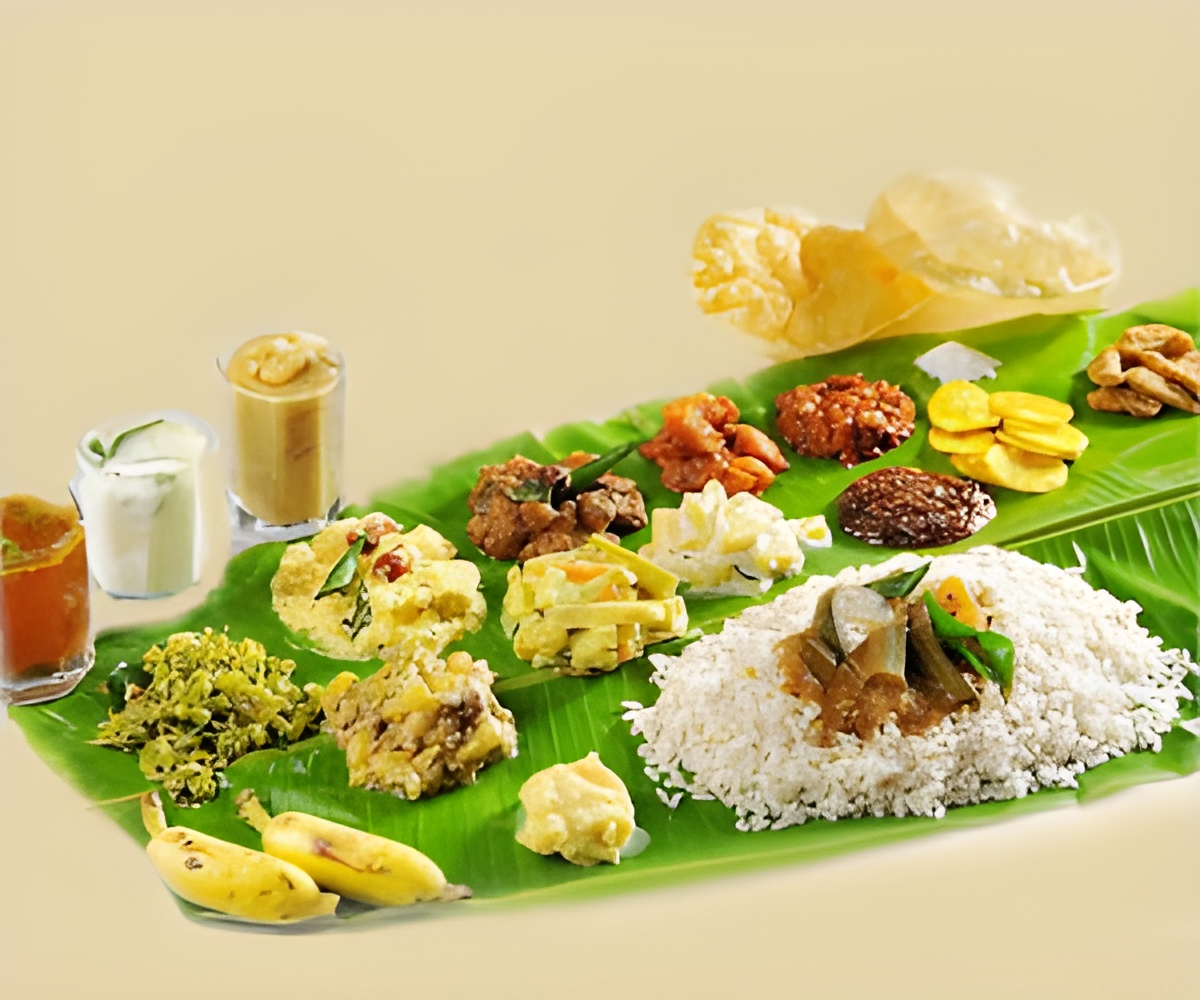
More than a festive feast, Onam Sadya brings protein, fiber, vegetables and fermented foods together on one banana leaf.
Highlights:
- Onam Sadya offers remarkable dietary diversity through vegetables, pulses, rice, fermented foods, fruits, and traditional accompaniments
- Fried snacks, pickles, ghee, and multiple payasams can add substantial calories, sugar, fat, and sodium, so portions matter
- The healthiest way to enjoy Sadya is to embrace its variety while practising moderation rather than labelling every dish as medicinal
There is something magical about an Onam Sadya that begins long before the first spoonful reaches your plate. A banana leaf arrives, dishes appear one after another, and suddenly lunch becomes an experience. But beneath the colours, aromas, crunch, sweetness, and generous servings lies an interesting nutritional story. Onam Sadya brings several food groups together, although not every dish should be considered automatically healthy.
The important distinction is this: a Sadya can be nutritionally diverse without making every individual dish a health food. Pulses contribute protein and fiber, vegetables provide micronutrients and fiber, while fermented dairy foods add variety. Rice supplies carbohydrates for energy, whereas pickles, chips, papadam, ghee, and payasam add considerable salt, fat, or sugar. That combination makes portion size and balance just as important as tradition.
Advertisement
Is Onam Sadya Healthy for You?
A traditional Sadya contains many of the components associated with a varied and balanced eating pattern. The meal commonly combines rice, lentils, vegetables, legumes, fruits, fermented dairy, coconut, spices, and traditional preparations. This diversity matters because different foods contribute different nutrients rather than relying upon one ingredient alone. WHO similarly recommends diets built around vegetables, fruits, legumes, whole grains, and diverse minimally processed foods (1).
The catch is that Sadya is also a festive meal rather than an everyday diet plan. Banana chips, sarkara varatti, papadam, ghee, pickles, and multiple payasams can substantially increase calories, sodium, sugar, and fat. Therefore, calling every bite health-boosting would oversimplify what is happening on the banana leaf. The better takeaway is that Sadya demonstrates how nutritional variety can coexist beautifully with celebration.
Advertisement
Which Onam Sadya Foods Provide Protein and Fiber?
Look first at parippu, kadala curry, parippu vada, and other pulse-based preparations served during Sadya. Lentils and chickpeas are valuable sources of plant protein and dietary fiber, making them an important nutritional counterpoint to rice. Fiber supports digestive health and can contribute to fullness when included regularly within a balanced diet (2). Legumes such as lentils and beans are important sources of protein, fiber, and other nutrients (3).
Then come the vegetables, including avial, erissery, beans thoran, okra preparations, and pachadis. A meal containing several vegetables naturally brings greater diversity of vitamins, minerals, fiber, and plant compounds (4). Red rice can add another source of fiber compared with more refined grain choices, depending on how it is processed and prepared. The variety of vegetables may be one of Sadya’s strongest nutritional features, rather than any single superstar ingredient.
Advertisement
Do Buttermilk and Curd Make Onam Sadya Gut Friendly?
Curd, buttermilk, kalan, and yogurt-based pachadis bring fermented dairy into the traditional meal. Fermented foods can contribute beneficial microorganisms, although their effects depend upon the specific food, preparation, and microorganisms present (5). It would therefore be too broad to claim that every yogurt-based Sadya preparation automatically improves gut health. Still, these foods add nutritional diversity and can provide protein, calcium, and other nutrients.
Inji puli, curry leaves, spices, pickles, and other strongly flavoured accompaniments also contribute to Sadya’s sensory complexity. Some ingredients have traditional associations with digestion, but traditional use does not automatically prove a specific medical benefit. Food traditions can offer useful nutritional patterns without needing every ingredient to become a remedy. That distinction helps preserve both cultural meaning and responsible health journalism.
Are Payasam, Banana Chips and Ghee Healthy?
This is where the banana leaf tells a more complicated story. Payasam, sarkara varatti, banana chips, papadam, and generous ghee servings are energy-dense foods designed for celebration. They can absolutely belong in a festive meal, but their nutritional value should not be exaggerated because they contain traditional ingredients. Healthy eating depends on overall balance, moderation, and portion size, not simply whether a food is homemade.
Ghee deserves a similar perspective because traditional diets often give it a special place. Ghee provides energy and fat, but it is also a source of saturated fat, which should be consumed in moderation. WHO recommends limiting saturated fat while favouring healthier unsaturated fat sources where possible (6). The same principle applies to fried snacks, sugary desserts, and salty accompaniments, regardless of how festive they feel.
What Nutrition Science Says about the Onam Sadya
There is no evidence that every Sadya dish independently boosts health, and the supplied material does not identify a clinical trial testing the complete meal. However, established nutrition guidance supports several principles naturally represented by the Sadya. Variety, legumes, vegetables, whole grains, and moderation are consistently important components of healthy dietary patterns. This gives the traditional feast nutritional strengths without requiring exaggerated health claims.
There is another important lesson hiding beneath the feast. Traditional meals often combine several food groups within one sitting, potentially making dietary diversity easier to achieve. WHO notes that healthy diets should provide adequacy, balance, moderation, and diversity according to individual needs (1). Sadya fits the diversity principle beautifully, but its richer components remind us that moderation still matters.
Tips to Enjoy Your Onam Sadya Meal Guilt-free
You do not need to turn Onam lunch into a calorie-counting exercise to eat sensibly. Start by enjoying the vegetables, dal, legumes, rice, and fermented foods that give the meal its remarkable diversity. Take smaller portions of fried snacks, pickles, ghee, and desserts, especially if several varieties are being served together. If you have diabetes, hypertension, kidney disease, or another medical condition, individual dietary needs may require additional adjustments.
Most importantly, do not judge a traditional feast by whether every ingredient qualifies as a modern superfood. The real nutritional strength of Sadya lies in its diversity, not perfection. It brings vegetables, pulses, grains, fermented foods, fruits, spices, and celebratory foods together around one communal meal. Perhaps that is the most beautiful lesson of Onam: health and pleasure do not always need to sit at separate tables.
Frequently Asked Questions
Is Onam Sadya healthy?
Onam Sadya can be nutritionally diverse, particularly because it combines vegetables, pulses, rice, fermented foods, and fruits.
Which Sadya dishes are rich in protein?
Parippu, kadala curry, parippu vada, and other pulse-based dishes provide useful amounts of plant protein.
Does Onam Sadya contain fiber?
Yes, vegetables, legumes, pulses, red rice, and some fruit-based preparations contribute dietary fiber.
Are banana chips and payasam healthy?
They can be enjoyed during celebrations, but their calorie, sugar, fat, or sodium content makes moderation important.
Can people with diabetes eat Onam Sadya?
People with diabetes can often enjoy festive meals with appropriate portions, but individual dietary needs should guide choices.
References:
- Healthy diet
(https://www.who.int/news-room/fact-sheets/detail/healthy-diet) - The Role of Dietary Fiber in Health Promotion and Disease Prevention: A Practical Guide for Clinicians
(Daley SF, Shreenath AP. The Role of Dietary Fiber in Health Promotion and Disease Prevention: A Practical Guide for Clinicians. [Updated 2025 Dec 1]. In: StatPearls [Internet]. Treasure Island (FL): StatPearls Publishing; 2026 Jan-. Available from: https://www.ncbi.nlm.nih.gov/books/NBK559033/) - Sustaining Protein Nutrition Through Plant-Based Foods
(Langyan S, Yadava P, Khan FN, Dar ZA, Singh R, Kumar A. Sustaining Protein Nutrition Through Plant-Based Foods. Front Nutr. 2022 Jan 18;8:772573. doi: 10.3389/fnut.2021.772573. PMID: 35118103; PMCID: PMC8804093.) - Health-promoting components of fruits and vegetables in the diet
(Liu RH. Health-promoting components of fruits and vegetables in the diet. Adv Nutr. 2013 May 1;4(3):384S-92S. doi: 10.3945/an.112.003517. PMID: 23674808; PMCID: PMC3650511.) - Fermented Foods, Health and the Gut Microbiome
(Leeuwendaal NK, Stanton C, O’Toole PW, Beresford TP. Fermented Foods, Health and the Gut Microbiome. Nutrients. 2022 Apr 6;14(7):1527. doi: 10.3390/nu14071527. PMID: 35406140; PMCID: PMC9003261.) - WHO updates guidelines on fats and carbohydrates
(https://www.who.int/news/item/17-07-2023-who-updates-guidelines-on-fats-and-carbohydrates)
Source-Medindia