

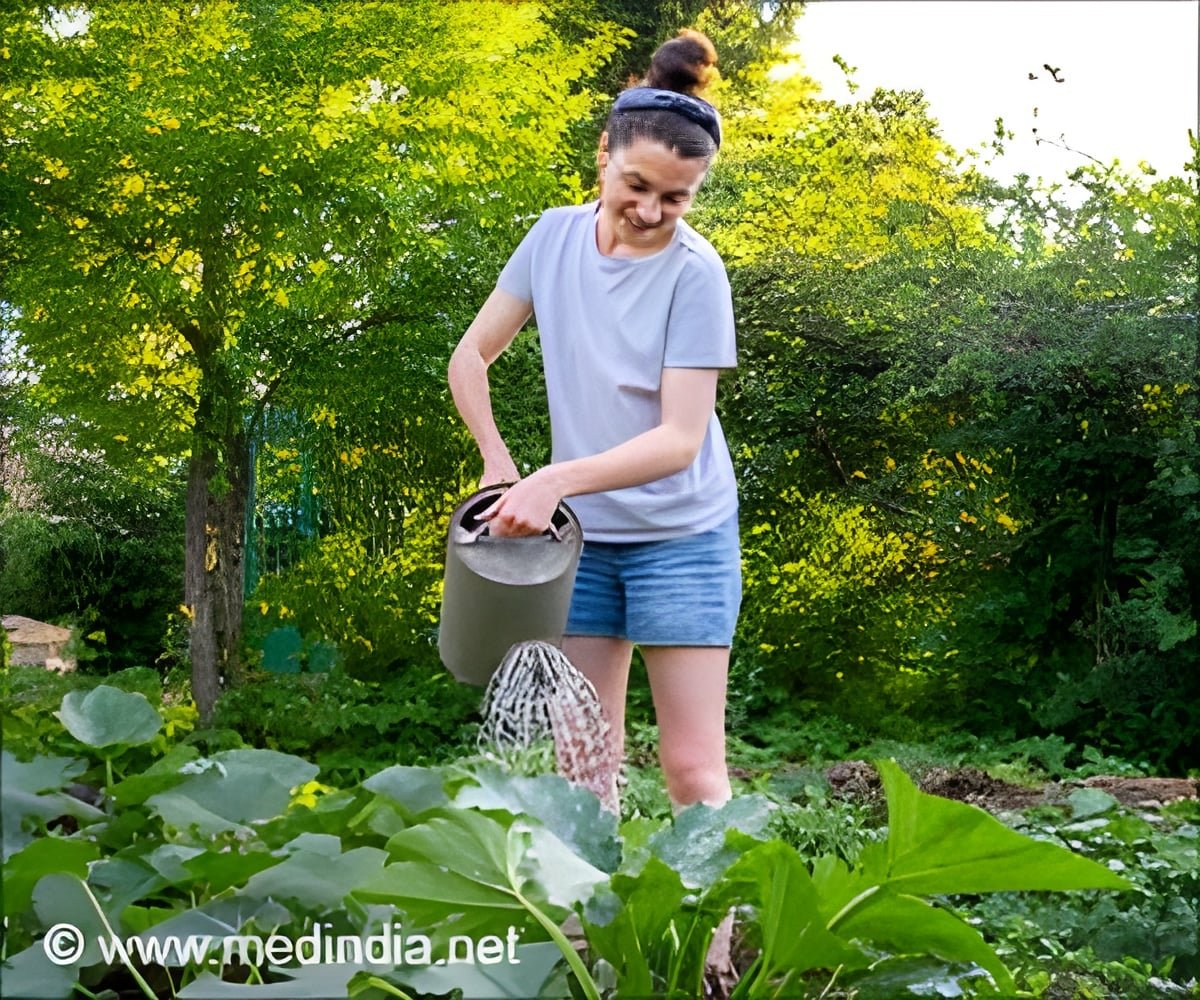
A home garden may offer more than fresh produce. Greater garden exposure was linked to a lower risk of type 2 diabetes in a large study.
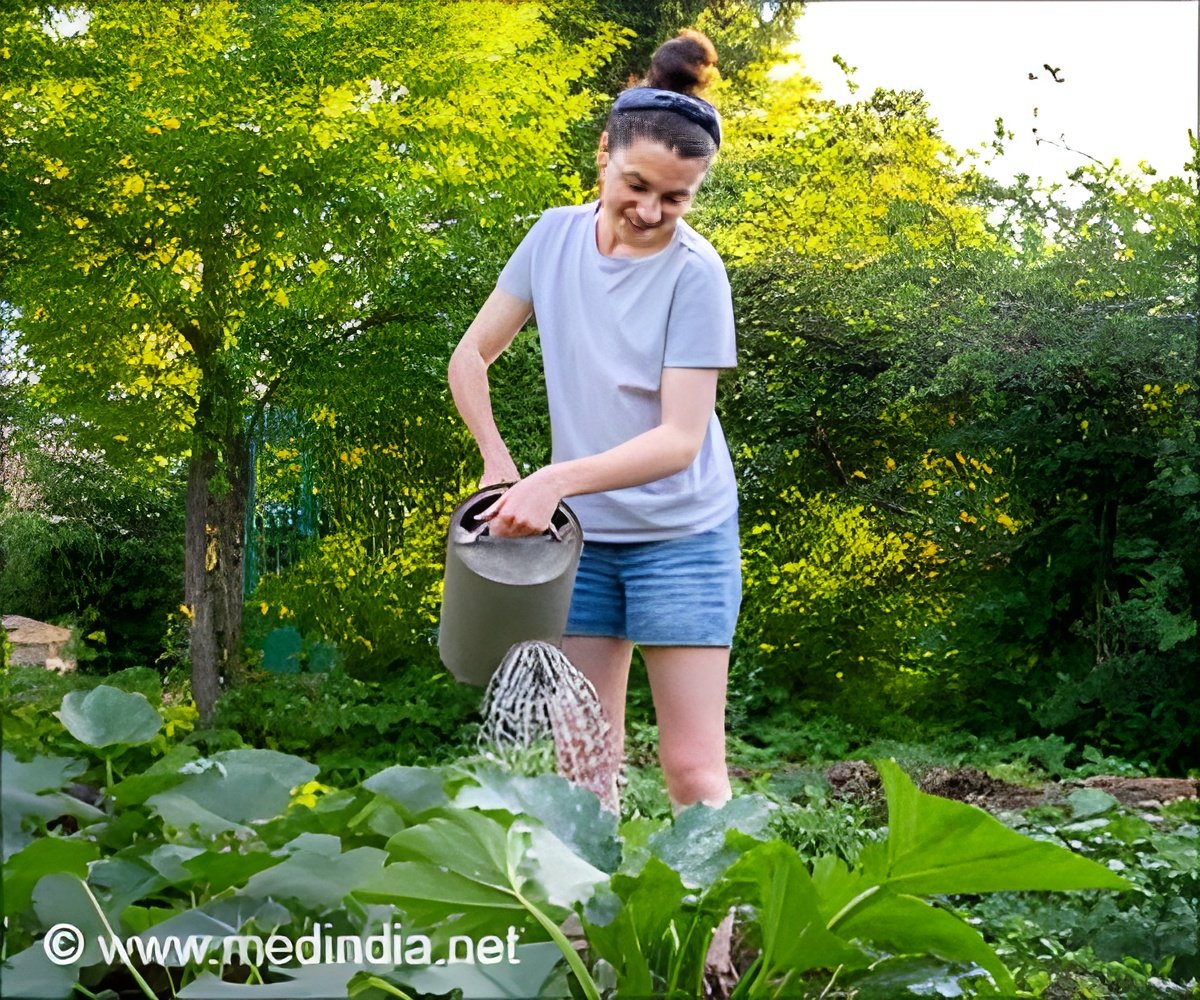
- Home garden exposure was linked to a 6.8% lower risk of type 2 diabetes
- Three or more nearby parks were linked to a 5.7% lower type 2 diabetes risk
- Gardening may support diabetes prevention through physical activity, healthier food and outdoor time
A garden may do more than beautify your home. A new University of Queensland study found that people with greater exposure to private residential gardens had a 6.8% lower risk of developing type 2 diabetes, while living near several parks was linked to a 5.7% lower risk.
The study, published in BMC Public Health, suggests that access to green spaces may support diabetes prevention by making it easier to stay active and spend time outdoors. Having a garden may also encourage healthier food choices and provide opportunities to reduce stress (1✔ ✔Trusted Source
Private garden exposure and public park access in relation to type-2 diabetes incidence: a UK Biobank cohort study
).
Advertisement
Could More Green Space Around Your Home Mean Lower Diabetes Risk?
The University of Queensland study followed 423,282 UK Biobank participants for a median of 15.4 years and recorded 19,648 new cases of type 2 diabetes. Researchers examined exposure to private residential gardens and access to public parks around participants’ homes.
Gardens, Parks and Lower Diabetes Risk: Key Study Findings
|
Study finding |
What it means |
|
423,282 participants |
A large study population was followed to examine whether green-space exposure was linked with diabetes risk. |
|
19,648 developed type 2 diabetes |
These were the participants who developed diabetes during the follow-up period. |
|
15.4 years of follow-up |
Researchers were able to observe diabetes development over a long period rather than looking at health at just one point in time. |
|
6.8% lower risk with greater private-garden exposure |
People with greater exposure to residential garden space were less likely to develop type 2 diabetes than those with the lowest exposure. |
|
5.7% lower risk with three or more nearby parks |
Having several parks within about 800 metres of home was associated with a lower diabetes risk. |
|
800 meters from home |
This gave researchers a practical measure of nearby park access, roughly representing a short walking distance. |
Taken together, the findings suggest that having more usable green space around where people live may be linked with a lower risk of type 2 diabetes.
The researchers found that simply having one park nearby was not enough to show the same association, pointing instead to the importance of broader access to green spaces.
Importantly, these findings show an association, not proof that gardens or parks directly prevent diabetes.
Advertisement
Why Might Having a Garden Be Linked to Lower Diabetes Risk?
The study does not prove that gardening itself prevents diabetes. Instead, the researchers suggest that green spaces may influence several behaviors and environmental factors linked with metabolic health.
According to the researchers, possible pathways include:
- More physical activity
- Less sedentary time
- More time outdoors
- Better mental well-being
- Greater exposure to natural environments
- Potential differences in vitamin D exposure
- More opportunities for social interaction
The strongest effects of private gardens were seen among people living in more deprived neighborhoods, suggesting that access to private green space could be particularly relevant where other opportunities for healthy activity may be limited.
So the garden may not be acting like a diabetes treatment. Instead, it could create an environment where healthier everyday habits become easier.
Advertisement
Can Gardening Help You Stay More Physically Active?
Gardening can add more movement to the day through activities such as digging, planting, weeding, watering and carrying gardening supplies. However, the amount and intensity of activity will vary from person to person.
Evidence from a scoping review published in Annals of Rehabilitation Medicine shows that regular home-based physical activity can improve glycemic control, muscle strength and quality of life in people with type 2 diabetes (2✔ ✔Trusted Source
Home-Based Physical Activity in Patients With Type 2 Diabetes Mellitus: A Scoping Review
The review found benefits from both aerobic activities, such as walking, and resistance exercises.
This provides useful context for the garden study: gardening could be one practical way to add movement to everyday life, particularly for people who prefer activities at home.
However, gardening should not automatically be considered equivalent to a structured exercise program. Its health benefits will depend on how often, how long and how actively a person gardens.
Can Growing Your Own Food Also Make a Difference?
This is another possible link between gardens and diabetes risk.
The American Diabetes Association (ADA) highlights research showing that people involved in community gardening may (3✔ ✔Trusted Source
The Health Benefits of Gardening
- Eat more fiber-rich foods
- Spend more time being physically active
- Experience greater reductions in perceived stress and anxiety
The ADA also notes that growing fruits and vegetables can increase access to nutritious foods, while the physical activity involved in gardening adds another health benefit.
This matters because diet is strongly connected with type 2 diabetes risk.
A review published in the Journal of Geriatric Cardiology found that plant-based eating patterns emphasizing vegetables, fruits, whole grains, legumes, nuts, and seeds are associated with a lower risk of type 2 diabetes (4✔ ✔Trusted Source
A plant-based diet for the prevention and treatment of type 2 diabetes
Can Growing Your Own Food Support a Diabetes-Friendly Diet?
A possible benefit of gardening is that it can make fresh, plant-based foods more accessible at home. But the important point is not simply eating more plants. The overall quality of the diet matters.
Which Plant Foods May Matter Most?
|
Food group |
Why it may help |
|
Vegetables and fruits |
Provide fiber and other beneficial plant compounds. |
|
Whole grains |
Provide more fiber and are linked with better metabolic health. |
|
Beans and other legumes |
Provide fiber and plant protein, and it may support better insulin sensitivity. |
|
Nuts and seeds |
Provide unsaturated fats and other nutrients associated with metabolic health. |
|
High-fiber foods |
Can slow digestion, improve fullness, and support healthier blood glucose levels |
|
Less-processed plant foods |
Help shift the diet away from highly refined and processed foods |
So, the potential diabetes benefit of gardening may extend beyond the activity itself: it can bring together movement, access to fresh produce and healthier eating habits in one everyday setting.
Should You Start Gardening to Lower Your Diabetes Risk?
Gardening can certainly be part of a healthier lifestyle, but it should not be viewed as a replacement for established diabetes-prevention strategies.
The combined evidence from these sources points toward a simple idea:
A garden may help create the conditions for healthier habits.
You can use it to:
- Move more through planting, digging, watering, and walking.
- Grow vegetables and herbs that can become part of a fiber-rich diet.
- Spend more time outdoors instead of sitting indoors.
- Build a regular routine around physical activity.
- Reduce stress through time spent in nature.
- Make healthy food more accessible at home.
The ADA similarly describes gardening as an inexpensive activity that can involve the whole family while providing opportunities for physical activity and access to nutritious produce.
Frequently Asked Questions
Q: Can having a home garden lower the risk of type 2 diabetes?
A: Having access to a home garden may be linked to a lower risk of type 2 diabetes. The study found that people with greater exposure to private residential gardens had a 6.8% lower risk of developing type 2 diabetes. The findings suggest that regular access to green space around the home may support healthier lifestyles and overall metabolic health.
Q: How might a garden help prevent type 2 diabetes?
A: Gardens may support diabetes prevention in several ways. Gardening and other outdoor activities can increase daily physical activity, while access to fresh herbs, fruits and vegetables may encourage healthier food choices. Spending time outdoors may also help reduce stress, which can contribute to better overall metabolic health.
Q: Does growing vegetables help with diabetes prevention?
A: Growing vegetables at home may encourage healthier eating habits that support diabetes prevention. Having fresh, fiber-rich vegetables and herbs readily available can make it easier to include nutritious foods in daily meals. Gardening itself also involves physical activity, adding movement to everyday routines.
Q: How many nearby parks were linked to lower diabetes risk?
A: Living near three or more parks was associated with a lower risk of type 2 diabetes. The study found that people who had access to three or more parks within approximately 800 metres of their homes had a 5.7% lower risk of type 2 diabetes. This suggests that having multiple nearby green spaces may provide more opportunities for walking, recreation and outdoor activity.
Q: Does gardening replace exercise for diabetes prevention?
A: No. Gardening should not be considered a replacement for regular exercise. It can provide useful daily movement through activities such as digging, planting, watering and walking around the garden. However, gardening is best viewed as an additional source of physical activity alongside regular walking, aerobic exercise and strength training.
Q: Does the study prove that gardens prevent type 2 diabetes?
A: No. The study does not prove that gardens directly prevent type 2 diabetes. Researchers found an association between greater exposure to green spaces and a lower risk of the disease. Other factors, such as physical activity, diet, socioeconomic conditions and overall lifestyle, could also contribute to the observed relationship.
Q: Who may benefit most from having access to a garden?
A: Access to private green space may be particularly valuable for people living in more deprived neighbourhoods. The study found the strongest associations between green-space exposure and lower diabetes risk among these groups. This suggests that home gardens and accessible green spaces could provide additional opportunities for physical activity, relaxation and healthier lifestyles where other resources may be limited.
References:
- Private garden exposure and public park access in relation to type-2 diabetes incidence: a UK Biobank cohort study – (https://link.springer.com/article/10.1186/s12889-026-28277-1)
- Home-Based Physical Activity in Patients With Type 2 Diabetes Mellitus: A Scoping Review – (https://pmc.ncbi.nlm.nih.gov/articles/PMC8572989/)
- The Health Benefits of Gardening – (https://diabetes.org/health-wellness/fitness/benefits-of-gardening)
- A plant-based diet for the prevention and treatment of type 2 diabetes – (https://pmc.ncbi.nlm.nih.gov/articles/PMC5466941/)
Source-Medindia