

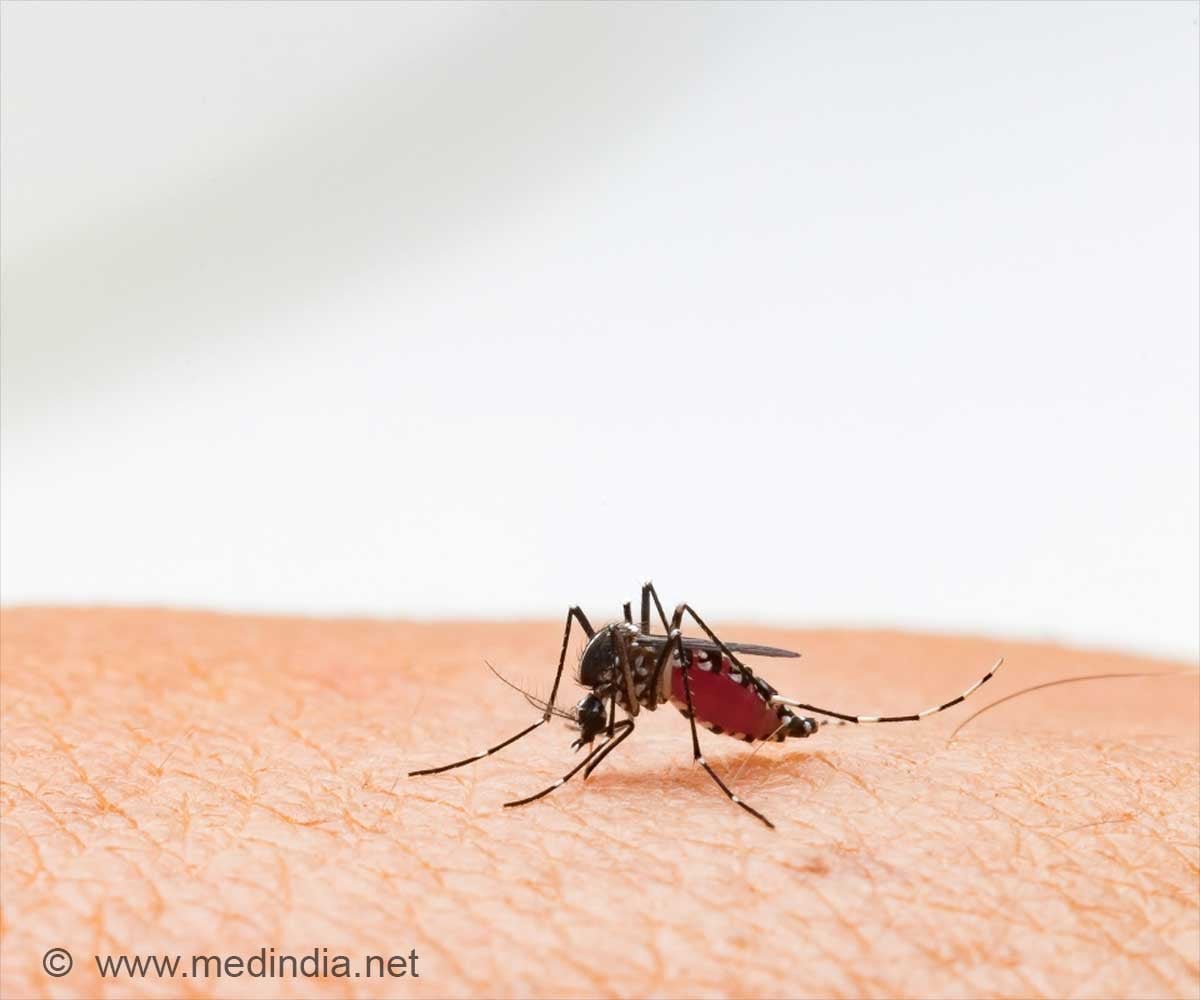
Certain people may genuinely attract more mosquitoes than others. Scientists are uncovering how body scent and skin chemistry shape mosquito attraction.
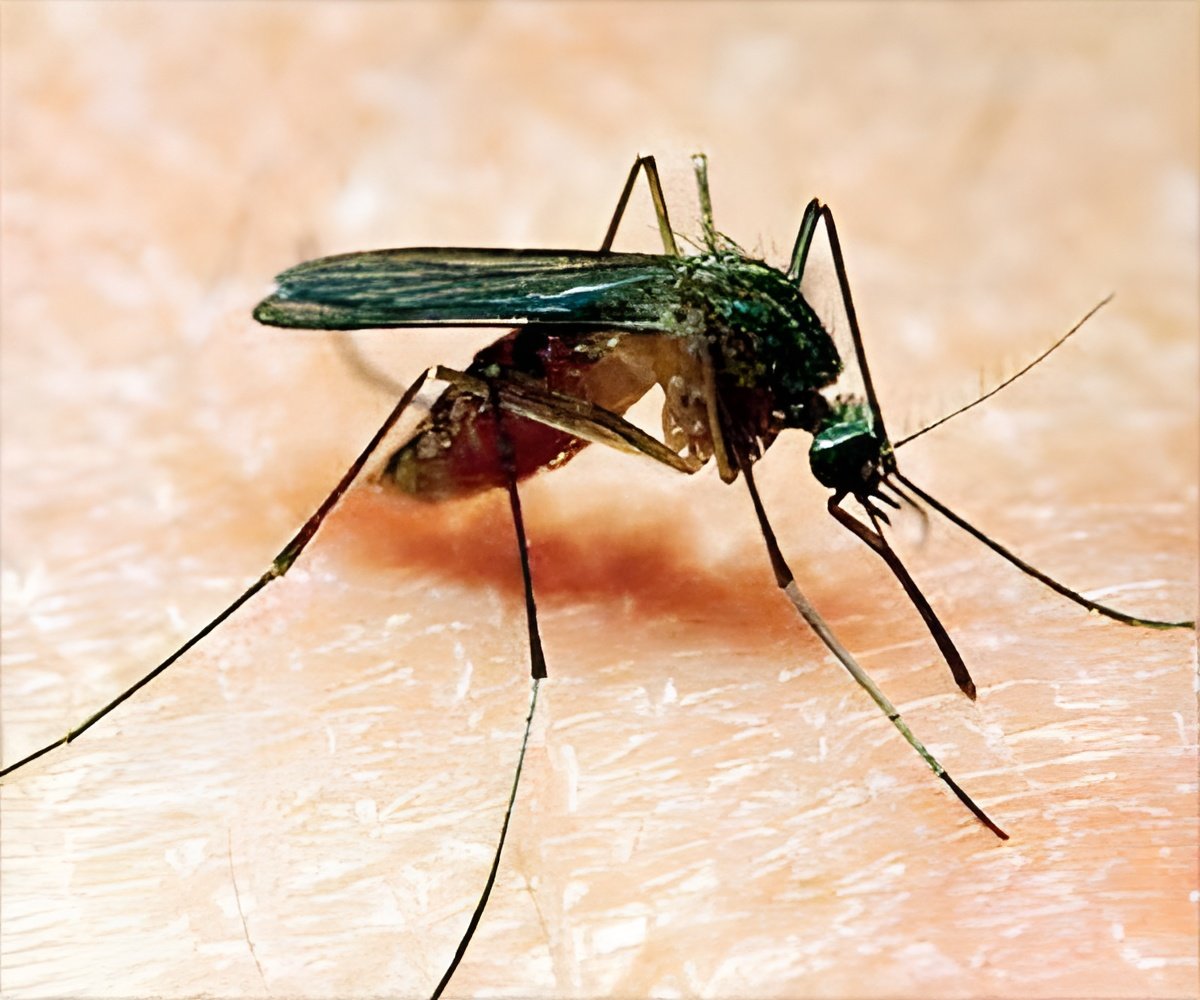
Some people barely get a mosquito bite, while others seem to attract them nonstop.
A new look at mosquito behavior is shedding light on why some people get bitten more often than others. Individual body chemistry may play a bigger role than previously thought.
A 2024 study found certain skin-derived compounds reduced mosquito landing by 62%-99.6% in laboratory experiments, highlighting the potential importance of skin odor chemistry. (1✔ ✔Trusted Source
Identification of human skin microbiome odorants that manipulate mosquito landing behavior
Advertisement
Why Some People Become Mosquito Magnets
Some people genuinely attract more mosquitoes than others, and research suggests this may be linked to their unique body chemistry.
Body odor, skin compounds, natural scent, and carbon dioxide released during breathing can all provide cues that help mosquitoes locate their next target.
Studies on Aedes aegypti mosquitoes have found that these insects can show strong and consistent preferences for certain people’s odors.
Factors such as skin microbiota, sweat, and chemical compounds produced on the skin may contribute to this difference, helping explain why some people seem to get far more mosquito bites than others.(2✔ ✔Trusted Source
Differential mosquito attraction to humans is associated with skin-derived carboxylic acid levels
Advertisement
Your Skin Could Be Sending Signals That Attract
Your skin acts like a chemical fingerprint, releasing compounds through sweat, sebum, and natural skin oils.
The microbes living on the skin can also break down these substances and produce odors that mosquitoes detect from a distance.
Research suggests that certain carboxylic acids and other skin-derived compounds can influence mosquito attraction.
Differences in these chemical signals may help explain why some people receive significantly more mosquito bites than others, even when they are in the same environment.
Advertisement
Are You on the Mosquitoes’ Favorite List?
The latest research challenges the idea that some people are simply “universal mosquito magnets.”
In a study of 119 volunteers in Miami, researchers tested three important disease-vector species “Aedes aegypti, Aedes albopictus and Culex quinquefasciatus,” to determine whether they shared the same preferences for human scent.
Researchers used a uniport olfactometer to test mosquito attraction to participants’ arm odors. They also analyzed skin scent using gas chromatograph-mass spectrometry (GC-MS) and examined the skin microbiome through DNA sequencing.
This allowed the team to compare the chemical and microbial profiles of people who were more or less attractive to each mosquito species.
The findings showed that there was no universal mosquito magnet. None of the 119 participants ranked among the top 10% of the most attractive individuals for all three mosquito species.(1✔ ✔Trusted Source
Identification of human skin microbiome odorants that manipulate mosquito landing behavior
Instead, each species appeared to respond to a different combination of human skin odors.
- Aedes aegypti showed a slight preference for male participants.
- Aedes albopictus and Culex quinquefasciatus showed no significant sex bias.
- Aedes aegypti and Culex quinquefasciatus were less attracted to people whose skin odor contained higher levels of certain cyclic alcohols and monoterpenes.
- Aedes albopictus showed attraction to specific odor compounds, including ketones.
These results suggest that mosquito attraction depends not only on the person but also on the mosquito species.
The findings are important because Aedes aegypti, Aedes albopictus and Culex quinquefasciatus transmit different diseases.
Meaning that understanding their distinct scent preferences could eventually help scientists develop species-specific mosquito lures, repellents, and disease-control strategies.
How to Get Rid of Mosquitos?
- Use mosquito repellent.
- Wear long-sleeved clothes and full-length trousers.
- Remove standing water around your home.
- Keep doors and windows screened.
- Use mosquito nets while sleeping.
- Keep indoor spaces cool and use fans.
- Avoid areas with heavy mosquito activity.
- Keep water storage containers tightly covered.
- Empty and clean flowerpots, buckets, and other water-holding containers regularly.
- Use mosquito-control products as directed.
Not All Mosquitoes Have the Same Taste
A 2025 study involving 24 participants found significantly different mosquito-attraction rates between high- and low-attraction groups (P < 0.0001) (1✔ ✔Trusted Source
Identification of human skin microbiome odorants that manipulate mosquito landing behavior
).
The latest findings suggest that being a “mosquito magnet” may depend on which mosquito species is doing the biting.
Differences in skin odor, skin microbes, and chemical compounds can influence attraction, highlighting the complex relationship between humans and disease-carrying mosquitoes.
As the research team, led by FIU neurogeneticist Matthew DeGennaro, explains: “It has become increasingly clear that there is a connection between human skin microbes and or odors when mosquitoes target individual humans.”
As the saying goes, “The devil is in the details.” In this case, those tiny chemical details on our skin may determine which mosquitoes find us irresistible.
References:
- Identification of human skin microbiome odorants that manipulate mosquito landing behavior – (https:pubmed.ncbi.nlm.nih.gov/37662338/)
- Differential mosquito attraction to humans is associated with skin-derived carboxylic acid levels – (https://www.cell.com/cell/fulltext/S0092-8674(22)01253-3)
- Every mosquito has a type — and you may not be it – (https://news.fiu.edu/2026/every-mosquito-has-a-type-and-you-may-not-be-it)
- Differences in human skin volatiles between populations with high and low attraction to mosquitoes – (https://pmc.ncbi.nlm.nih.gov/articles/PMC12093884/)
Source-Medindia