

Close Menu

    Subscribe to Updates

    Get the latest news information from worldwide businesses.

    What's Hot

    Discovered Materials is playing AI whack-a-mole to hunt cooler chips

    August 10, 2026

    Festive demand set to lift FMCG growth, but margins face pressure

    August 10, 2026

    Russia explores rail link to India to bypass maritime chokepoints

    August 10, 2026
    Facebook Instagram YouTube LinkedIn X (Twitter)
    Trending
    • Discovered Materials is playing AI whack-a-mole to hunt cooler chips
    • Festive demand set to lift FMCG growth, but margins face pressure
    • Russia explores rail link to India to bypass maritime chokepoints
    • Italy-Spain fallout: United by geography, divided by politics
    • Marine Corps to get ‘production-ready’ microwave drone swarm killer
    • First time in 5 decades, top cop sets foot in Telangana region that was once Maoist bastion | India News
    • First Council of Nicaea church possibly found by archaeologists in Turkey
    • India wins gold, 3 bronze medals at International Linguistics Olympiad 2026 in Romania | Education News
    Newspublicly
    • About Us
    • Advertise & Partner with us
    • Pitch Your Story
    • Contact Us
    Facebook Instagram LinkedIn X (Twitter)
    Subscribe
    • Home
    • World News
      • Asia
      • India
      • USA
      • UK & Europe
      • Middle East
    • Economy & Business
      • Global Economy
      • Corporate & Industry
      • Finance & Markets
      • Policy & Trade
    • Technology
      • Gadgets & Devices
      • Software & Apps
      • AI & Machine Learning
      • Robotics & Automation
    • Health & Medicine
      • Fitness & Nutrition
      • Research & Innovation
      • Disease & Treatment
      • Doctors, Clinics & Patient Care
    • Travel & Tourism
    • Automobile
      • Electric & Hybrid Vehicles
      • Auto Industry Insights
    • Sports
    • More
      • Education
      • Real Estate
      • Environment & Climate
      • Space & Astronomy
      • War & Conflicts
    Newspublicly
    Home»Health & Medicine»Disease & Treatment»India’s haemophilia diagnosis gap has an overlooked consequence: preventable vision loss
    Disease & Treatment

    India’s haemophilia diagnosis gap has an overlooked consequence: preventable vision loss

    AdminBy AdminAugust 10, 2026No Comments4 Mins Read0 Views
    Share
    Facebook Twitter LinkedIn Copy Link WhatsApp


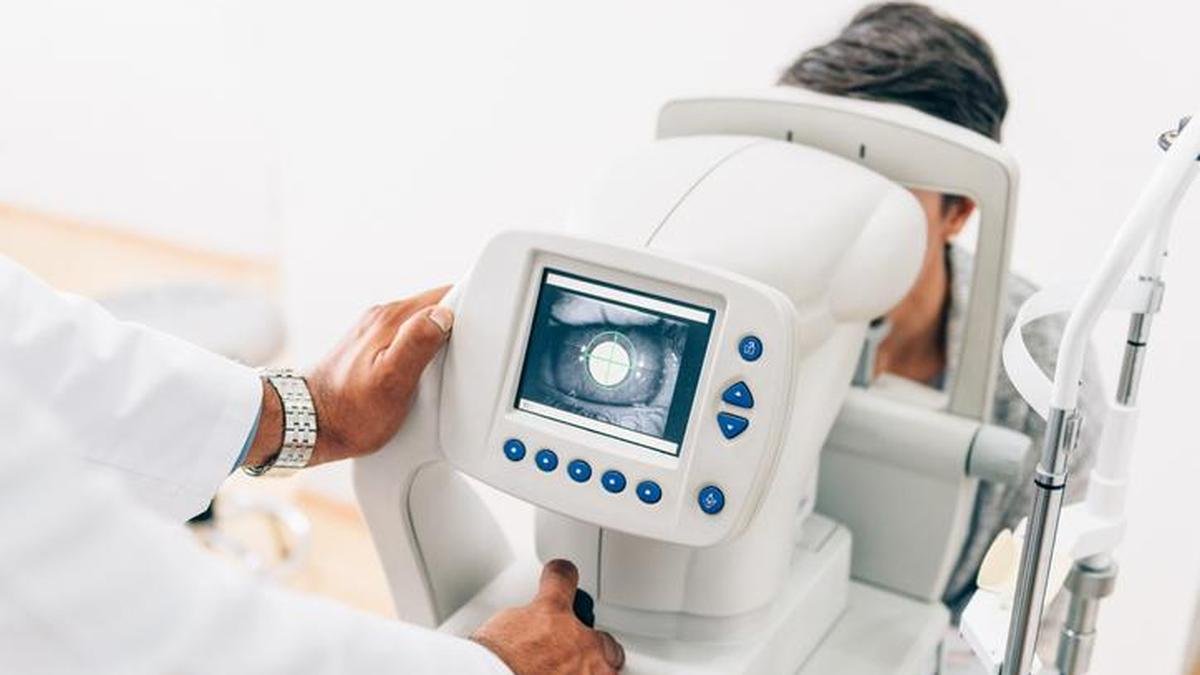
    Low awareness and the concentration of labs that can diagnose haemophilia in a handful of metros are some of the reasons for the gap in both timely diagnosis and access to care. Image used for representational purposes only

    Low awareness and the concentration of labs that can diagnose haemophilia in a handful of metros are some of the reasons for the gap in both timely diagnosis and access to care. Image used for representational purposes only
    | Photo Credit: Getty Images

    Haemophilia, a genetic bleeding disorder where blood doesn’t clot properly, is usually hereditary and can be passed down from parent to child. The condition is caused by a lack of, or improper functioning of certain clotting factors. This can lead to uncontrolled bleeding after injuries, or even without a clear trigger.

    India has the world’s second-largest haemophilia burden. A 2025 review in the Journal of the Association of Physicians of India put prevalence of diagnosed and registered haemophilia cases in India at 0.9 per 1,00,000. However, statistical modelling puts the true disease burden much higher, at around 1,36,000.

    Diagnostic challenges

    The challenge is to reach those who have not been formally diagnosed. Low awareness and the concentration of labs that can diagnose haemophilia in a handful of metros are some of the reasons for the gap in both timely diagnosis and access to care.

    Usually when this gap is discussed, the focus is on the orthopaedic impact on patients – repeated joint bleeds, arthropathy, a young man with the knees of a seventy-year-old. While this is an important aspect of the condition, it leads to lesser conversations on the other effects of haemophilia on the body – the effect on the eyes and vision. This is irreversible when it happens, and can cost patients with undiagnosed haemophilia their sight.

    The vision problem

    A retrospective study of haemophilia patients at a government hospital in India found that bleeding in and around the eye accounted for 13% of all bleeds recorded. The types of bleeding included anterior segment bleeding (part of the eye in front of the lens), subconjunctival haemorrhage (under the conjunctiva), periorbital ecchymoses (bruising of the skin around the eye), and hyphaema (pooling of blood inside the front chamber of the eye). Posterior segment bleeding in the part of eye behind the lens occurred in around 1.8% of patients. This is a critical matter and led to permanent loss of vision in the affected eye.

    The onset can be sudden. One of the patients in the study was a 45-year-old man with moderate haemophilia and no other illness. He came with a sudden one-sided headache. There was no eye pain and no injury that would have made him consult an ophthalmologist. The headache was eventually attributed to an intraorbital haemorrhage, by which point the eye was lost.

    That is the challenge faced. While bleeding that threatens vision is a rare occurrence in the eye, the diagnosis is usually delayed due to ambiguous symptoms, with a very short window to take action and correct the clotting factor levels in the blood.

    Missing elements

    A common scenario is a patient with undiagnosed haemophilia being taken into an operating theatre in an emergency. Traumatic hyphaema or pooling of blood inside the front chamber of the eye due to an injury is quite common in a child. The usual pre-operative panel that includes a complete blood count, a chest radiograph and a urinalysis, does not detect a clotting factor deficiency. In such a case, surgery may result in bleeding in the eye after the procedure, with resultant complications.

    Two more factors make the risk harder to tackle. About a third of people born with haemophilia have no family history at all, so an unremarkable family tree is not reassurance. And mild haemophilia frequently goes undetected until adulthood, surfacing only after a dental extraction, an accident or surgery.

    The clinical baselines are well established. For ocular surgery, clotting factor levels are recommended at 70% to 80%, with a minimum of 50% in emergencies. Blood in the anterior chamber or vitreous is treated as an emergency requiring immediate treatment. None of this is achievable if the diagnosis is unknown, and is difficult if the clotting factors are not readily available.

    The solution

    This can be fixed. Pre-operative checklists must have a bleeding history line that asks specifically about prolonged bleeding after tooth extraction, easy bruising and heavy menstrual periods. An APTT (Activated Partial Thromboplastin Time) and factor assay must be done whenever ocular bleeding looks disproportionate to the trauma that caused it. Referral links between district eye units and the nearest haemophilia treatment centre must be established.

    Damage to joints takes place over years and can be partly rehabilitated. An eye does not get a second chance. We must work to prevent vision loss due to India’s haemophilia diagnosis gap.

    (Dr. Anusha Venkataraman is senior consultant & surgeon – vitreo retina and ocular oncology, ASG Vasan Eye Care, Coimbatore. anushavenkat262@gmail.com)

    Published – August 10, 2026 03:30 pm IST


    Source link

    Author

    • Admin

      NewsPublicly.com is News & Articles Platform that creating SEO-focused articles on travel, lifestyle, and digital trends.

    Admin
    • Website

    NewsPublicly.com is News & Articles Platform that creating SEO-focused articles on travel, lifestyle, and digital trends.

    Related Posts

    Why Hepatitis A is no longer a simple disease in Kerala

    August 10, 2026

    Telangana has 36 govt medical colleges, but only four make it to national IIRF 2026 top institutions

    August 10, 2026

    What is emotional regulation? A child psychologist explains

    August 10, 2026
    Leave A Reply Cancel Reply

    Demo
    Top Posts

    The Blue Moon rises on May 30— Where and when to see the second full moon of the month

    May 30, 202640 Views

    New SOCOM rifle allows barrel swapping and cartridge changes

    June 1, 202633 Views

    “Inside Gemini Robotics 1.5: How Robots Learn to Reason & Act

    November 22, 202527 Views

    525 pounds of cocaine seized after Nebraska K9 alerts troopers on I-80

    May 28, 202624 Views
    Don't Miss

    Discovered Materials is playing AI whack-a-mole to hunt cooler chips

    August 10, 20264 Mins Read0 Views

    Chips running AI workloads are too hot: That’s one reason why data centers consume so…

    Festive demand set to lift FMCG growth, but margins face pressure

    August 10, 2026

    Russia explores rail link to India to bypass maritime chokepoints

    August 10, 2026

    Italy-Spain fallout: United by geography, divided by politics

    August 10, 2026
    Stay In Touch
    • Facebook
    • Twitter
    • Instagram
    • YouTube
    • LinkedIn
    • WhatsApp

    Subscribe to Updates

    Get the latest creative news from SmartMag about art & design.

    Demo
    NEWSPUBLICLY
    Facebook X (Twitter) Instagram LinkedIn

    Home

    • About Us
    • Leadership
    • Advertise & Partner With Us
    • Pitch Your Story
    • Media Kit & Pricing
    • Career
    • FAQs

    Guidelines

    • Editorial & Submission
    • Partnership
    • Advertising & Sponsor
    • Intellectual Property Policy
    • Community & Comment
    • Security & Data Protection
    • Send Your Opinion

    Quick Links

    • Cookie Policy
    • Payment & Billing Terms
    • Refund & Cancellation
    • Copyright Policy
    • Complaint & Support
    • Sitemap
    • Contact Us

    Subscribe Us

    Get the latest news and updates!

    Copyright © 2026 Newspublicly (DIGITALIX COMMUNICATION). All Rights Reserved.
    • Privacy Policy
    • Terms of Use
    • Disclaimer