

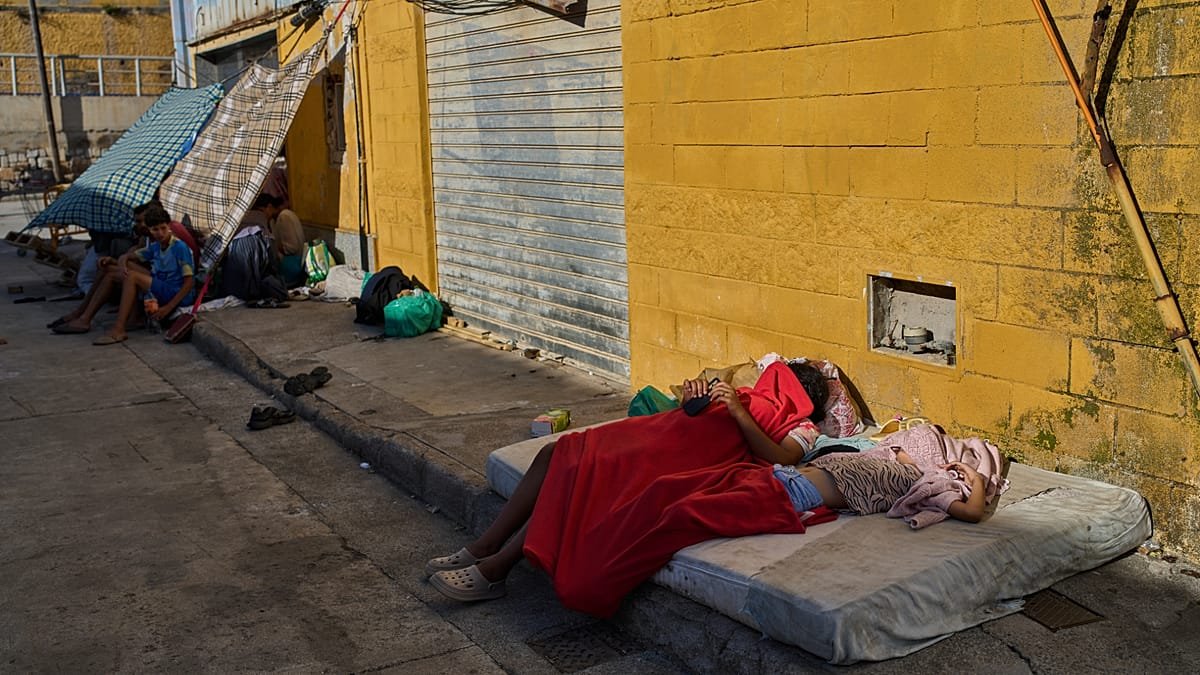
Medical sources have confirmed that Ceuta University Hospital has treated over the past week at least five girls for suspected rape, none of them older than 14, and all whom had arrived in the city from Morocco amid last week’s influx of migrants into the Spanish north African exclave.

ADVERTISEMENT
ADVERTISEMENT
One boy is also believed to be among those who suffered alleged sexual assault, medical sources said, noting that the real figure may be higher, as some victims have yet to file a complaint.
So far, more than a dozen cases consistent with sexual assault have been treated.
The National Police have opened an investigation into the alleged rape of one minor who entered Ceuta during the mass arrival of migrants from Morocco. She was taken to hospital, where injuries consistent with sexual assault were detected.
No arrests have been reported, nor the exact circumstances in which the events are believed to have taken place, though authorities are continuing with their inquiries.
Judicial sources have added that several attempted assaults have been prevented thanks to the intervention of local residents, adding that evidence points to other attempted cases that did not ultimately materialise.
’14-year-old girls left on the street’
Susana Ascaso, an accident and emergency doctor at Ceuta University Hospital, confirmed in an interview that her department is treating cases of rape of migrant girls.
According to her account, these are girls under 14 who are living on the streets because there are no places available in reception centres for minors.
“It is not that they do not want to take them in, there is simply no room for them,” the doctor explained.
Ascaso places these cases within a broader situation she describes as a “health catastrophe”.
Her department is currently treating between 300 and 400 migrants per day on average, with the same staff and the same resources it had before the mass arrival at the end of July, noting that much more manpower is needed to address the dramatically higher volume of patients.
The doctor says that once patients are discharged, they cannot be sent anywhere, as most of them have nowhere to go.
She also pointed to the risk of diseases with epidemic potential, such as tuberculosis or hepatitis, arriving without any capacity to detect them in an emergency department, as well as cases of diabetic decompensation and epileptic seizures among migrants who have been left without access to their usual treatment.
She has publicly called for extra staff and urged that Ceuta be recognised as an area with particularly difficult healthcare coverage.
Insufficient support from authorities
In the makeshift settlement of Sidi Embarek, where around 300 people are crammed together, the president of the neighbourhood association, Abdellah Mustafa, describes episodes similar to those recounted by Ascaso.
According to his testimony, some girls arrive there in a state of shock after having been sexually assaulted in the hills, and he explains that many do not report the attacks because of their psychological state, which has prompted local residents to bring in a psychologist and a lawyer to accompany them.
The situation has led organisations such as ‘Save the Children’ to warn of the risks faced by migrant and adolescent girls in Ceuta in relation to human trafficking and sexual exploitation, largely due to shortcomings in identification, accommodation and appropriate support from authorities.
Jennifer Zuppiroli, a migration specialist at the organisation, stressed that a teenage girl who is alone and outside the child protection system may find herself in an extremely vulnerable situation.
The National Police have prioritised attention to girls and to children under 13 years of age in their identification work, and the Minister for Youth and Children, Sira Rego, has also acknowledged a change in the profile of the minors arriving in the city, with more girls and very young children, now constituting a large chunk.