

When it comes to energy creation, there’s no such thing as a free lunch. You have to spend energy to make energy. Fortunately, with solar panels, we can make the sun do all the work and reap the benefits. Problem is, solar panels typically don’t create enough energy to juice up an electric car nearly enough to cover your daily driving needs. However, BMW threw down the gauntlet to students at Clemson University to create an electric vehicle that can actually make more energy than it uses in a single day of urban commuting. And the students did it.
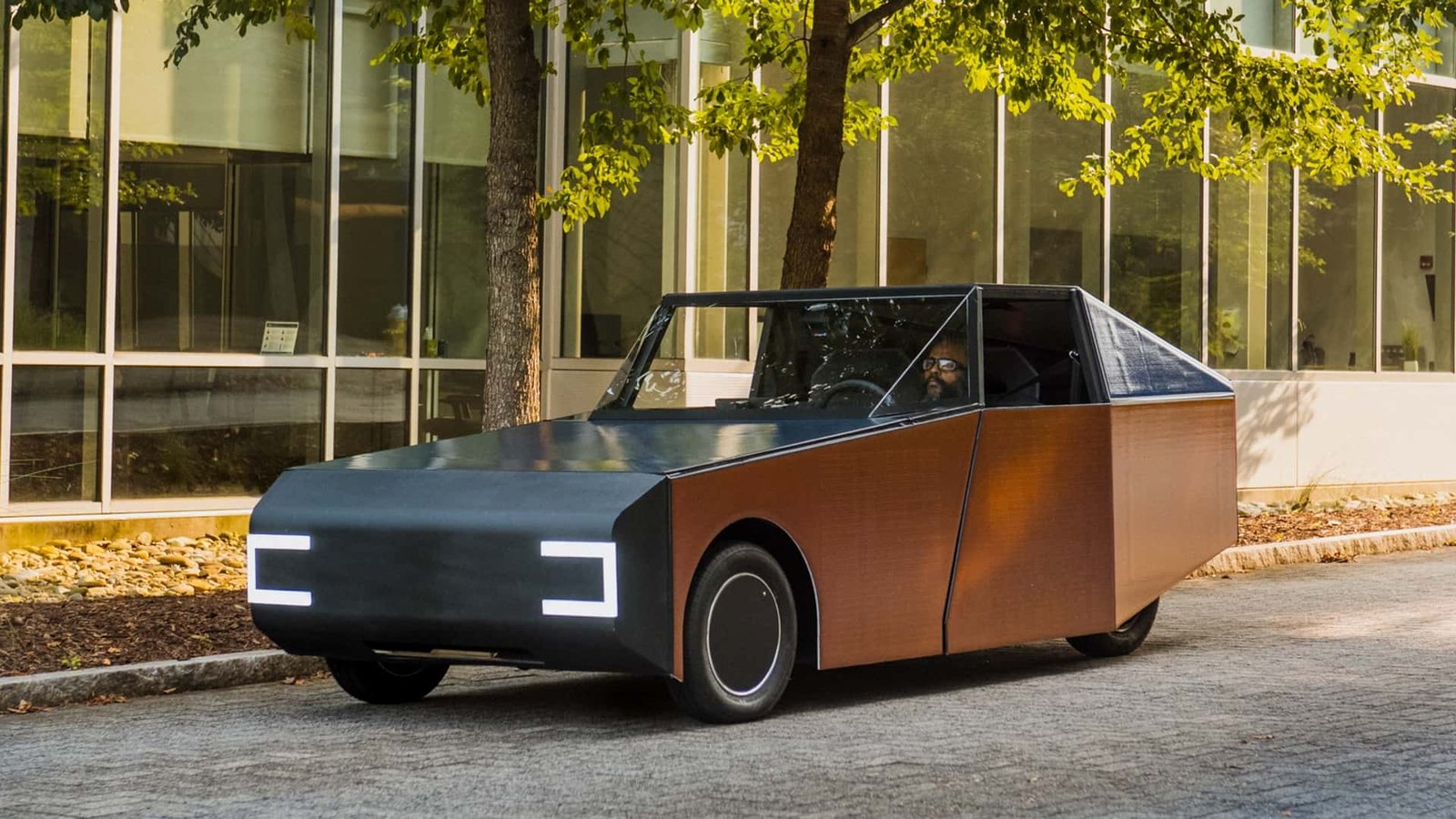
The result is called Deep Orange 17. It was developed through Clemson’s Deep Orange program, in which graduate students develop fully functional prototype vehicles alongside industry partners. BMW issued the challenge to Deep Orange students in 2024, and two years later, they now have a fully functioning solar-powered vehicle vehicle. Even if it looks like a cardboard shoe.

Photo by: BMW
Essentially every square inch of the exterior surface area is covered in solar panels, with more than 1,700 photovoltaic cells built into its skin. That way, it can harvest the sun’s energy while parked, while on the move, and when stuck in traffic. No matter where the sun is in the sky, the Deep Orange 17 can soak up its rays. Its panels, which were developed in collaboration with the Fraunhofer Institute for Solar Energy Systems ISE, can also soak up the sun even when they’re in the shade. That orange color is part of a durable outer film that helps protect the panels.
It’s a lightweight little thing, weighing in at just 1,212 pounds, thanks to being made from a combination of steel (passenger cell), aluminum, carbon fiber, and even 3D printed metal joints. That funny shape? Apparently inspired by a box fish.
OK, so how much more energy does it make than it uses? The Deep Orange team assumed a daily commute of 12 miles, which would make sense for city-dwellers or suburbanites who work from home. And since the solar panels can regenerate 31 miles worth of electricity, it puts more than twice what it uses back into the battery on average. Most of its energy recuperation comes from its solar panels, but some of it also comes from regenerative braking, while optimized torque distribution and drivetrain controls help limit energy usage.
Photo by: BMW
Inside, there aren’t many amenities or creature comforts, but it does at least have Apple CarPlay and digital gauges.
BMW calls it the Luminetta, and while it’s unrealistic to think that a production vehicle can just be covered in solar panels to become an energy-positive car, there are lessons to be learned here.
“This was an incredibly challenging project—not only to create a working energy-positive prototype, but to demonstrate how a vehicle can become increasingly energy independent through solar integration,” Harsh Manghnani, Deep Orange team member and solar integration lead, said in a press release. “Seeing our initial research and design validated in a working prototype has been incredibly rewarding.”