

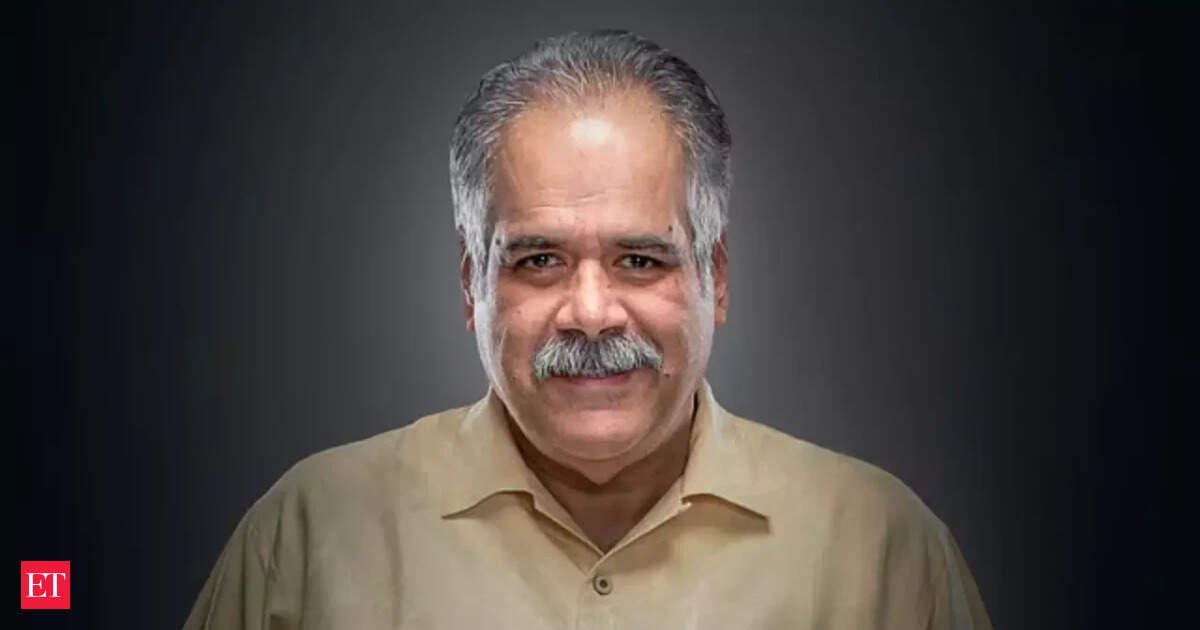
Bhatia also said that it is imperative that the country should have one or two strong airlines with large market share if it intends to compete against global aviation power hubs.
“34% of our capacity is deployed in unique markets where nobody else flies. It is not that other airlines cannot fly in these markets — but they choose not to,” Bhatia told ET in an interview.
“When the world talks about our market share, generally there isn’t an appreciation of the fact that within that, there’s a large chunk of flying that we do which is unique to IndiGo.”
Bhatia drew comparisons with Emirates in Dubai, Singapore Airlines, and Qantas in Australia, arguing that scale is inevitable for any airline that wants to compete globally. “If you truly want India to compete with the rest of the world, you will have to build one or two or three large organisations that are able to compete with the heft of some of these large carriers,” he said.

According to civil aviation regulator Directorate General of Civil Aviation (DGCA), IndiGo held a 66.3% share of India’s domestic market.
Also Read | IndiGo’s Rahul Bhatia urges govt to cut taxes, airport charges to lower airfaresThe large market share has come under scrutiny, especially after the carrier’s operational meltdown in December forced it to cancel 3,000 flights in a week, grounding India’s air travel.
“The event was essentially the coming together of several different things. We had the new pilot rest norms that came into play, cyclones in Chennai, a software upgrade across our entire fleet, and some volcanic ash activity coming out of Africa. Several things came together, and the outcome was what it was,” Bhatia said, calling it regrettable.
Since then, the airline, he said, has built more resilience in operations by conducting an internal review and reorganising the network and rostering of pilots. The airline has also done audits through external consultants and is working with consultancy Oliver Wyman to build early-warning systems.
“We are now prepared to implement the pilot rest rules in their more stringent form. The winter schedule that we have submitted this year is built around the most stringent version of pilot rest rules. On that, our aircraft utilisation is north of 14 hours,” Bhatia said.
Also Read | IndiGo’s Rahul Bhatia says pilot duty rules make aviation ‘uncompetitive’, calls for review
The government is now eager to attract cash-rich corporate groups to start an airline in India in order to counter the duopoly of IndiGo and Air India. However, Bhatia said that IndiGo’s cost leadership will keep it ahead even if competition heats up in the sector. “You can’t take away the fact that the IndiGo of today has been built over 20 years, aircraft by aircraft, brick by brick. It’s one of those businesses that takes what it takes to build to scale. I see our own trajectory unchanged, given what may happen in the landscape.”
Kapil Kaul, CEO, South Asia at aviation consultancy firm CAPA, said that IndiGo’s current market share is an outcome of its implementation of a business plan and the inability of its rivals to compete. “It was built organically over the last 20 years and not handed over to them. If the industry’s planned expansion till FY32 goes as per plan, IndiGo’s market share will get significantly rationalised — likely to be below or around 50 percent — hence ending the monopoly debate,” Kaul said.