

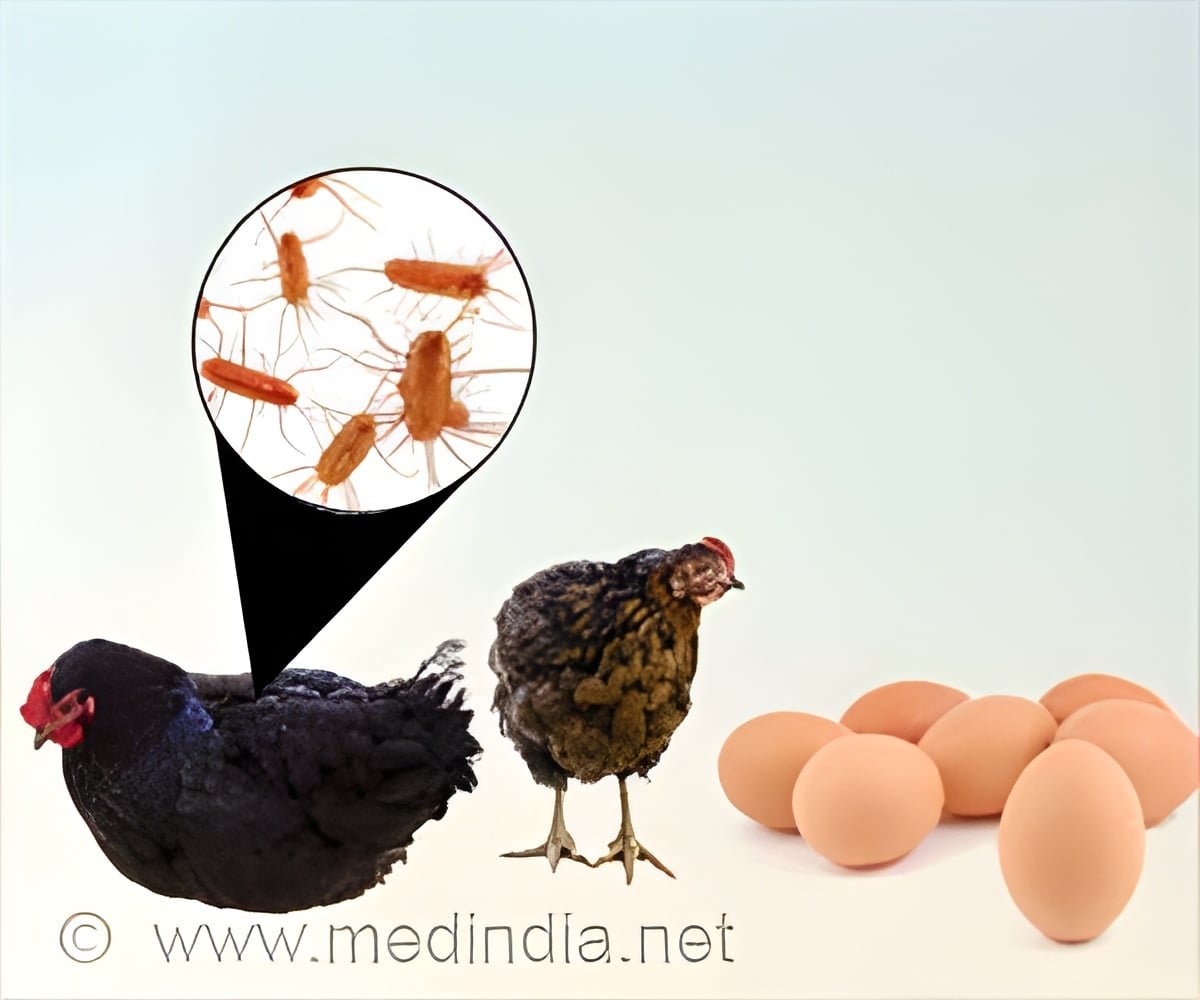
Oxford researchers found that the global expansion of industrial chicken farming has increased Campylobacter movement more than 100-fold, allowing strains to spread and adapt within poultry flocks.

Could the rapid expansion of industrial chicken farming be helping dangerous foodborne bacteria spread and evolve?
Researchers from the University of Oxford believe it could. Their new study found that industrial poultry farming has driven a more than 100-fold increase in the movement of Campylobacter, allowing strains once largely confined to wild birds to enter, mix and become established in commercial chicken populations.
The study, published in the Proceedings of the National Academy of Sciences (PNAS), examined how the extraordinary growth of global poultry production has changed the ecology and evolution of Campylobacter.
Campylobacter is considered the world’s most common bacterial cause of gastroenteritis and one of the four leading global causes of diarrheal disease.
Advertisement
Campylobacter Infection and Its Symptoms
Campylobacteriosis is an intestinal infection caused by Campylobacter bacteria, most commonly Campylobacter jejuni and Campylobacter coli.
People usually become infected after consuming undercooked poultry, contaminated meat, raw milk or unsafe water. Infection can also occur when bacteria from raw chicken contaminate hands, utensils, chopping boards or other foods.(1✔ ✔Trusted Source
Campylobacter
Symptoms usually begin two to five days after infection, although the incubation period may range from one to 10 days.
Common symptoms include:
- Diarrhea, which may contain blood
- Abdominal pain or cramps
- Fever
- Headache
- Nausea
- Vomiting
Symptoms generally last between three and six days. Most infections are mild and resolve without specific treatment. However, Campylobacter can cause severe illness in young children, older adults and people with weakened immune systems.
Rare complications include bloodstream infection, reactive arthritis and
Advertisement
Nearly 2,800 Campylobacter Genomes Analysed
Researchers analysed nearly 2,800 Campylobacter genomes collected from chickens and wild birds across 30 countries, including the United Kingdom and the United States.
The samples covered a 45-year period, from 1979 to 2024, allowing the team to track how bacterial strains moved between bird populations and adapted to commercial poultry environments.
The analysis showed that expanding chicken populations created more opportunities for Campylobacter strains from wild birds to enter poultry flocks, spread between animals and exchange genetic material.
The reported 100-fold rise refers to the increased movement and mixing of bacterial strains—not a 100-fold rise in human Campylobacter cases.
“Industrial farming has created one of the largest animal habitats on the planet,” said Professor Sam Sheppard, senior author of the study.
He said the findings demonstrate how human-driven environmental changes can influence the spread of infectious diseases and increase future risks from zoonotic infections and antimicrobial resistance.
31 Billion Chickens Create a Global Bacterial Breeding Ground
Since the 1960s, the global chicken population has increased sevenfold to approximately 31 billion birds.
Chickens now account for around 70% of all bird biomass on Earth. Although this expansion has made animal protein more affordable and widely available, researchers say it has also created ideal conditions for bacteria to circulate, adapt and survive.
Large commercial farms bring enormous numbers of genetically similar animals together in densely populated environments. Once bacteria enter these flocks, they have repeated opportunities to spread between birds.
Mathematical modelling showed that when chicken populations reach a critical scale, Campylobacter strains originating in wild birds can become self-sustaining within poultry populations—even when initially poorly adapted to chickens.(2✔ ✔Trusted Source
Industrial chicken farms are accelerating the spread of a major foodborne disease
Advertisement
Dense Poultry Flocks Act as Pathogen Sponges
The researchers described industrial chicken populations as ecological “pathogen sponges” capable of absorbing and amplifying bacterial strains from multiple sources.
Instead of remaining confined to their original wild-bird hosts, Campylobacter strains can enter commercial farms, mix with other bacterial populations and acquire traits that improve their ability to survive.
Genomic analysis identified changes involving genes associated with:
- Antimicrobial resistance
- Oxidative stress tolerance
- Metal acquisition
- Bacterial motility
These traits may help Campylobacter withstand challenging conditions and spread more efficiently through modern poultry-production systems.
“As Campylobacter strains adapt to life in poultry, they can acquire traits that help them survive,” said study first author Oakem Kyne.
The researchers said understanding how farming practices shape bacterial evolution is essential for reducing foodborne disease and limiting the spread of antibiotic-resistant infections.
Poultry Linked to Most Campylobacter Infections
The new findings support growing evidence that poultry meat is a major source of human Campylobacter infections.
An earlier Oxford study estimated that approximately 80% of human Campylobacter infections in Oxfordshire were associated with poultry meat, with many of the identified strains showing resistance to antibiotics.(2✔ ✔Trusted Source
Industrial chicken farms are accelerating the spread of a major foodborne disease
The highest resistance levels were detected among Campylobacter strains isolated from chickens. Three strains showed almost complete resistance to certain antibiotics.
Although antibiotic use on farms in the United Kingdom has declined, resistance to fluoroquinolones and tetracyclines has continued to increase.
Antimicrobial resistance occurs when bacteria develop the ability to survive medicines designed to kill them, making infections more difficult to treat.
Researchers stressed that responsible antibiotic use must be combined with stronger farm biosecurity, better animal welfare, food-chain surveillance and improved infection-prevention measures.
Updated Global Burden of Foodborne Disease
Updated World Health Organization estimates indicate that approximately 866 million people—almost one in nine globally—develop foodborne illnesses each year.
Unsafe food is associated with an estimated 1.52 million deaths and the loss of approximately 57.1 million years of healthy life annually. Children younger than five years account for nearly one-third of foodborne disease cases.
Campylobacter is one of the four major global causes of diarrheal disease and is considered the most common bacterial cause of human gastroenteritis worldwide.
Although deaths from campylobacteriosis are uncommon, the infection can be serious among very young children, older people and those with severe underlying illnesses or weakened immune systems.
Safe Chicken Handling Reduces Infection Risk
Campylobacter bacteria can be destroyed by thorough cooking, making safe food preparation an important defense against infection.
Consumers can reduce infection risk by cooking chicken thoroughly, avoiding washing raw poultry, preventing cross-contamination, cleaning hands and surfaces, refrigerating meat promptly, and avoiding unpasteurized dairy products.
The World Health Organization recommends controlling Campylobacter throughout the food chain—from poultry farms and slaughterhouses to retailers and domestic kitchens.
The Oxford researchers said that stronger farm biosecurity, improved poultry health, responsible antibiotic use and better surveillance will be necessary to reduce the movement of Campylobacter before contaminated meat reaches consumers.
References:
- Campylobacter – (https://www.who.int/news-room/fact-sheets/detail/campylobacter)
- Industrial chicken farms are accelerating the spread of a major foodborne disease- (https://www.biology.ox.ac.uk/article/industrial-chicken-farms-are-accelerating-the-spread-of-a-major-foodborne-disease)
Source-Medindia