

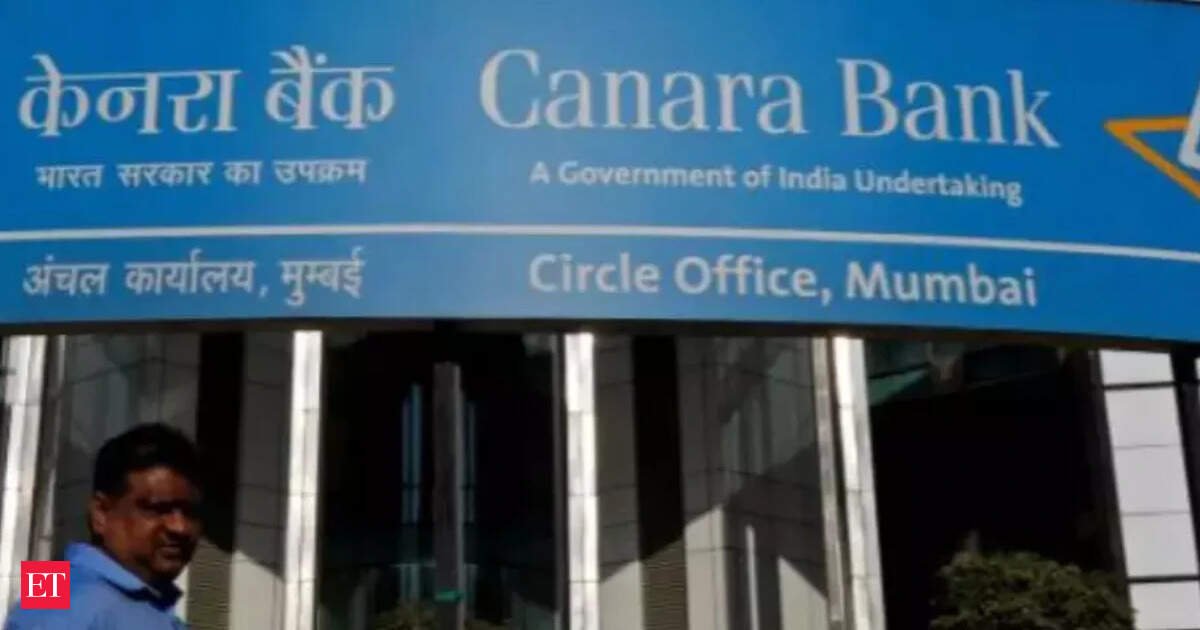
“We have decided to go for early provisioning when the new regime comes into force,” Singh said.
“However, we are not going to make any additional provisions this year,” he added.
The state-owned bank has meanwhile revised the provisioning projections upward to ₹12,-13,000 crore, from an earlier estimate of ₹10,000 crore. The projected provision will result in a 60-basis point hit on the bank’s capital adequacy ratio.
Also Read: Minimum balance charges swell pvt banks’ coffers by nearly Rs 5,000 cr in FY26

The bank’s capital adequacy ratio stood at 17.17% at the end of June, improving 65 basis points from a year prior. One basis point is a hundredth of a percentage point.
The bank’s provision coverage ratio improved 159 basis points year-on-year to 94.76% at the end of June.The ECL framework is a forward-looking accounting practice that requires banks to make provisions on expected losses based on past asset quality instead of the current practice of incurred loss-based provisioning. It involves a staged transition, beginning April 2027, and banks have until FY31 to ensure full compliance.
The likely hit on the Canara Bank’s capital adequacy ratio will get covered when the bank goes for the proposed ₹8,000 crore capital raise.
Singh said the bank would raise growth capital irrespective of the ECL impact. Canara Bank has approved an enabling provision for raising ₹8,000 crore -₹4,500 crore through issuance of tier 1 and ₹4,000 crore through tier 2 bonds.
“We will tap the market when the opportunity comes,” Singh said.
The government holds 62.93% in the bank.
Its gross non-performing assets came down 112 basis points to 1.57% at the end of June.
The bank expanded its gross advances by 18% year-on-year to ₹12.93 lakh crore while deposits increased by 11.6% to ₹16.12 lakh crore at the end of June. Its retail, agriculture and MSME advances grew 21% to ₹7.65 lakh crore while corporate credit saw 13.6% expansion to ₹5.29 lakh crore.
The MD said that the bank has a sanctioned pipeline of ₹18,000 crore of corporate loans while it is evaluating about 50 more proposals worth ₹32,000 crore.