

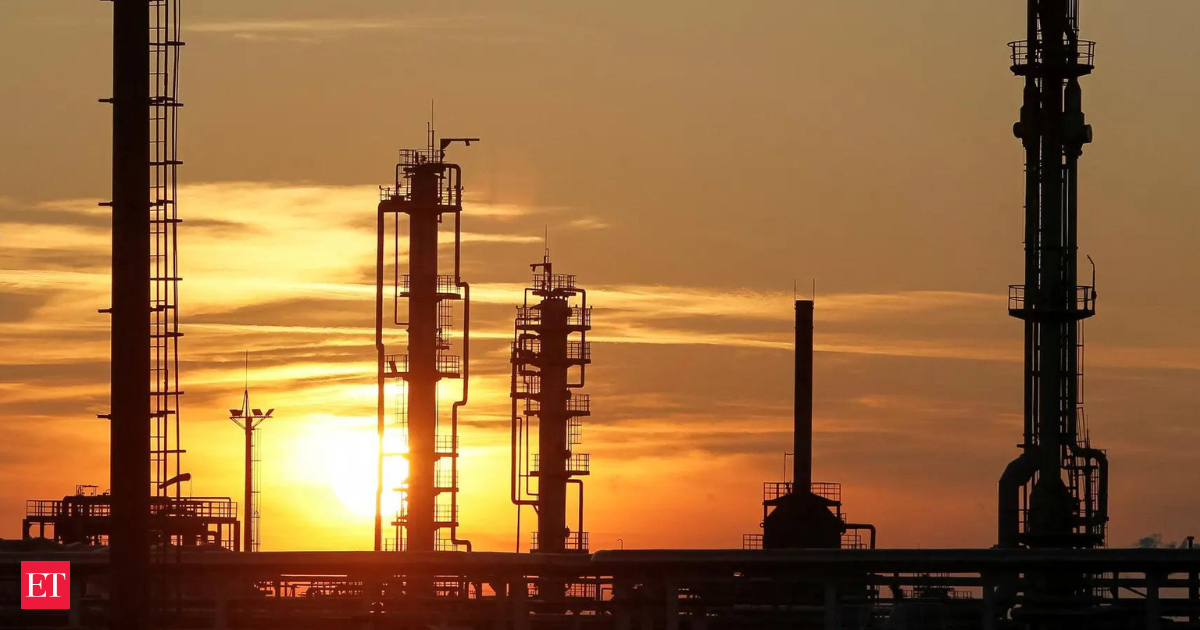
The state-run oil major’s capacity additions are expected to lift its refining capacity to a record 98.05 million metric tonnes per annum (MMTPA) from 80.75 MMTPA now.
“Whatever surplus capacity we have after meeting domestic needs, we will look to export. This has the potential to raise our export share to about 15% of total revenues, from 5% currently. That said, we don’t work with a fixed export target, and our priority remains domestic first,” senior official at IOCL told ET.
Read more: Dr Reddy’s pauses weight loss drug on quality fears
The ₹75,000 crore expansion has already seen more than ₹53,500 crore deployed.


The expansion covers its Panipat, Vadodara and Barauni refineries, where capacities are being raised to 25 MMTPA from 15 MMTPA, 18 MMTPA from 13.7 MMTPA and 9 MMTPA from 6 MMTPA, respectively, with all three projects scheduled for commissioning by November-December 2026.
Read more: India raises questions at WTO over interim arrangement to implement e-comm pact
India’s refining sector currently has an installed capacity of about 258.1 million metric tonnes per annum (MMTPA), while domestic petroleum product consumption stands at around 239 MMTPA.
However, refineries typically operate at 105-115% of their capacity, taking actual production to nearly 300 million tonnes annually. The surplus of around 61.5 million tonnes is exported.
This makes India one of the world’s largest suppliers of refined fuels.
About 70% of India’s refined fuels exports come from Reliance Industries, which operates the largest single location refinery at Jamnagar with a capacity of 70 MMTPA. With IOCL adding another 17.3 MMTPA of refining capacity by the end of 2026, much of the incremental output is expected to be available for overseas markets after meeting domestic demand. If the additional production is exported, it could significantly lift India’s petroleum product exports, strengthening the country’s position as a global refining hub while boosting foreign exchange earnings.
While the senior official added “if the demand rises significantly in India, then we may not have major exportable surplus on a sustained basis from our refining systems.”
India has emerged as one of the world’s largest exporters of refined petroleum products despite importing more than 90% of its crude oil requirement, leveraging its large and complex refineries to process imported crude for both domestic consumption and overseas markets. The expansion comes as global refining capacity additions remain limited and disruptions in Russia and the Middle East continue to support refining margins.