

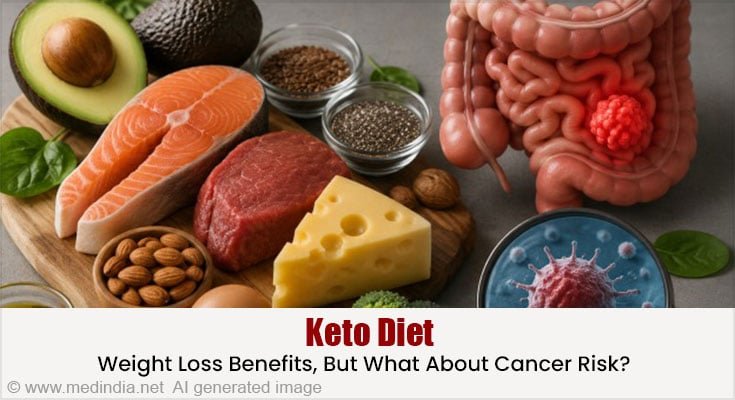
A new study suggests that while the ketogenic diet may benefit some conditions, it could increase the risk of small intestinal cancer in people who are genetically susceptible.

- Keto diet promoted small intestinal tumors in genetically susceptible mice
- Dietary fat-not ketone bodies-drove the increased tumor growth
- Researchers say keto may affect the colon and small intestine differently
A ketogenic diet is widely known for helping with weight loss and blood sugar control. However, a new study published in Nature by researchers at the Massachusetts Institute of Technology (MIT) has found that the diet promoted tumor growth in the small intestine of mice that were genetically prone to intestinal cancer (1✔ ✔Trusted Source
Ketogenic diets may increase cancer risk in the small intestine
)(2✔ ✔Trusted Source
Ketogenic diet mediates intestinal tumorigenesis through lipids not ketones
).
The researchers say the effect was driven by the way intestinal cells processed large amounts of dietary fat rather than by ketone bodies themselves.
Advertisement
Should People at High Cancer Risk Be Careful with the Keto Diet?
According to the study, researchers wanted to find out whether the cancer-protective effects previously reported for ketogenic diets in the colon also applied to the small intestine.
To investigate the effects of the ketogenic diet on intestinal cancer, researchers studied mice that were genetically predisposed to developing intestinal tumors. The animals were fed one of three different diets:
- Standard control diet
- Ketogenic diet
- High-fat, high-calorie diet
The researchers found that mice fed the ketogenic diet developed small intestinal tumors at rates similar to or even higher than those fed the
Interestingly, the ketogenic diet did not make the mice obese, suggesting that excess body weight was not responsible for the increased tumor growth.
Further laboratory analysis revealed that the tumors were not caused by ketone bodies, as researchers had initially expected.
Instead, the large amount of dietary fat activated a metabolic pathway called fatty acid oxidation inside intestinal stem cells.
This switched on proteins known as PPARs, causing
Researchers say this finding changes the current understanding of how ketogenic diets influence cancer risk because the dietary fat itself—not ketosis—appears to drive tumor development in the
Advertisement
What Is a Ketogenic Diet and Who Should Follow It?
According to a review, the ketogenic diet was first introduced in the 1920s to help treat drug-resistant epilepsy (3✔ ✔Trusted Source
Ketogenic diet for human diseases: the underlying mechanisms and potential for clinical implementations
).
Today, it is also used for weight loss and type 2 diabetes management under medical supervision and is being studied for several neurological and metabolic disorders.
A typical ketogenic diet contains a very high proportion of fat while sharply restricting carbohydrates, allowing the body to enter a metabolic state known as ketosis, where fat becomes the primary source of energy (4✔ ✔Trusted Source
Ketogenic diets: Boon or bane?
Advertisement
Typical Composition of a Standard Ketogenic Diet
| Diet Component | Approximate Share of Daily Calories |
|---|---|
| Fat | Around 70% |
| Protein | Around 20% |
| Carbohydrates | Around 10% (usually less than 50 g per day) |
According to the review and the Cleveland Clinic, ketogenic diets may benefit some people by helping control difficult-to-treat epilepsy, supporting weight loss, and improving blood sugar control in selected adults with type 2 diabetes (5✔ ✔Trusted Source
What Is the Keto Diet and Should You Try It?
).
However, experts also caution that keto is not suitable for everyone. Long-term use without proper planning may lead to nutritional deficiencies, digestive problems, kidney stones in some individuals, and other health concerns.
The new MIT findings add another important consideration. Researchers say people with inherited conditions that increase the risk of intestinal cancer, such as familial adenomatous polyposis (FAP), may need extra caution before starting a ketogenic diet.
How the Ketogenic Diet Affected Different Parts of the Intestine
The new study shows that a ketogenic diet does not affect every part of the digestive tract in the same way. While earlier studies suggested benefits in the colon, the latest research found the opposite effect in the small intestine.
This highlights why researchers say the health effects of ketogenic diets cannot be generalized across the entire gut.
| Part of the Gut | What the Researchers Found | What It Means |
|---|---|---|
| Small intestine | More active intestinal stem cells and increased tumor growth | A ketogenic diet may increase cancer risk in people who are genetically susceptible. |
| Colon (large intestine) | Earlier studies found fewer tumors | The diet may have protective effects in the colon, but not throughout the digestive tract. |
| Ketone bodies | Did not directly cause tumor growth | Ketosis itself was not responsible for the increased cancer risk. |
| Dietary fat | High fat intake increased fatty acid oxidation and activated PPAR proteins | The way intestinal cells burned dietary fat triggered excessive stem cell growth and tumor formation. |
Why Does the Same Keto Diet Protect the Colon but Harm the Small Intestine?
One of the biggest surprises in the study was that the ketogenic diet produced completely opposite effects in different parts of the digestive tract.
According to MIT researchers, while the diet promoted tumor growth in the small intestine, it also reduced the development of tumors in the colon, confirming findings from an earlier study.
The researchers showed that ketone bodies were largely “metabolic bystanders.” Instead, the amount of dietary fat entering intestinal cells was the main factor driving the different outcomes.
According to the researchers:
- In the small intestine, dietary fat activated stem cells through fatty acid oxidation, increasing tumor formation.
- In the colon, the ketogenic diet continued to show protective effects, but not because of ketone bodies alone.
- Scientists are still investigating why two neighboring organs respond so differently to the same diet.
Is a Ketogenic Diet Safe for Everyone?
Experts say the new findings should not discourage people from following a ketogenic diet when it is medically recommended.
However, the study shows that keto may not be the right choice for everyone, and its effects can differ depending on the person’s health and underlying risk factors.
Ketogenic diets remain an established treatment for drug-resistant epilepsy and may also benefit some people with obesity or type 2 diabetes under medical supervision.
However, experts do not recommend keto as a general healthy eating pattern for everyone. People undergoing cancer treatment should focus on (6✔ ✔Trusted Source
Foods To Eat and Avoid When You Have Advanced Gastric Cancer
- Eating small, frequent meals instead of a few large meals.
- Choosing protein-rich foods to help maintain muscle strength and support recovery.
- Including high-calorie, nutrient-dense foods if appetite is poor or weight loss is a concern.
- Drinking enough fluids to stay hydrated during treatment.
- Working with a doctor or registered dietitian before making major dietary changes, including starting a ketogenic diet.
- Using a personalized diet plan based on the type of cancer, treatment stage, and nutritional needs, rather than following one diet for everyone.
People with inherited conditions that increase the risk of intestinal cancer, especially familial adenomatous polyposis (FAP), should discuss ketogenic diets with their healthcare provider before starting one.
The overall message is that ketogenic diets may have very different effects depending on the organ being studied. Rather than assuming keto is either entirely beneficial or harmful, scientists believe dietary advice should increasingly be tailored to an individual’s health condition, genetic risk and treatment goals.
Frequently Asked Questions
Q: Does the ketogenic diet cause cancer?
A: No. This study was conducted in mice genetically prone to intestinal cancer. More human studies are needed.
Q: Why did the keto diet increase tumor growth?
A: Researchers found that dietary fat activated pathways that increased intestinal stem cell growth, raising the chance of tumor formation.
Q: Are ketone bodies responsible for the increased cancer risk?
A: No. The study found that dietary fat metabolism, not ketone bodies, drove tumor growth.
Q: Is the keto diet still beneficial for some people?
A: Yes. Under medical supervision, it is used for drug-resistant epilepsy and may help selected people with obesity or type 2 diabetes.
Q: Should people with a family history of intestinal cancer avoid keto?
A: People with inherited conditions such as familial adenomatous polyposis (FAP) should discuss ketogenic diets with their healthcare provider before starting one.
References:
- Ketogenic diets may increase cancer risk in the small intestine – (https://news.mit.edu/2026/ketogenic-diets-may-increase-cancer-risk-small-intestine-0715)
- Ketogenic diet mediates intestinal tumorigenesis through lipids not ketones – (https://www.nature.com/articles/s41586-026-10779-y)
- Ketogenic diet for human diseases: the underlying mechanisms and potential for clinical implementations – (https://www.nature.com/articles/s41392-021-00831-w)
- Ketogenic diets: Boon or bane? – (https://ijmr.org.in/ketogenic-diets-boon-or-bane/)
- What Is the Keto Diet and Should You Try It? – (https://health.clevelandclinic.org/what-is-the-keto-diet-and-should-you-try-it)
- Foods To Eat and Avoid When You Have Advanced Gastric Cancer – (https://health.clevelandclinic.org/stomach-cancer-diet)
Source-Medindia