

Close Menu

    Subscribe to Updates

    Get the latest news information from worldwide businesses.

    What's Hot

    “Absolutely huge” 400-year-old black coral stuns scientists in New Zealand

    June 25, 2026

    Ruxolitinib Cream Provides Rapid and Sustained Relief in Atopic Dermatitis: Study

    June 25, 2026

    You won’t have long to get these iPad deals before Apple’s price hike

    June 25, 2026
    Facebook Instagram YouTube LinkedIn X (Twitter)
    Trending
    • “Absolutely huge” 400-year-old black coral stuns scientists in New Zealand
    • Ruxolitinib Cream Provides Rapid and Sustained Relief in Atopic Dermatitis: Study
    • You won’t have long to get these iPad deals before Apple’s price hike
    • Notion Mail shuts down amid agent takeover
    • US trade deal to be on the day India secures tariff edge: Piyush Goyal
    • India’s active credit cards cross 120 million in May
    • Apple’s price hikes suggest inflation won’t slow quickly, even as gas gets cheaper
    • Eighth Pay Panel may stay cautious on fitment factor
    Newspublicly
    • About Us
    • Advertise & Partner with us
    • Pitch Your Story
    • Contact Us
    Facebook Instagram LinkedIn X (Twitter)
    Subscribe
    • Home
    • World News
      • Asia
      • India
      • USA
      • UK & Europe
      • Middle East
    • Economy & Business
      • Global Economy
      • Corporate & Industry
      • Finance & Markets
      • Policy & Trade
    • Technology
      • Gadgets & Devices
      • Software & Apps
      • AI & Machine Learning
      • Robotics & Automation
    • Health & Medicine
      • Fitness & Nutrition
      • Research & Innovation
      • Disease & Treatment
      • Doctors, Clinics & Patient Care
    • Travel & Tourism
    • Automobile
      • Electric & Hybrid Vehicles
      • Auto Industry Insights
    • Sports
    • More
      • Education
      • Real Estate
      • Environment & Climate
      • Space & Astronomy
      • War & Conflicts
    Newspublicly
    Home»Health & Medicine»Research & Innovation»Scientists discover how a single cell builds a brain with 170 billion cells
    Research & Innovation

    Scientists discover how a single cell builds a brain with 170 billion cells

    AdminBy AdminJune 25, 2026No Comments3 Mins Read0 Views
    Share
    Facebook Twitter LinkedIn Copy Link WhatsApp


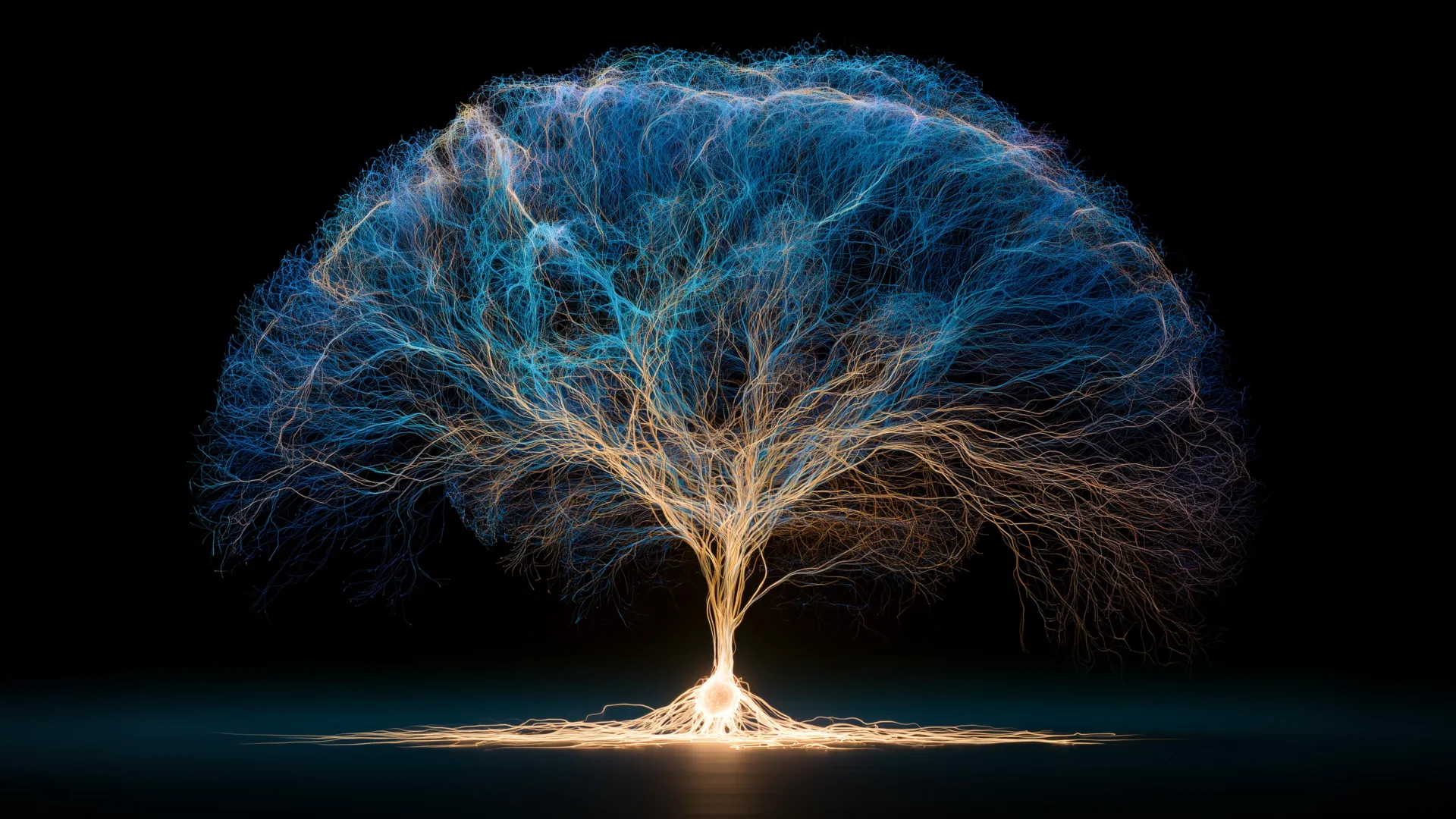
    A human brain starts as a single cell. Over time, that lone cell gives rise to an extraordinarily complex organ containing roughly 170 billion cells. One of the biggest questions in developmental neuroscience is how all of those cells end up in the right places to form a functioning brain.

    Researchers at Cold Spring Harbor Laboratory now believe the answer may be surprisingly simple. Their new work offers insights into how the brain organizes itself during development and could eventually influence research in fields ranging from biology to artificial intelligence.

    How Brain Cells Determine Their Identity

    Stan Kerstjens, a postdoctoral researcher in Professor Anthony Zador’s laboratory, explains the challenge in terms of positional information.

    “The only thing a cell ‘sees’ is itself and its neighbors,” he explains. “But its fate depends on where it sits. A cell in the wrong place becomes the wrong thing, and the brain doesn’t develop right. So, every cell must solve two questions: Where am I? And who do I need to become?”

    In a study published in Neuron, Kerstjens, Zador, and collaborators from Harvard University and ETH Zürich propose a new theory describing how the developing brain achieves this remarkable level of organization.

    Beyond Chemical Signals

    For decades, scientists have largely believed that cells communicate positional information through chemical signals. According to Kerstjens, that explanation works well in relatively small systems with limited numbers of cells.

    The developing brain, however, contains billions of neurons that must each arrive at the correct location. Because chemical signals weaken as they travel, researchers have long wondered how cells located deep within a growing brain can accurately determine where they are.

    Kerstjens suggests that part of the answer may come from a process that resembles the way human populations spread over generations.

    “Consider how human populations spread across a country over generations,” he says. “Descendants settle near their parents, so people who share ancestry end up in neighboring regions, producing large-scale geographic structures without long-range communication. We argue that a similar principle operates in the developing brain. Cells that descend from the same progenitor tend to remain near one another.”

    Testing a Lineage-Based Model

    To investigate the idea, the researchers developed what they describe as a “lineage-based model of scalable positional information.”

    They first used theoretical calculations to explore whether the concept could work. Next, they examined patterns of gene expression in developing mouse brains, looking at both individual cells and larger cellular groups. Finally, they tested the model in zebrafish and found similar results, suggesting the mechanism may operate across brains of different sizes.

    The findings indicate that chemical signaling and cellular lineage may work together to provide positional information during development.

    Implications for Biology and Artificial Intelligence

    Although the research focuses on the brain, Kerstjens says the underlying principle could apply to many other developing tissues, including tumors.

    The theory may also have relevance for future self-replicating AI systems. Just as brain cells can inherit information across generations of cells, future AI models that pass information from one generation to the next could potentially rely on similar organizational principles.

    Perhaps the most significant implication is what the work could reveal about intelligence itself. Understanding how a single cell develops into a highly organized brain may help scientists answer some of the deepest questions about the mind.

    “The brain somehow makes us intelligent,” Kerstjens says. “How did it manage to accumulate this capability, not just over its developmental time, but over evolutionary time? This is one piece in that big puzzle.”


    Source link

    Author

    • Admin

      NewsPublicly.com is News & Articles Platform that creating SEO-focused articles on travel, lifestyle, and digital trends.

    Admin
    • Website

    NewsPublicly.com is News & Articles Platform that creating SEO-focused articles on travel, lifestyle, and digital trends.

    Related Posts

    “Absolutely huge” 400-year-old black coral stuns scientists in New Zealand

    June 25, 2026

    They knew the pill was fake but their memory still improved

    June 25, 2026

    FDA-approved drug may finally help immunotherapy defeat rare liver cancer

    June 25, 2026
    Leave A Reply Cancel Reply

    Demo
    Top Posts

    The Blue Moon rises on May 30— Where and when to see the second full moon of the month

    May 30, 202640 Views

    New SOCOM rifle allows barrel swapping and cartridge changes

    June 1, 202633 Views

    “Inside Gemini Robotics 1.5: How Robots Learn to Reason & Act

    November 22, 202525 Views

    525 pounds of cocaine seized after Nebraska K9 alerts troopers on I-80

    May 28, 202624 Views
    Don't Miss

    “Absolutely huge” 400-year-old black coral stuns scientists in New Zealand

    June 25, 20262 Mins Read0 Views

    Researchers exploring the deep waters of Fiordland have discovered an enormous black coral measuring 4…

    Ruxolitinib Cream Provides Rapid and Sustained Relief in Atopic Dermatitis: Study

    June 25, 2026

    You won’t have long to get these iPad deals before Apple’s price hike

    June 25, 2026

    Notion Mail shuts down amid agent takeover

    June 25, 2026
    Stay In Touch
    • Facebook
    • Twitter
    • Instagram
    • YouTube
    • LinkedIn
    • WhatsApp

    Subscribe to Updates

    Get the latest creative news from SmartMag about art & design.

    Demo
    NEWSPUBLICLY
    Facebook X (Twitter) Instagram LinkedIn

    Home

    • About Us
    • Leadership
    • Advertise & Partner With Us
    • Pitch Your Story
    • Media Kit & Pricing
    • Career
    • FAQs

    Guidelines

    • Editorial & Submission
    • Partnership
    • Advertising & Sponsor
    • Intellectual Property Policy
    • Community & Comment
    • Security & Data Protection
    • Send Your Opinion

    Quick Links

    • Cookie Policy
    • Payment & Billing Terms
    • Refund & Cancellation
    • Copyright Policy
    • Complaint & Support
    • Sitemap
    • Contact Us

    Subscribe Us

    Get the latest news and updates!

    Copyright © 2026 Newspublicly (DIGITALIX COMMUNICATION). All Rights Reserved.
    • Privacy Policy
    • Terms of Use
    • Disclaimer