

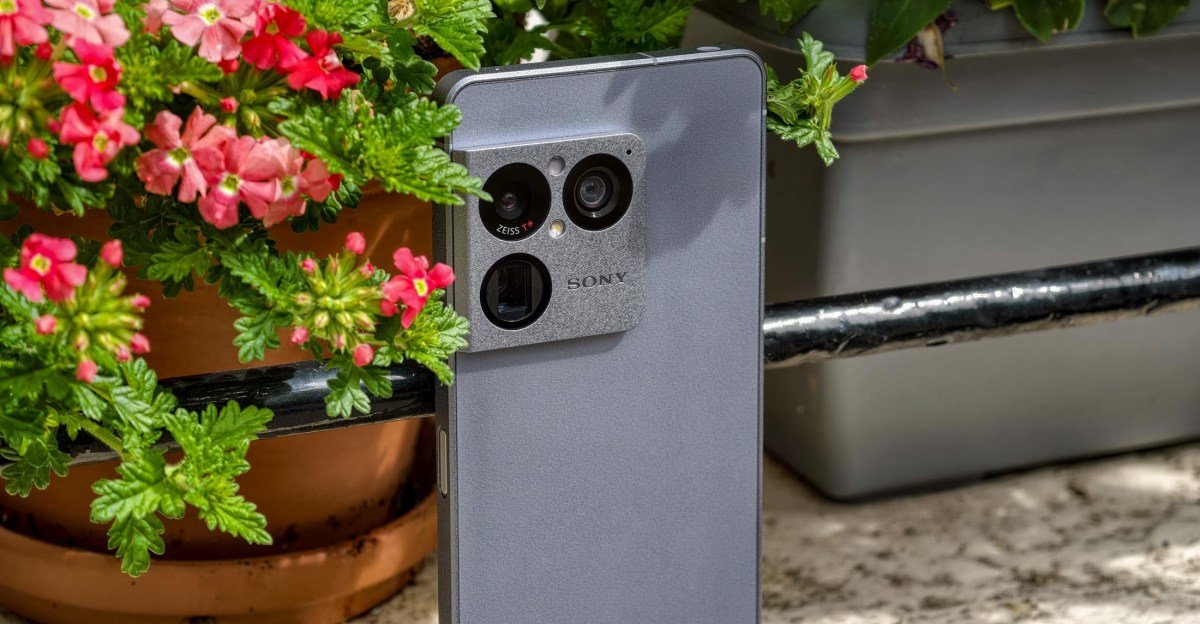
The Xperia 1 VIII marks an attempt at a step change for Sony’s flagship phone line. Not only has it had an aesthetic overhaul, but Sony has also revamped the camera system, dropping the continuous optical zoom telephoto that’s defined the last four generations of Xperia phone.
It’s not all different. Sony staples like a 3.5mm headphone jack and microSD card slot remain, and a few specific design touches, like a thick front bezel that fits stereo speakers, have stayed intact. Sony’s ambitious pricing hasn’t changed either: The Xperia 1 VIII isn’t launching in the US, but in the UK and Europe, it starts from £1,399 / €1,499 (about $1,850), rising to £1,849 / €1,999 ($2,450) if you want 1TB of storage.
For Sony diehards, this delivers the flagship essentials, including a capable camera, and looks good doing it. For everyone else, you can find better Android phones at this price, like Xiaomi’s 17 Ultra or the Vivo X300 Ultra.


$1850
The Good
- Stark, striking design
- Headphone jack and microSD card slot
- Capable cameras
The Bad
- Middling battery life
- Uneven performance
- Only four years of Android updates
- Dreadful AI Camera Assistant
Sony’s Xperia 1 phones have looked almost identical to one another since 2020. It was a pretty handsome design, to be fair, but probably overdue sprucing up. The 1 VIII does just that, moving to a blocky new camera island and an unusual textured finish that make the phone feel very different to every previous Xperia.
I’m a big fan of the design, which has a stark, brutalist quality. The slightly grippy texture — a bit like an incredibly fine nail file — was designed to vary subtly between the back and frame, which helps prevent the phone from feeling like a monotone slab. The texture helps sell the phone’s high price even better than ultrasmooth glass might (not that this isn’t glass, with Gorilla Glass Victus on the rear and Victus 2 on the front).


I love the details, like how the camera island’s edges drop off steeply on three sides, while on the last it angles down to meet the frame. Sony’s usual knurled two-stage camera shutter button returns, adding another textural element and improved camera controls. Unfortunately, so does the recessed power button and fingerprint sensor, which is less reliable than modern under-display options. It fails about a third of the time I try it. I’m also confused by the odd rectangular patch above the volume button, which has an especially rough texture and looks like it should do something, but doesn’t. Is it some sort of antenna cutout? I’ve asked Sony.
Sony long ago gave up on using its unique 21:9, 4K displays on the Xperia lineup. The 1 VIII uses a less impressive 1080p display in a standard smartphone aspect ratio. The resolution is low for this grade of phone, but otherwise I can’t complain about the panel, which is a 6.5-inch, 120Hz OLED with decent brightness. I do still miss the taller screens Sony phones used to offer, though. Unlike most rivals, the display is also entirely uninterrupted by a camera cutout, notch, or Dynamic Island. The tradeoff is the rather thick bezel above and below the screen, which houses the camera and a pair of stereo speakers (good for phone speakers, but still phone speakers).

The Xperia 1 VIII’s internals are unremarkable, with the same Qualcomm Snapdragon 8 Elite Gen 5 chipset you’ll find on most comparable handsets. It’s paired with either 12GB of RAM and 256GB of storage — available in black, red, or silver versions of the phone — or 16GB of RAM and 1TB of storage. That model is only available in gold, meaning that anyone tempted by the Trump phone’s lustrous finish and built-in headphone jack can enjoy the same luxuries here for quadruple the price.
What is remarkable is that Sony has managed to make the 8 Elite Gen 5 perform quite poorly. While the phone runs smoothly the majority of the time, I’ve run into repeated stuttering and slowdowns, especially in the camera or while switching between apps. It gets hot, too. Using the phone to record the audio of a recent press event, with real-time AI transcription running, it became worryingly warm after just 30 minutes or so, and as the hourlong call ended, it was hot to the touch.
I don’t love the battery either. Sony claims you’ll get two days of life out of the 5,000mAh cell, but I don’t see how. I’m a light-to-moderate user most of the time, and I’ve dipped into single-digit territory by bedtime more than once. This will last the day unless you push it hard, but expect to charge every 24 hours. That might take some time too, given the 30W max speed, substantially slower than most rivals. Only Google’s Pixel 10 Pro charges quite so slowly.

This is definitely Sony’s best phone camera yet
I have better news on the camera front. After years of carving its own path, Sony has taken the “if you can’t beat ‘em, join ‘em” approach to its Chinese flagship rivals, abandoning its clever continuous zoom lens and instead packing the 1 VIII with the biggest telephoto sensor it could fit. That Sony dropped continuous zoom in the same year Xiaomi finally copied it and did it better feels like a cruel twist of fate.
Still, what the 2.9x (70mm-equivalent) telephoto lens here loses in versatility by giving up continuous zoom it more than makes up for in quality. That’s driven mostly by the move to a large 48-megapixel, 1/1.56-inch-type sensor — the same size as the ultrawide’s and almost as big as the 1/1.35-inch-type main camera sensor. Those other cameras, along with the 12-megapixel selfie shooter, are unchanged from last year.
1/19
The telephoto and the ultrawide are the two standouts, both using relatively large sensors compared to the competition. I’m a fan of Sony’s daytime processing, which leans toward higher contrast and slightly more muted colors than some other phones, and nighttime shots come out sharp and well-exposed too, though still struggle with bright streetlights. This is definitely Sony’s best phone camera yet and holds its own against the competition.

That is, except for the egregious new AI Camera Assistant. More often than not, when you’re trying to take a shot with the rear camera (not selfies — don’t ask me why), a pop-up appears with four AI-suggested edits to your photos, before you even take them. The overwhelming majority of these are simply overaggressive filters, either ramping up contrast or dialling back saturation, often to comically bad effect. Occasionally one will include algorithmically generated bokeh, and Sony claims it can also suggest lens swaps for better framing, but this has yet to happen to me. Every single suggestion has been markedly worse than the default camera settings, and the pop-up alone is a distracting annoyance that seems to make the camera app sluggish. Fortunately, you can turn it off, and if I wasn’t reviewing the phone, I would have done so immediately.
1/5
The AI camera suggestions feel emblematic of Sony’s Xperia line, which always delivers an impressive amount on paper and then contrives to trip itself up. The headphone jack, expandable storage, and stereo speakers are great. The new design language is striking and unique. The camera is the best it’s ever been. Sony’s relatively simple, streamlined take on Android 16 has its appeal too, but a meager promise of four OS updates and six years of security support gives me pause. It has its irritating quirks too: it keeps insisting on creating home screen folders, adding Facebook to my Instagram icon to make a Meta folder, and throwing a whole host of Google apps on top of Google Maps. Throw in the middling battery, performance problems, and high price, and the 1 VIII is hard to recommend to the average flagship buyer.
All of which leaves Sony back where it started. It redesigned the Xperia, rethought its camera, and simplified its software, but this is still what it always was: a phone for the fanboys. The rest of us can do better.
Photography by Dominic Preston / The Verge
Agree to Continue: Sony Xperia 1 VIII
Every smart device now requires you to agree to a series of terms and conditions before you can use it — contracts that no one actually reads. It’s impossible for us to read and analyze every single one of these agreements. But we started counting exactly how many times you have to hit “agree” to use devices when we review them since these are agreements most people don’t read and definitely can’t negotiate.
To use the Xperia 1 VIII, you must agree to:
- Google Terms of Service
- Google Play Terms of Service
- Google Privacy Policy (included in ToS)
- Install apps and updates: “You agree this device may also automatically download and install updates and apps from Google, your operator, and your device’s manufacturer, possibly using cellular data.”
- Sony warranty and usage guidelines
- Sony end user licence agreement
There’s also a variety of optional agreements, including:
- Provide anonymous location data for Google’s services
- “Allow apps and services to scan for Wi-Fi networks and nearby devices at any time, even when Wi-Fi or Bluetooth is off.”
- Google phone number verification
- Send usage and diagnostic data to Google
- Let contacts nearby find and share with you
- Google Gemini Apps Privacy Notice if you opt in to using Gemini Assistant
- Sony data collection to develop and improve products and services
- Sony data use for tailored marketing
- Sony data use for tailored support
- Sony data use for tailored marketing via the support app
Honor includes several more optional agreements during setup tied to specific features. Other Google features, like Google Wallet, may require additional agreements.
Final tally: six mandatory agreements and more than 12 optional agreements.