

Close Menu

    Subscribe to Updates

    Get the latest news information from worldwide businesses.

    What's Hot

    The most unpredictable meteor shower of the year peaks next week. Here’s what to expect

    June 19, 2026

    Former WWE champion takes a shot at MJF amid ongoing issues between the two

    June 19, 2026

    New Mercedes van combines limo luxury with lots of legroom

    June 19, 2026
    Facebook Instagram YouTube LinkedIn X (Twitter)
    Trending
    • The most unpredictable meteor shower of the year peaks next week. Here’s what to expect
    • Former WWE champion takes a shot at MJF amid ongoing issues between the two
    • New Mercedes van combines limo luxury with lots of legroom
    • Einstein’s “biggest blunder” may finally have an explanation
    • Low-Dose Liquid Egg Oral Immunotherapy Shows Promise for Egg-Allergic Children: Study
    • Hue’s wired wall modules bring non-smart lights into its ecosystem
    • Is the US government’s Anthropic ban accidentally helping the brand?
    • Adani eyes Bengal ports, logistics opportunities as SMPK plans tourism push
    Newspublicly
    • About Us
    • Advertise & Partner with us
    • Pitch Your Story
    • Contact Us
    Facebook Instagram LinkedIn X (Twitter)
    Subscribe
    • Home
    • World News
      • Asia
      • India
      • USA
      • UK & Europe
      • Middle East
    • Economy & Business
      • Global Economy
      • Corporate & Industry
      • Finance & Markets
      • Policy & Trade
    • Technology
      • Gadgets & Devices
      • Software & Apps
      • AI & Machine Learning
      • Robotics & Automation
    • Health & Medicine
      • Fitness & Nutrition
      • Research & Innovation
      • Disease & Treatment
      • Doctors, Clinics & Patient Care
    • Travel & Tourism
    • Automobile
      • Electric & Hybrid Vehicles
      • Auto Industry Insights
    • Sports
    • More
      • Education
      • Real Estate
      • Environment & Climate
      • Space & Astronomy
      • War & Conflicts
    Newspublicly
    Home»Health & Medicine»Research & Innovation»Researchers found a Wordle strategy that wins 99% of the time
    Research & Innovation

    Researchers found a Wordle strategy that wins 99% of the time

    AdminBy AdminJune 19, 2026No Comments4 Mins Read0 Views
    Share
    Facebook Twitter LinkedIn Copy Link WhatsApp


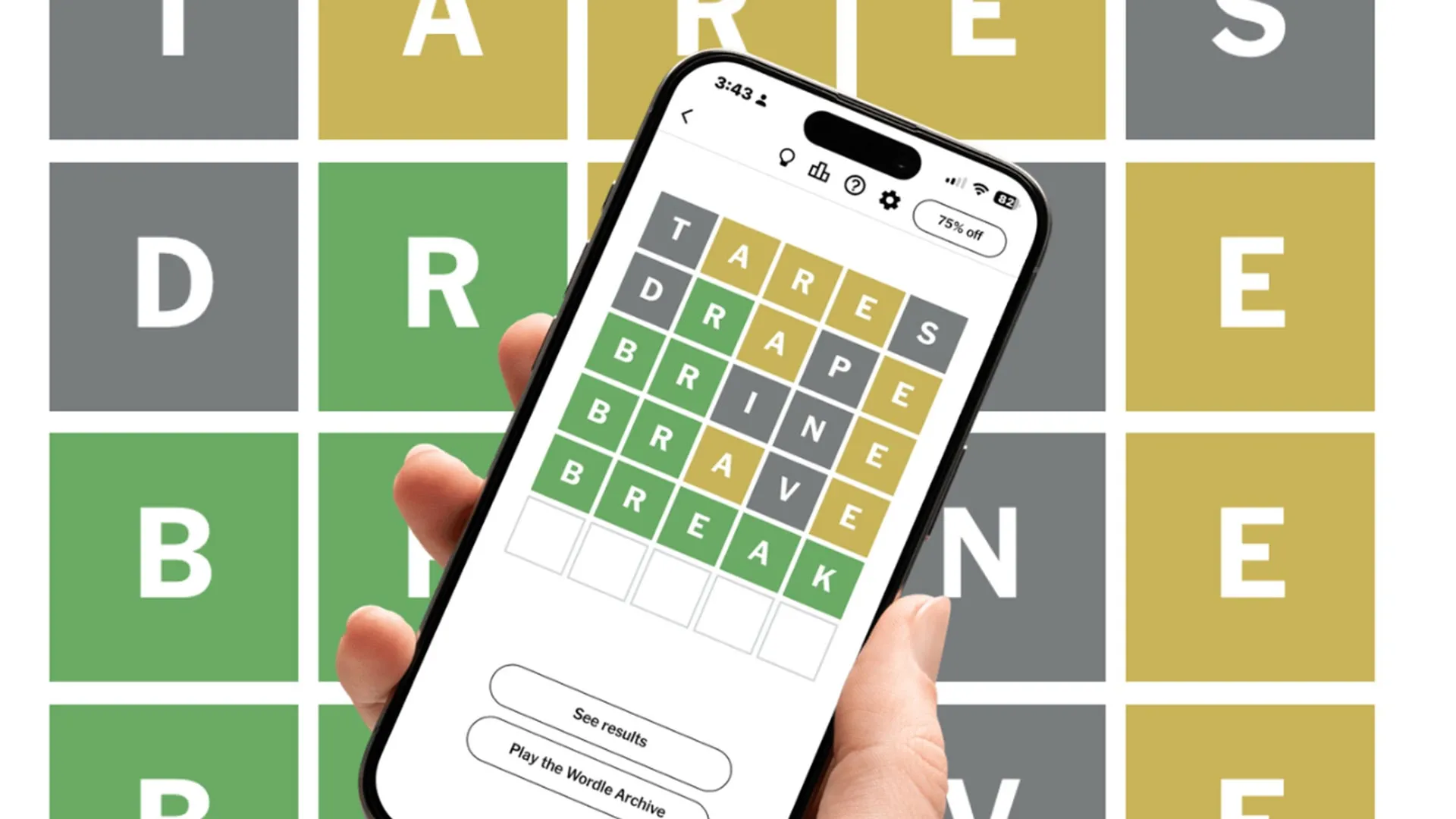
    Millions of people tackle Wordle every day, trying to uncover a hidden five-letter word in the New York Times’ wildly popular puzzle game. Now, researchers at Binghamton University, State University of New York, say they have developed a mathematical approach that can solve Wordle with a remarkable 99% success rate.

    The goal of Wordle is simple. Players have six chances to identify a secret five-letter word. Each game begins with five empty squares and no clues.

    When a player enters a guess, such as “BRAVE,” the game responds with colored squares that provide hints about the hidden word:

    • Grey means the letter does not appear in the secret word.
    • Yellow means the letter is in the word but is in the wrong position.
    • Green means the letter is both correct and in the correct position.

    Using these clues, players continue making guesses until they either find the answer and turn all five squares green or run out of attempts.

    Using Information Theory to Solve Wordle

    The research team, led by Assistant Professor Congyu “Peter” Wu, turned to Shannon entropy, a mathematical concept used to measure uncertainty. Instead of focusing on words that seem most likely to be the answer, the method identifies guesses that reveal the greatest amount of information and eliminate the largest number of possibilities.

    “Let’s say you’re at a certain guess. The previous guesses will eliminate a whole bunch of options, and based on the remaining options, guessing some words will send you into a trajectory where information gain is speedier,” said Wu, a faculty member at the Thomas J. Watson College of Engineering and Applied Science’s School of Systems Science and Industrial Engineering.

    According to the researchers, the key insight is that the best guess is not always the one most likely to be correct. Sometimes a more informative guess can dramatically narrow the field of possible answers.

    “A subtle but important insight from the paper is that a guess doesn’t have to be the most likely answer; it simply has to be informative,” said Donald Stephens, a doctoral student at Binghamton University. “By applying Shannon entropy, the objective shifts to maximizing the expected reduction in uncertainty rather than the probability of being right. In practice, this approach can lead to solving the puzzle in fewer guesses.”

    The strategy can appear somewhat random because it prioritizes gathering information over directly pursuing the answer. To use it while playing Wordle, a player would run a separate script/program and enter the color-coded feedback after each guess. The program would then recommend the next word that is expected to provide the most useful information.

    A 99% Success Rate

    To evaluate the approach, the researchers compared it with a more traditional Wordle strategy that emphasizes frequently used letters (e.g., “A,” “E,” “R”).

    In computer simulations, the information theory-based method successfully solved 99% of Wordle puzzles. The conventional approach solved about 90%.

    From Classroom Assignment to Published Research

    The project began not as a formal research initiative, but as a class assignment. Wu challenged students to demonstrate how information theory could be applied to a real-world problem.

    That classroom exercise eventually evolved into a published scientific paper.

    Co-author Talal Aladaileh said the journey from coursework to publication reflects the strength of Binghamton’s School of Systems Science and Industrial Engineering.

    “The courses here don’t just teach concepts; they push you to apply them in ways that have real, lasting impact,” Aladaileh said.

    Wu noted that the project serves as an excellent example of how information theory can be used to improve performance in practical tasks.

    “What is especially creative and valuable about the team’s intellectual contribution,” Wu said, “is that it transformed a static measurement (Shannon entropy) in a scientific domain into a dynamic solution that helps accomplish a popular task better, which showcases the team’s deep understanding of class material and their talent as engineers.”

    The study, “Solving Wordle Using Information Theory,” was published in the Northeast Journal of Complex Systems.


    Source link

    Author

    • Admin

      NewsPublicly.com is News & Articles Platform that creating SEO-focused articles on travel, lifestyle, and digital trends.

    Admin
    • Website

    NewsPublicly.com is News & Articles Platform that creating SEO-focused articles on travel, lifestyle, and digital trends.

    Related Posts

    Einstein’s “biggest blunder” may finally have an explanation

    June 19, 2026

    Scientists reprogram brain immune cells to fight Alzheimer’s

    June 19, 2026

    Scientists expected a black hole but found a neutrino factory powered by stars

    June 19, 2026
    Leave A Reply Cancel Reply

    Demo
    Top Posts

    The Blue Moon rises on May 30— Where and when to see the second full moon of the month

    May 30, 202640 Views

    New SOCOM rifle allows barrel swapping and cartridge changes

    June 1, 202633 Views

    “Inside Gemini Robotics 1.5: How Robots Learn to Reason & Act

    November 22, 202525 Views

    525 pounds of cocaine seized after Nebraska K9 alerts troopers on I-80

    May 28, 202624 Views
    Don't Miss

    The most unpredictable meteor shower of the year peaks next week. Here’s what to expect

    June 19, 20263 Mins Read0 Views

    Heads up, stargazers! The notoriously unpredictable June Bootid meteor shower is set to peak next…

    Former WWE champion takes a shot at MJF amid ongoing issues between the two

    June 19, 2026

    New Mercedes van combines limo luxury with lots of legroom

    June 19, 2026

    Einstein’s “biggest blunder” may finally have an explanation

    June 19, 2026
    Stay In Touch
    • Facebook
    • Twitter
    • Instagram
    • YouTube
    • LinkedIn
    • WhatsApp

    Subscribe to Updates

    Get the latest creative news from SmartMag about art & design.

    Demo
    NEWSPUBLICLY
    Facebook X (Twitter) Instagram LinkedIn

    Home

    • About Us
    • Leadership
    • Advertise & Partner With Us
    • Pitch Your Story
    • Media Kit & Pricing
    • Career
    • FAQs

    Guidelines

    • Editorial & Submission
    • Partnership
    • Advertising & Sponsor
    • Intellectual Property Policy
    • Community & Comment
    • Security & Data Protection
    • Send Your Opinion

    Quick Links

    • Cookie Policy
    • Payment & Billing Terms
    • Refund & Cancellation
    • Copyright Policy
    • Complaint & Support
    • Sitemap
    • Contact Us

    Subscribe Us

    Get the latest news and updates!

    Copyright © 2026 Newspublicly (DIGITALIX COMMUNICATION). All Rights Reserved.
    • Privacy Policy
    • Terms of Use
    • Disclaimer