

This essay is part of Going Out, a series of stories celebrating LGBTQIA+ travel.
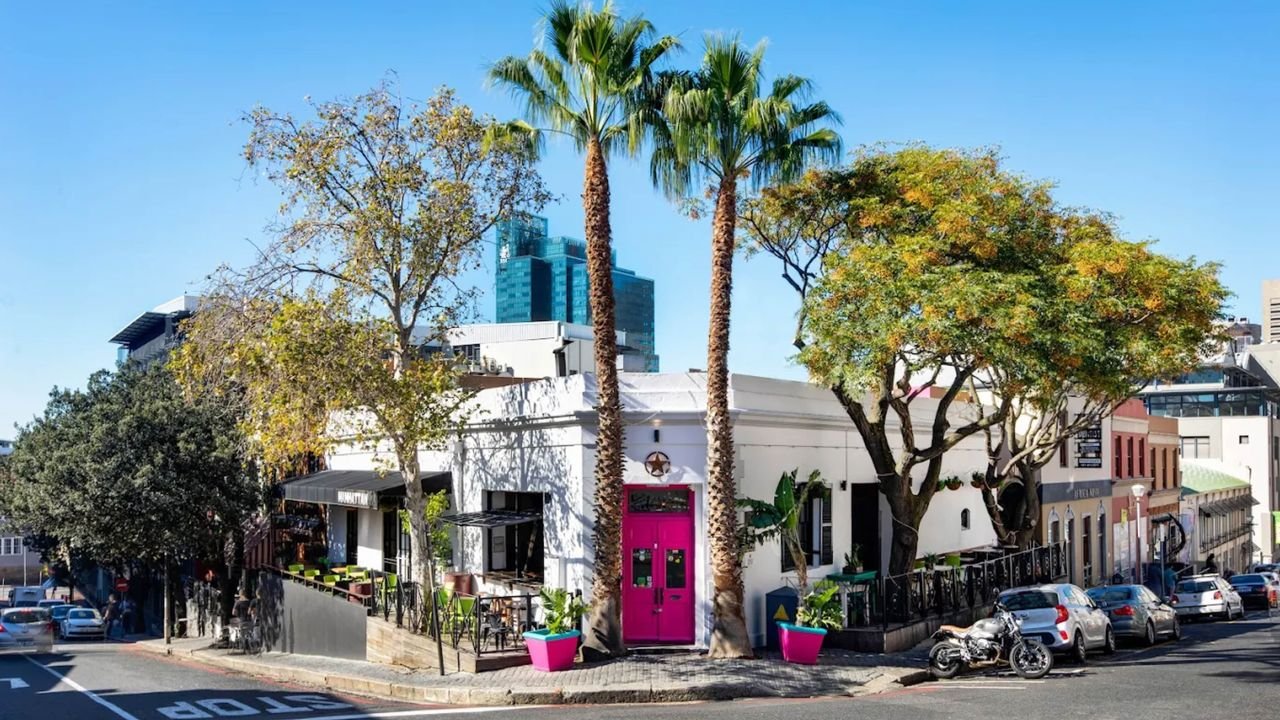
Cafe Manhattan, the oldest queer bar and restaurant in Africa, sits at a literal crossroads: The storied gathering space spans an entire street corner in the center of Cape Town’s de Waterkant village, where its lime-green patio chairs and hot-pink front doors offer a cheeky contrast to the angular building’s crisp-white facade. However modern its exterior, Cafe Manhattan has been a neighborhood pillar since well before many of the sleek rooftop restaurants and luxury boutiques that now surround it popped up.
Established in 1994 by local entrepreneur Russell Shapiro, Cafe Manhattan is the neighborhood’s longest-standing venue, a major catalyst in the enclave’s development, and a longtime draw for queer patrons. For more than three decades now, the cafe has welcomed LGBTQ+ locals, travelers, and anyone else looking for a warm, welcoming place to have a rollicking good time, whether that means cheering on their favorite drag queen or knocking back drinks with a hot date.

Although Cape Town is often celebrated as a haven for queer travelers on a continent where other countries are still passing punitive anti-gay laws, South Africa’s reputation as a safer alternative is fairly new. Cafe Manhattan’s founding predates the country’s constitution, which was adopted in 1996 as part of the official end of apartheid and signed by South Africa’s first Black head of state, Nelson Mandela. Part of its mandate was making South Africa the first nation to enact a constitution that explicitly forbids discrimination, including on the basis of sexual orientation.
South Africa’s landmark legal protections didn’t usher in an overnight cultural shift, but they did make visibility less dangerous for queer people in some pockets of major cities, particularly Cape Town. And in the late 1990s and early 2000s, Cafe Manhattan was among the first public spaces to put queer artists in the spotlight. Its sister venue, On Broadway, used proceeds from the cafe to fund regular performances of “Cabaret, comedy, theatre, song & dance and much, much more…” as its website advertised back in 2004.
Several nights a week, visitors could witness acts like the celebrity impersonator Ceri Dupree (who has performed as Marilyn Monroe, Lady Gaga, and even Queen Camilla) or the all-female vocal trio 3 Tons of Fun, whose standout renditions of Motown hits drew consistent crowds. A drag show by veteran performer Lilly Slaptsilli (sound out the cheeky surname), which debuted during On Broadway’s opening night in 1997, ran for nearly 18 years. “People know when they go to On Broadway that they’ve got a good night out,” Shapiro told South Africa’s Independent Online back in 2004, adding that “all the shows are pure party shows.”