

Close Menu

    Subscribe to Updates

    Get the latest news information from worldwide businesses.

    What's Hot

    India’s net direct tax collections rise 14.6% to Rs 5.21 lakh crore till June 17

    June 18, 2026

    What did Ukraine target in Moscow and how significant was the drone attack? | Ukraine

    June 18, 2026

    Survey Reveals 78% of Urban Indians Have High Confidence in Economy Amid Global Pessimism | India News

    June 18, 2026
    Facebook Instagram YouTube LinkedIn X (Twitter)
    Trending
    • India’s net direct tax collections rise 14.6% to Rs 5.21 lakh crore till June 17
    • What did Ukraine target in Moscow and how significant was the drone attack? | Ukraine
    • Survey Reveals 78% of Urban Indians Have High Confidence in Economy Amid Global Pessimism | India News
    • ‘Remain calm, avoid sharing unverified information’
    • Astrophotographer captures a cosmic lagoon glowing 5,200 light-years from Earth (photo)
    • Ivory Coast star Elye Wahi banned from entering Canada for FIFA World Cup clash amid investigation over match-fixing allegations: Reports
    • Forget Solid-State. This EV Battery Breakthrough Is Ready To Upend The Market Now
    • Volkswagen’s EV hot hatch captured for the first time, not the Polo
    Newspublicly
    • About Us
    • Advertise & Partner with us
    • Pitch Your Story
    • Contact Us
    Facebook Instagram LinkedIn X (Twitter)
    Subscribe
    • Home
    • World News
      • Asia
      • India
      • USA
      • UK & Europe
      • Middle East
    • Economy & Business
      • Global Economy
      • Corporate & Industry
      • Finance & Markets
      • Policy & Trade
    • Technology
      • Gadgets & Devices
      • Software & Apps
      • AI & Machine Learning
      • Robotics & Automation
    • Health & Medicine
      • Fitness & Nutrition
      • Research & Innovation
      • Disease & Treatment
      • Doctors, Clinics & Patient Care
    • Travel & Tourism
    • Automobile
      • Electric & Hybrid Vehicles
      • Auto Industry Insights
    • Sports
    • More
      • Education
      • Real Estate
      • Environment & Climate
      • Space & Astronomy
      • War & Conflicts
    Newspublicly
    Home»More»Space & Astronomy»‘It’s quite a bit more than we expected’: Satellite reveals immense scale of GPS signal tampering
    Space & Astronomy

    ‘It’s quite a bit more than we expected’: Satellite reveals immense scale of GPS signal tampering

    AdminBy AdminJune 18, 2026No Comments5 Mins Read0 Views
    Share
    Facebook Twitter LinkedIn Copy Link WhatsApp


    An experimental satellite has mapped the scale of GPS jamming across Europe and the Middle East from space for the first time.

    The data surprised the team behind the project and indicated that satellites orbiting far from Earth aren’t the only ones that experience degradation of their positioning, navigation and timing (PNT) signals, which could affect their performance and the safety of their operations.

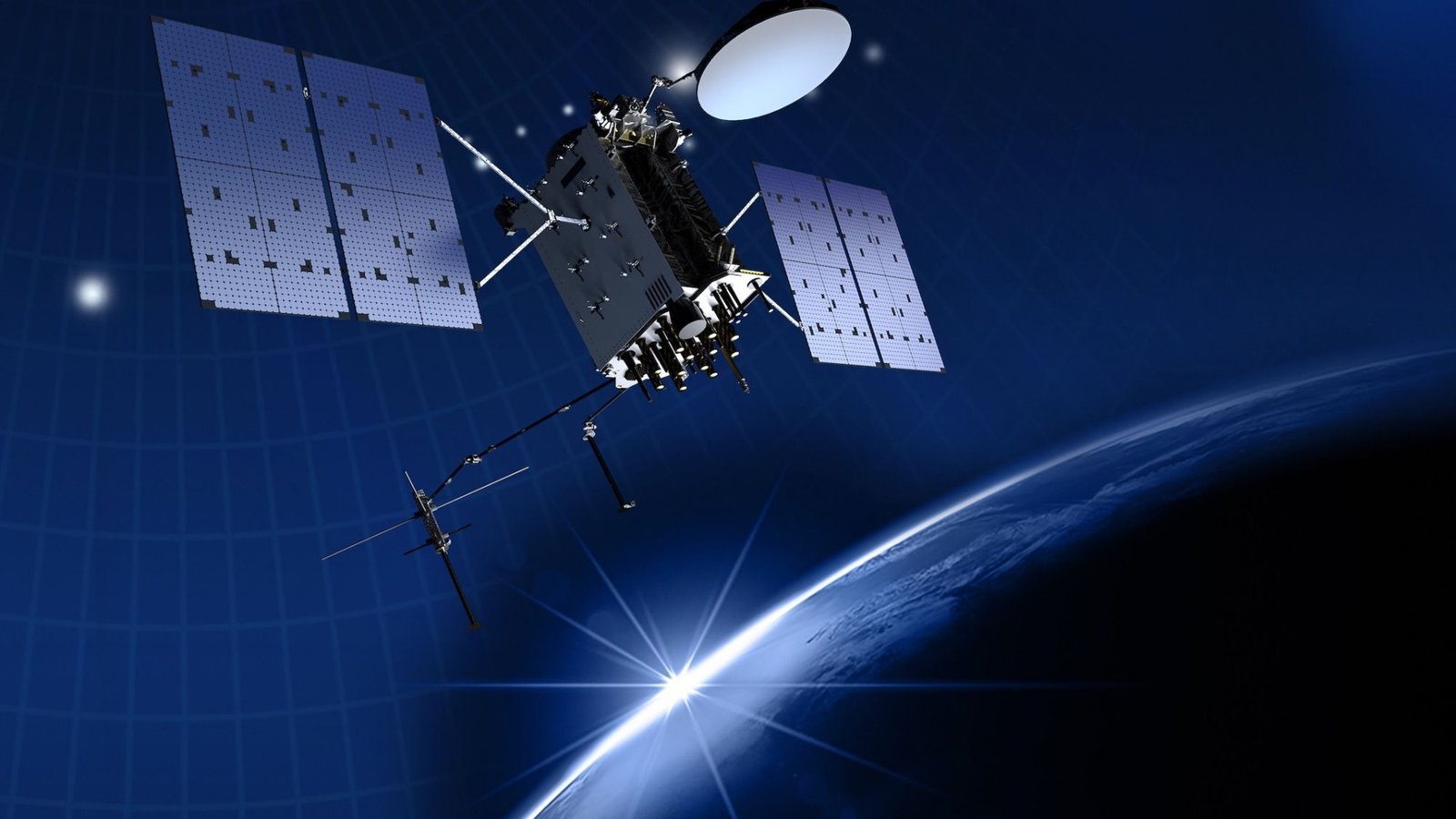
    The new measurements were made by Pulsar-0, the first satellite of the novel Pulsar navigation constellation developed by California-based Xona Space Systems. The experimental satellite orbits 310 miles (500 kilometers) above Earth, testing Xona’s technology before the company begins deploying its navigation constellation of 300 spacecraft in low Earth orbit (LEO) later this year.

    The purpose of the Pulsar constellation is to provide a more resilient PNT service compared to the United State’s GPS network and other global navigation satellite systems (GNSS), such as Europe’s Galileo or China’s Beidou. The PNT signals distributed by GNSS satellites underpin many systems that our civilization relies on in everyday life, including the operation of power grids, finance operations and oil drilling.

    But because GNSS satellites orbit quite far from Earth — at altitudes abve 12,000 miles (19,000 km) — the signal that ground-based receivers detect is weak and can be easily jammed.


    You may like

    GNSS jamming (the overpowering of GNSS signals with noise) and spoofing (which involves overriding the original signals with false ones carrying incorrect coordinates), have become almost a global emergency over the past five years.

    For example, Russian jammers have been disrupting GNSS signals along Russia’s western borders, officially to protect the country from Ukrainian drone attacks. Every month, this interference affects tens of thousands of flights that cruise over the region. The warring parties in the Middle East, too, use jamming and spoofing to deflect drone attacks and hide the positions of illegal ships at sea.
    Space

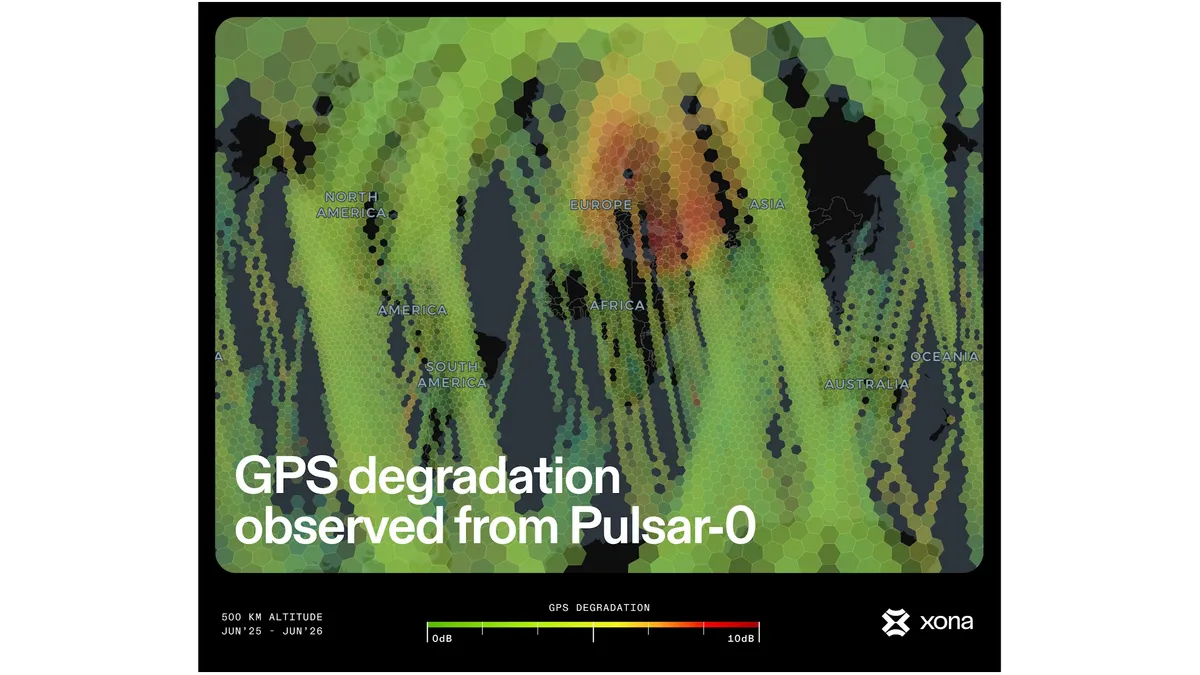
    Pulsar-0 navigation satellite has mapped areas of GNSS jamming on Earth with unprecedented accuracy.

    Xona’s Pulsar-0 navigation satellite has mapped areas of GNSS jamming on Earth with unprecedented accuracy. (Image credit: Xona)

    Xona’s satellites will use a similar signal, but one that’s 100 times stronger, to offer greater resiliency against such deliberate interference. But the Pulsar-0 spacecraft also carries a GPS receiver to make sure the two systems will be able to work together. When the Xona team first turned on that receiver a few months after Pulsar-0’s launch last year, they were shocked by the scale of signal degradation the receiver was reporting above Europe and parts of the Middle East.

    “When we fly over North America, for example, we see a beautiful signal all the time,” Kaz Gunning, Xona’s co-founder, told Space.com. “But as soon as we started doing any operations above Europe, we noticed that there was really something going on there. We thought we were going to see some jamming, but it’s quite a bit more than we expected.”

    In the hardest-hit areas, the strength of the GPS signals at the satellite’s altitude dropped from the regular 40 decibels to as little as 10 decibels.


    What to read next

    Gunning says that, due to the altitude of the Pulsar-0 satellite, the map may not truthfully reflect where jamming is worst for users on the ground. The data, however, revealed that satellites in heavily used LEO suffer from some degree of GPS signal disruption all the way from France in the west to the borders of Pakistan in the east.

    The measurements mean that satellites in LEO are not out of the reach of ground-based jammers, and that the PNT signals those satellites need to time-sync their operations and determine their position in space can’t always be relied upon.

    “You lose the GPS capability as soon as you pass over these regions,” said Gunning. “That may be a problem for imaging satellites that are trying to position themselves to take images of a certain region. You can’t do altitude determination, you can’t do the positioning without the GPS signal. You can’t even accurately point at your telecommand antenna on the ground. That’s generally going to disrupt satellite operations.”

    Satellite constellations such as SpaceX Starlink also rely on GPS to avoid collisions with other spacecraft.
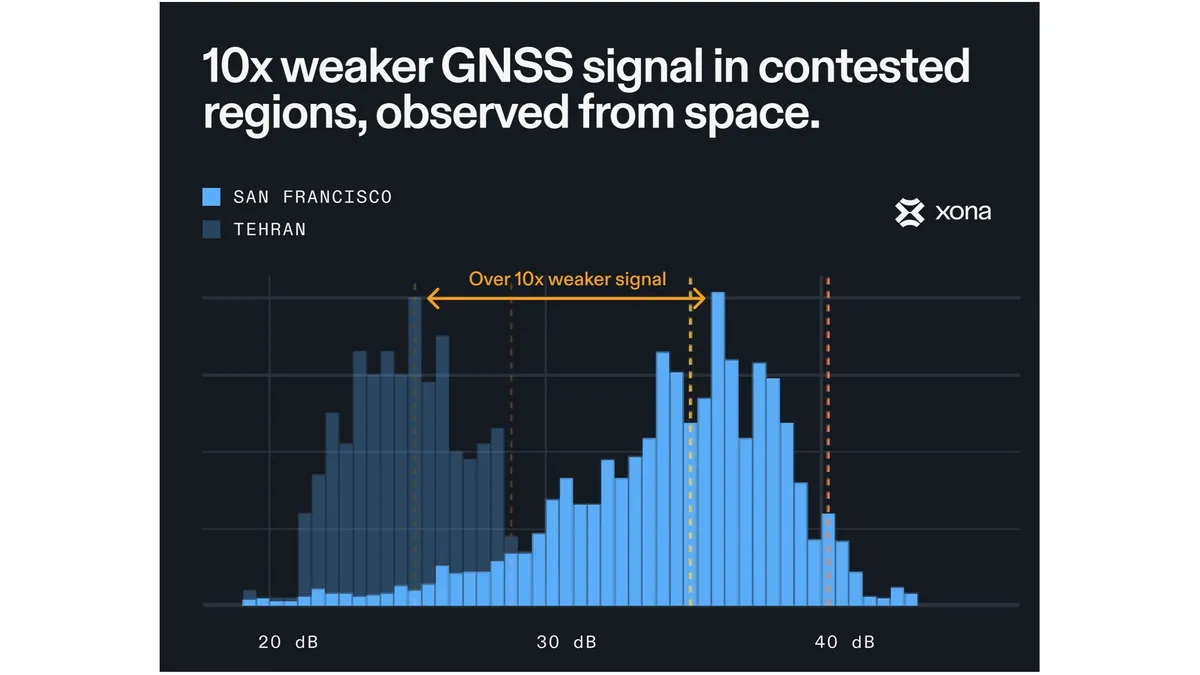
    Pulsar-0 navigation satellite has mapped areas of GNSS jamming on Earth with unprecedented accuracy.

    Pulsar-0 has found that GNSS signals are tampered with more extensively over regions in conflict. (Image credit: Xona)

    It’s not just deliberate jamming and spoofing that can wreak havoc with the precious PNT signal. Severe solar storms, too, can cause serious disruptions. The Gannon superstorm in May 2024, for example, distorted the GNSS signal so much that precision farming machinery in parts of the U.S. couldn’t operate for days. Technologists are therefore racing to find backup solutions to transmit the PNT signal to everyone who needs it whenever GNSS is down.

    Xona hopes that the Pulsar constellation, once up and running, will make the lives of those dependent on GNSS much easier.

    Gunning says that, with the superior strength of the PNT signal transmitted by the company’s planned LEO constellation, existing jammers would only be able to affect about 5% of the area they can currently disrupt.

    “The effect of the jamming is going to be reduced to a smaller radius,” Gunning said. “The degradation area will go down, and the full lock-out radius will also go down.”

    Xona plans to launch a batch of six satellites in October and begin ramping up production shortly thereafter. The company raised $170 million in a “Series C” funding round this March and hopes to begin delivering basic service in early 2027.

    “We expect early customers in timekeeping to begin utilizing Pulsar at the end of this year with intermittent coverage,” Max Eunice, Xona’s head of communications, told Space.com. “Pulsar’s capability will increase with every subsequent launch, unlocking new advantages for new customer segments as our constellation fills out.”


    Source link

    Author

    • Admin

      NewsPublicly.com is News & Articles Platform that creating SEO-focused articles on travel, lifestyle, and digital trends.

    Admin
    • Website

    NewsPublicly.com is News & Articles Platform that creating SEO-focused articles on travel, lifestyle, and digital trends.

    Related Posts

    Astrophotographer captures a cosmic lagoon glowing 5,200 light-years from Earth (photo)

    June 18, 2026

    These Mars valleys are hiding 30 dust devils photo of the day for June 18, 2026

    June 18, 2026

    Astronomers solve the mystery of black holes’ delayed cosmic ‘burps’

    June 18, 2026
    Leave A Reply Cancel Reply

    Demo
    Top Posts

    The Blue Moon rises on May 30— Where and when to see the second full moon of the month

    May 30, 202640 Views

    New SOCOM rifle allows barrel swapping and cartridge changes

    June 1, 202633 Views

    “Inside Gemini Robotics 1.5: How Robots Learn to Reason & Act

    November 22, 202525 Views

    525 pounds of cocaine seized after Nebraska K9 alerts troopers on I-80

    May 28, 202624 Views
    Don't Miss

    India’s net direct tax collections rise 14.6% to Rs 5.21 lakh crore till June 17

    June 18, 20261 Min Read0 Views

    Net direct tax collections grew 14.64% to Rs 5.21 lakh crore in the current fiscal…

    What did Ukraine target in Moscow and how significant was the drone attack? | Ukraine

    June 18, 2026

    Survey Reveals 78% of Urban Indians Have High Confidence in Economy Amid Global Pessimism | India News

    June 18, 2026

    ‘Remain calm, avoid sharing unverified information’

    June 18, 2026
    Stay In Touch
    • Facebook
    • Twitter
    • Instagram
    • YouTube
    • LinkedIn
    • WhatsApp

    Subscribe to Updates

    Get the latest creative news from SmartMag about art & design.

    Demo
    NEWSPUBLICLY
    Facebook X (Twitter) Instagram LinkedIn

    Home

    • About Us
    • Leadership
    • Advertise & Partner With Us
    • Pitch Your Story
    • Media Kit & Pricing
    • Career
    • FAQs

    Guidelines

    • Editorial & Submission
    • Partnership
    • Advertising & Sponsor
    • Intellectual Property Policy
    • Community & Comment
    • Security & Data Protection
    • Send Your Opinion

    Quick Links

    • Cookie Policy
    • Payment & Billing Terms
    • Refund & Cancellation
    • Copyright Policy
    • Complaint & Support
    • Sitemap
    • Contact Us

    Subscribe Us

    Get the latest news and updates!

    Copyright © 2026 Newspublicly (DIGITALIX COMMUNICATION). All Rights Reserved.
    • Privacy Policy
    • Terms of Use
    • Disclaimer