

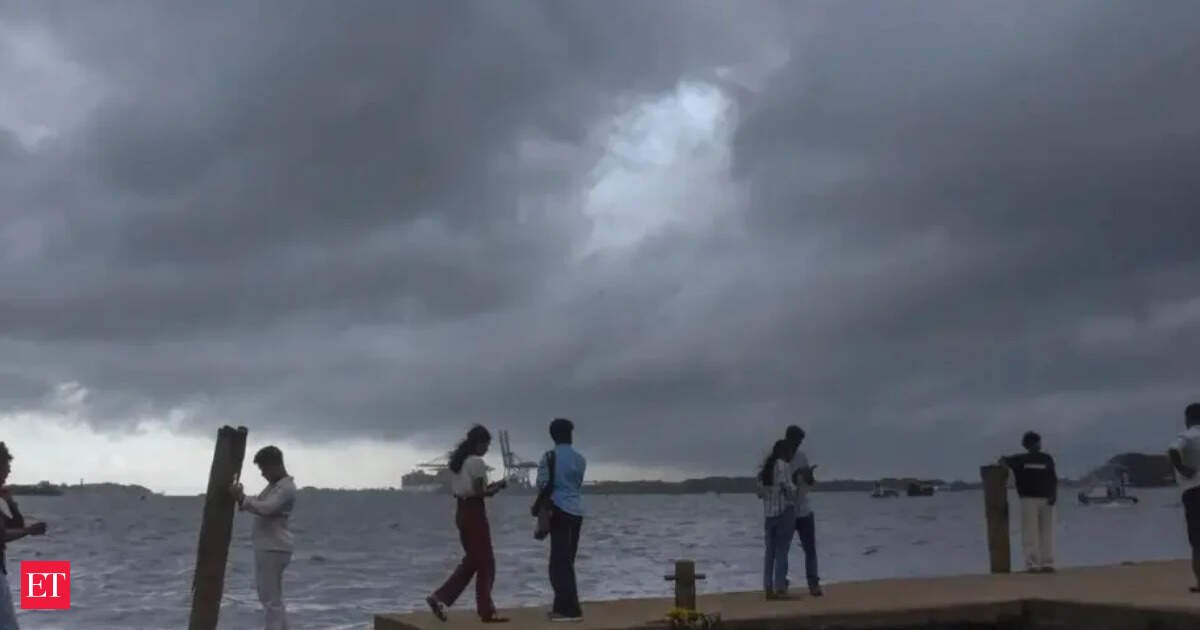
The UN body said the weather phenomenon raises risks for agriculture-dependent livelihoods and food security in regions already in crisis.
“In Asia, the risk extends beyond fields to global markets. El Nino can weaken the summer monsoon across much of India, putting rainfed crops such as rice and maize under stress during the critical growing season,” FAO said on its website.
Agricultural drought risk runs across South and Southeast Asia – from Pakistan and India through Myanmar, Thailand, Cambodia and Vietnam, and further east to the Philippines, Indonesia and Timor-Leste, it added.
The warning comes as the World Meteorological Organization (WMO) forecasts a stronger-than-usual monsoon cycle. FAO’s analysis draws on 41 years of historical satellite imagery to trace where strong El Nino events have caused the most severe agricultural drought.

The impact on India is a particular concern. During the 2015-16 El Nino, India’s maize output fell by four per cent, and rice production dropped by one per cent.
Across Southeast Asia, the same event led to losses of around 15 million tonnes of rice, pushing up prices and squeezing import-dependent countries.”When rainfall falls short, agriculture is hit first. A farmer might first lose crops, then livestock and with that their entire livelihood,” said Jorge Alvar-Beltran, FAO’s Natural Resources Officer.
The agency cautioned that this cycle could prove more damaging than previous ones.
“This isn’t like previous El Ninos. The planet is much warmer today, and with conflict and food insecurity widespread, this will hit hardest in places that are already vulnerable and have limited coping capacity,” Alvar-Beltran said.
More than 80 per cent of projected drought impacts are expected to fall on low- and middle-income countries.
Disruptions to shipping through the Strait of Hormuz are also pushing up energy and fertiliser costs as farmers prepare for the sowing season, FAO noted.
The agency said early action could limit damage. In Southern Africa, a pre-season effort ahead of the 2023-24 El Nino directed nearly USD 31 million to more than two million people across seven countries, providing seeds, livestock support and early warning systems.
“Early warning becomes effective prevention when it is acted upon timely and decisively,” FAO said.