

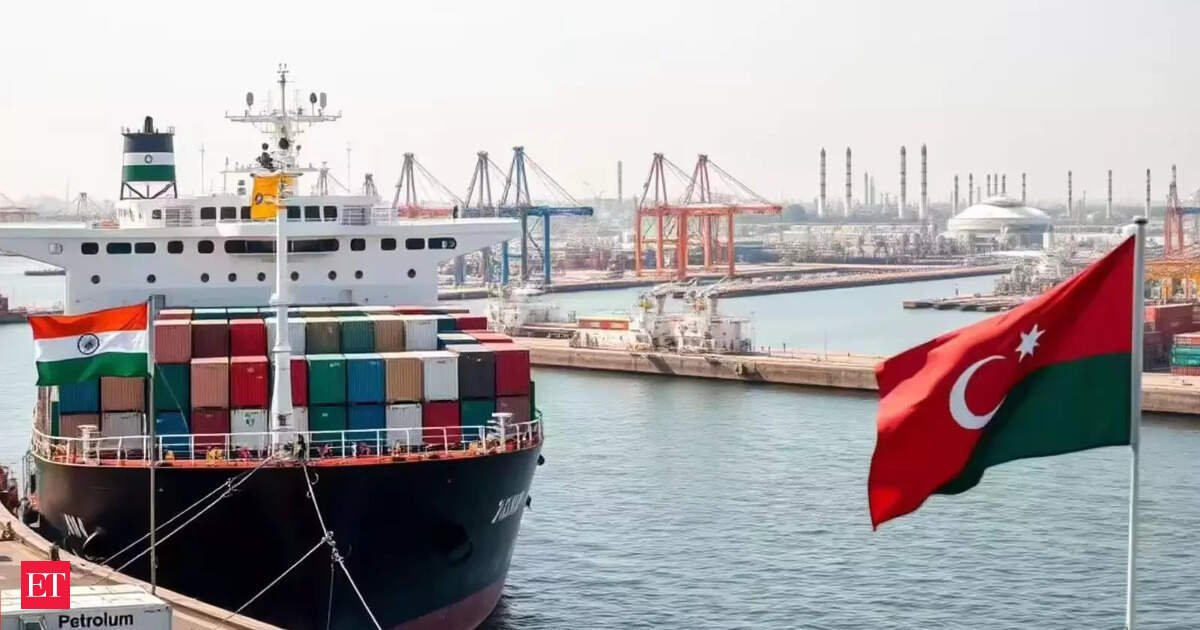
The India-Oman Comprehensive Economic Partnership Agreement (CEPA), which came into force on June 1, 2026, marks a major milestone in strengthening the economic and strategic partnership between the two countries.
“The entry into force of the India-Oman CEPA is expected to boost bilateral trade, deepen supply-chain linkages, and create new opportunities for Indian exporters, artisans and MSMEs.
“By providing comprehensive duty-free access and a transparent trade framework, the agreement is set to accelerate India’s textile exports to Oman and reinforce its position as a competitive and reliable supplier in the global market,” an official statement said.
The CEPA provides significant market access opportunities for India’s textiles and apparel sector.

Oman has accorded immediate duty-free access on all 945 textile and apparel tariff lines, eliminating the existing 5 per cent MFN (most favoured nation) duty and substantially enhancing the price competitiveness of Indian products in the Omani market.
Moreover, immediate zero duty access by elimination of the 5 per cent MFN duty has also been provided on exports of handicraft lines.”This places India in a strong position to expand its exports and consolidate its presence in a key Gulf market,” the Textile Ministry said in the statement.
India’s exports of textiles, apparel and handicrafts to Oman stood at USD 95.1 million in FY 2025-26, while Oman imports textiles and apparel worth approximately USD 598 million annually.
With India currently accounting for around 11 per cent of Oman’s total imports and ranking as its third-largest supplier, the CEPA provides a clear opportunity to significantly scale up exports and gain greater market share.
“Indian exporters are well-positioned to tap into growing demand in Oman across key segments such as apparel, made-ups, carpets, and fabrics, particularly in value-added and design-oriented products,” the ministry stated.
The agreement incorporates a modern and fully digitalised Certificate of Origin (CoO) framework, enabling seamless electronic exchange of origin certificates between the two countries, reducing transaction costs, improving efficiency, and facilitating smoother trade flows.
CEPA will also strengthen cooperation in intellectual property rights, reaffirming both countries’ rights under the WTO TRIPS Agreement and ensuring national treatment in the IPR protection.
The agreement provides for recognition of Geographical Indications (GIs), which is expected to enhance the visibility and marketability of India’s GI-tagged handloom and handicraft products in the Omani market, further promoting “Brand India” globally.
In the midst of the geopolitical developments in West Asia, Oman has emerged as a gateway for trade with the Gulf Cooperation Council (GCC) nations, by bypassing chokepoints like the Strait of Hormuz through ports like Sohar.
The bilateral trade agreement would further strengthen a broader connectivity with the Gulf Cooperation Council (GCC) nations and the East African region.