

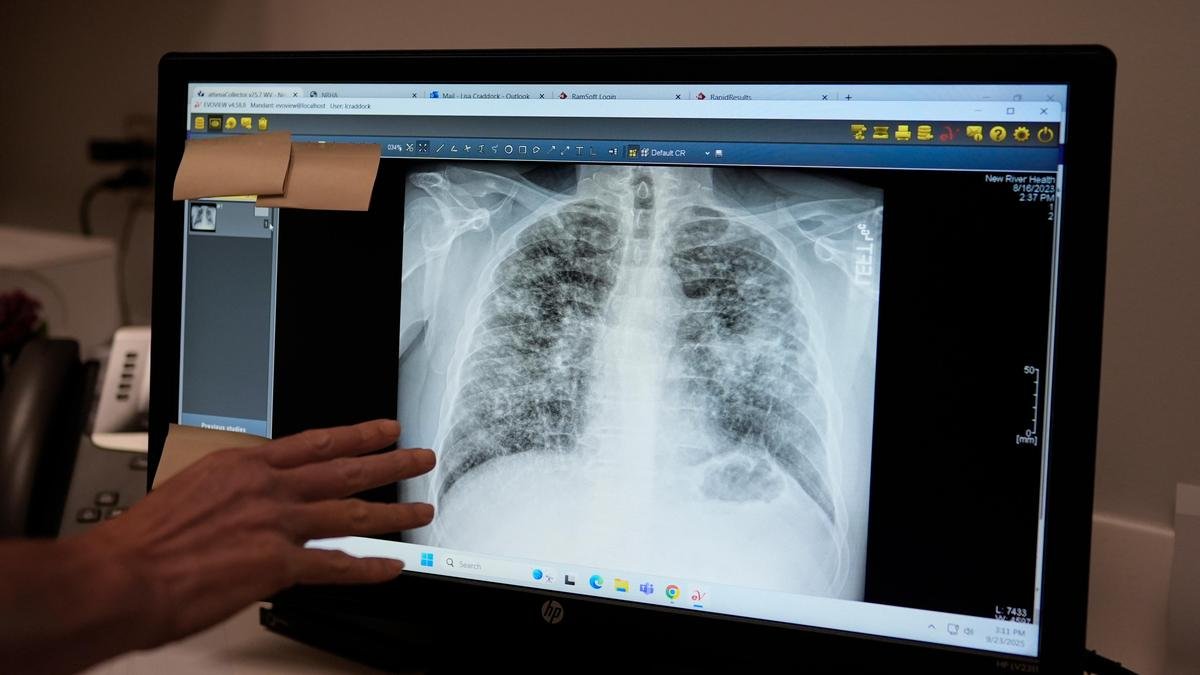
For most of the last century, a diagnosis of lung cancer was often regarded as a death sentence. As an oncologist, I have witnessed dramatic changes over the past two decades, particularly in the last five years. Long-term survival in patients with advanced lung cancer, once virtually unheard of, is no longer rare. This progress reflects remarkable advances in medical science.
Yet these breakthroughs currently benefit only a small proportion of patients, and access remains limited for many others. Amid the excitement surrounding new drugs and technologies, we sometimes overlook a fundamental reality: most lung cancers, particularly in India, are diagnosed at an advanced stage, when cure is no longer possible and disease control becomes the primary goal.
Early detection through screening has the potential to benefit millions, but it often receives far less attention than the latest technological innovation. Therefore, it is worth discussing both: lung cancer screening and the emerging field of lung cancer vaccines.

Early detection
Lung cancer screening using a low-dose CT scan is recommended for people aged 50 to 80 years who have a smoking history of at least 20 pack-years (equivalent to smoking one pack a day for 20 years) and who either currently smoke or have quit within the past 15 years.
This annual, non-invasive scan requires no contrast injection, hospital admission or recovery period. Studies have shown that it can significantly reduce deaths from lung cancer by detecting the disease at an earlier and more treatable stage.
Screening is not without limitations. It can result in false-positive findings, leading to additional tests, costs and anxiety. Nevertheless, it remains one of the most effective tools for detecting lung cancer early, when the chances of cure can exceed 90%.
A growing challenge, however, is the increasing incidence of lung cancer among younger people and those who have never smoked. A study involving residents of Delhi found that non-smokers accounted for 10% of lung cancer cases in 1998, rising to 50% by 2018, with many cases occurring at younger ages.
The question is how best to detect lung cancer early in these populations. Emerging evidence offers some hope. A recent study from Guangzhou, China, reported that low-dose CT screening reduced lung cancer mortality in a cohort that included never-smokers. Until stronger evidence becomes available, however, low-dose CT screening should remain a priority for those who currently meet established eligibility criteria.

Lung cancer vaccines
The phrase “lung cancer vaccine” can be misleading. Unlike vaccines for infectious diseases such as measles or tetanus, cancer vaccines are being developed in two distinct forms.
The first category is therapeutic vaccines, which are designed for people who already have cancer. One of the most closely watched candidates is BNT116, which uses messenger RNA (mRNA) technology similar to that used in some COVID-19 vaccines.
Rather than targeting a virus, the vaccine carries genetic instructions that help the immune system identify six proteins commonly found on lung cancer cells. The goal is to train the body’s immune defences to recognise and attack cancer cells more effectively.
In an early-phase clinical trial, a small group of patients who received the vaccine alongside immunotherapy demonstrated encouraging disease control. However, side effects were common, the number of participants was limited, and much more evidence is needed before it can be considered an established treatment.

Preventing cancer
An even more ambitious approach involves preventive vaccines, which aim to stop cancer from developing in the first place.
One such project is LungVax, a collaboration between the University of Oxford and University College London, funded by Cancer Research UK. Built on vaccine technology developed at Oxford, LungVax is designed to train the immune system to recognise and eliminate abnormal lung cells before they become cancerous.
The first human trial is expected to begin in 2026 among people at high risk of developing lung cancer, including older long-term smokers identified through screening programmes.
This represents a pioneering effort, but it remains at a very early stage. While the research is promising, it should be viewed with cautious optimism rather than undue hype. Even if a preventive vaccine proves successful, it will not replace smoking cessation programmes or measures to reduce air pollution. It would become an additional tool in cancer prevention, not a substitute for existing strategies.

Why this matters for India
India’s lung cancer burden is expected to rise substantially in the coming years, and the disease often presents differently from what is seen in many Western countries.
A significant proportion of Indian patients with lung cancer have never smoked. Patients are often diagnosed at younger ages, and an increasing number are women. Air pollution, indoor exposure to cooking-fuel smoke and second-hand smoke are all believed to contribute to this trend. Increasingly, research is linking fine particulate air pollution to some of the genetic mutations targeted by modern cancer therapies.

How should readers interpret these developments? With both optimism and perspective. The science is advancing faster than ever, and the trajectory is clearly towards treatments that are more precise, personalised and less toxic. Within the next decade, it is conceivable that vaccines may join surgery, radiation therapy, targeted treatments and immunotherapy as part of standard lung cancer care.
However, a vaccine entering its first human trial represents the beginning of a journey, not its destination. The tools already available today — molecular testing, targeted therapies, immunotherapy, modern surgery and advanced radiation therapy are the interventions that can improve outcomes for patients right now, particularly when used early.
At the same time, the most effective measures remain the simplest: avoiding tobacco use, helping smokers quit, reducing exposure to air pollution and ensuring that eligible individuals undergo screening. While the challenges remain significant, the future of lung cancer care appears considerably brighter than it once did.
(Dr Srinivas Chilukuri, Professor & Senior Consultant, Radiation Oncology, Apollo Proton Cancer Centre, Chennai. drsrinivas_c@apollohospitals.com)
Published – June 02, 2026 06:47 pm IST