

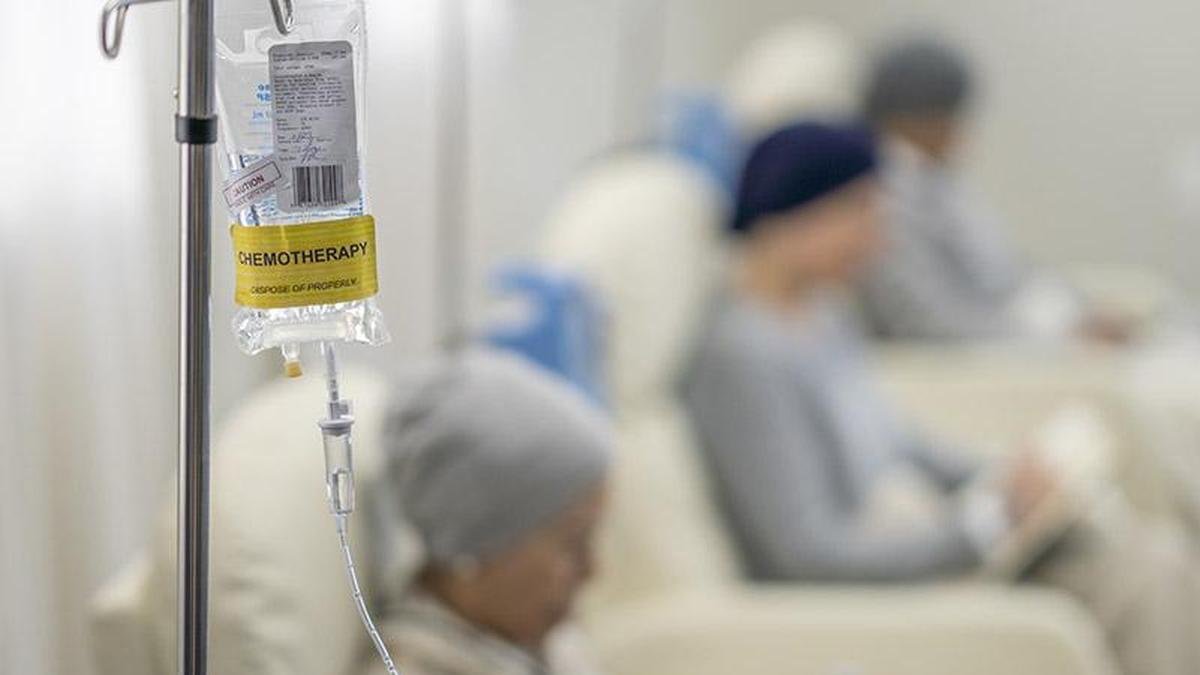
Every May, the world marks Bladder Cancer Awareness Month. This is a moment to spotlight a disease affecting over half a million people worldwide each year, yet largely unknown to the general public. Unlike breast or lung cancer, bladder cancer rarely makes headlines, leaving many unaware of its warning signs until it is too late.

A hidden epidemic
Bladder cancer is the 9th most common cancer worldwide, with men three to four times more likely than women to develop it. In 2022, around 614,000 new cases and over 220,000 deaths were recorded globally. What surprises most patients is the recurrence rate, which is 50 to 70% within five years, the highest of any solid tumour. Even after a clean resection, follow-ups run into years.
Know your risk
Smoking is by far the biggest driver: nearly half of all bladder cancers come back to it. Tobacco-derived chemicals concentrate in urine and cover the bladder lining for hours; quitting genuinely helps over time. Occupational exposure to aromatic amines (dyes, rubber, leather, paint, textiles, printing) is the next big one. In our setting, chewing tobacco and beedi use are also important and often go uncounted in patient’s own risk assessments. Chronic infections, prior pelvic radiation, certain chemotherapy drugs and long standing catheters add to the list.
Warning signs
If there’s one line worth remembering, it is blood in the urine. This is the single most important sign of bladder cancer, present in 8 to 9 of every 10 patients. It can look pink, red or like cola or only show up on a urine test. The trickiest part, and the reason patients come to hospitals late, is that the bleeding usually comes and goes. Other clues are frequent or urgent urination, burning and pelvic or low back pain. In women, all of this gets too easily labelled as a urinary infection, which is why women are diagnosed later than men. Persistent urinary symptoms, especially blood, should never be left to settle on their own.

If caught early, this is one of the more treatable cancers we have. About three out of four bladder cancers are diagnosed at the non-muscle invasive stage, where five-year survival exceeds 95%. Once it spreads outside the bladder, that number reduces to 5–10%.
The workup is not complicated: a urine test, an ultrasound or computed tomography urogram and a cystoscopy (a quick outpatient telescope examination of the bladder). Daunting in name but routine in practice.

New treatment options
How we treat bladder cancer depends on how deep it has gone, i.e. confined to the inner lining (non-muscle-invasive), invading muscle (muscle-invasive), or spread beyond the bladder. The toolkit today is genuinely impressive: intravesical therapies, modern reconstructive surgery, bladder-preserving combinations, immunotherapy, and antibody–drug conjugates.
A brief word on what immunotherapy actually does: cancer cells survive partly because they hide from the body’s immune system. Modern immunotherapy unmasks the tumour cells to the patient’s own immunity, allowing the immune system to recognise and eliminate them, either on its own or in combination with chemotherapy. This shift, harnessing the patient’s own defences, has been one of the most significant advances in bladder cancer treatment in the last decade.
Non-Muscle invasive disease: Transurethral resection of the bladder tumour is the cornerstone, usually followed by intravesical immunotherapy in high-risk tumours. For patients whose disease comes back despite intravesical immunotherapy, newer options now exist such as systemic immune checkpoint inhibitors and intravesical chemotherapy combinations — both of which can save the bladder in carefully-chosen cases that would otherwise have meant cystectomy.(7,8)
Muscle-invasive disease: Standard care remains radical cystectomy with neoadjuvant platinum based chemotherapy, which improves survival over surgery alone. Modern reconstruction like a neobladder from the patient’s own bowel or a continent pouch means many patients today don’t end up with an external bag. In selected patients, trimodality therapy (maximal transurethral resection of the bladder tumour with concurrent chemoradiation) gives comparable survival while keeping the bladder. The post-surgery story has also changed: an adjuvant immunotherapy improves disease-free survival and perioperative immunotherapy combined with chemotherapy has shown event-free and overall survival benefit — a real shift in how we plan these cases.
Advanced and metastatic disease: This is the area that has changed the most. Until recently, platinum-based chemotherapy was about all we had to offer in the first line. That has now changed: an antibody–drug conjugate combined with immunotherapy has nearly doubled overall survival versus chemotherapy and is now the global first-line standard regardless of cisplatin eligibility. For patients still on a chemotherapy-first pathway, maintenance immunotherapy extends survival.

Take action this May
If you smoke or chew tobacco, please consider quitting. This remains the single most useful thing you can do for your bladder. If you see blood in your urine, do not wait for it to disappear. If you work with industrial chemicals, insist on protective equipment. Talk about these signs with family, friends and colleagues; awareness drives early diagnosis.
A common question patients often ask is: “My neighbour smoked heavily and is perfectly healthy, while I smoked only occasionally and developed bladder cancer. Why?” The answer lies in the complex interaction between genetics and environmental exposure. All of us carry genetically abnormal cells that may, under certain circumstances, become cancerous. Some of these genetic abnormalities are inherited along family lines, while others arise within individual cells during life. In certain people, these mild genetic abnormalities may remain silent until triggered by environmental factors such as smoking. This is often explained through the “double-hit theory” — where an underlying genetic vulnerability is followed by a second insult, such as tobacco exposure, eventually leading to tumour formation. As a result, the risk of developing cancer differs significantly from person to person, even when exposures appear similar.
Bladder cancer doesn’t make headlines, but for the families it touches, the impact is profound. Science has moved enormously in the last few years. If we match that progress with earlier diagnosis, the picture will keep improving.
(Dr. Ginil Kumar Pooleri is clinical professor (urology) and head of department (uro-oncology) at Amrita Hospital, Kochi. drginil@aims.amrita.edu)
Published – May 28, 2026 08:02 pm IST