

Close Menu

    Subscribe to Updates

    Get the latest news information from worldwide businesses.

    What's Hot

    Foodgrain output seen rising 5% to 376.5 MT

    May 27, 2026

    IndiGo, Air India cut flights as fuel costs bite; fares set to rise

    May 27, 2026

    China’s next export shock walks on two legs — and costs less than a used car

    May 27, 2026
    Facebook Instagram YouTube LinkedIn X (Twitter)
    Trending
    • Foodgrain output seen rising 5% to 376.5 MT
    • IndiGo, Air India cut flights as fuel costs bite; fares set to rise
    • China’s next export shock walks on two legs — and costs less than a used car
    • Too hot to handle: Heatwave in North India slows textile, rice supply chains
    • New Mandelson revelations cast doubt on claim vetting decision was borderline, Thornberry says – as it happened | Politics
    • Navy thwarts suspected piracy attack on merchant vessel in western Indian Ocean | India News
    • Princeton grad who shot hedge-fund father claims innocence from prison
    • Edu Min Dharmendra Pradhan writes to CMs, LGs to ensure ‘fair’ conduct of NEET-UG 2026 re-exam
    Newspublicly
    • About Us
    • Advertise & Partner with us
    • Pitch Your Story
    • Contact Us
    Facebook Instagram LinkedIn X (Twitter)
    Subscribe
    • Home
    • World News
      • Asia
      • India
      • USA
      • UK & Europe
      • Middle East
    • Economy & Business
      • Global Economy
      • Corporate & Industry
      • Finance & Markets
      • Policy & Trade
    • Technology
      • Gadgets & Devices
      • Software & Apps
      • AI & Machine Learning
      • Robotics & Automation
    • Health & Medicine
      • Fitness & Nutrition
      • Research & Innovation
      • Disease & Treatment
      • Doctors, Clinics & Patient Care
    • Travel & Tourism
    • Automobile
      • Electric & Hybrid Vehicles
      • Auto Industry Insights
    • Sports
    • More
      • Education
      • Real Estate
      • Environment & Climate
      • Space & Astronomy
      • War & Conflicts
    Newspublicly
    Home»Health & Medicine»Research & Innovation»Queenless wasp colonies explode into chaos but hidden helpers save them
    Research & Innovation

    Queenless wasp colonies explode into chaos but hidden helpers save them

    AdminBy AdminMay 27, 2026No Comments4 Mins Read0 Views
    Share
    Facebook Twitter LinkedIn Copy Link WhatsApp


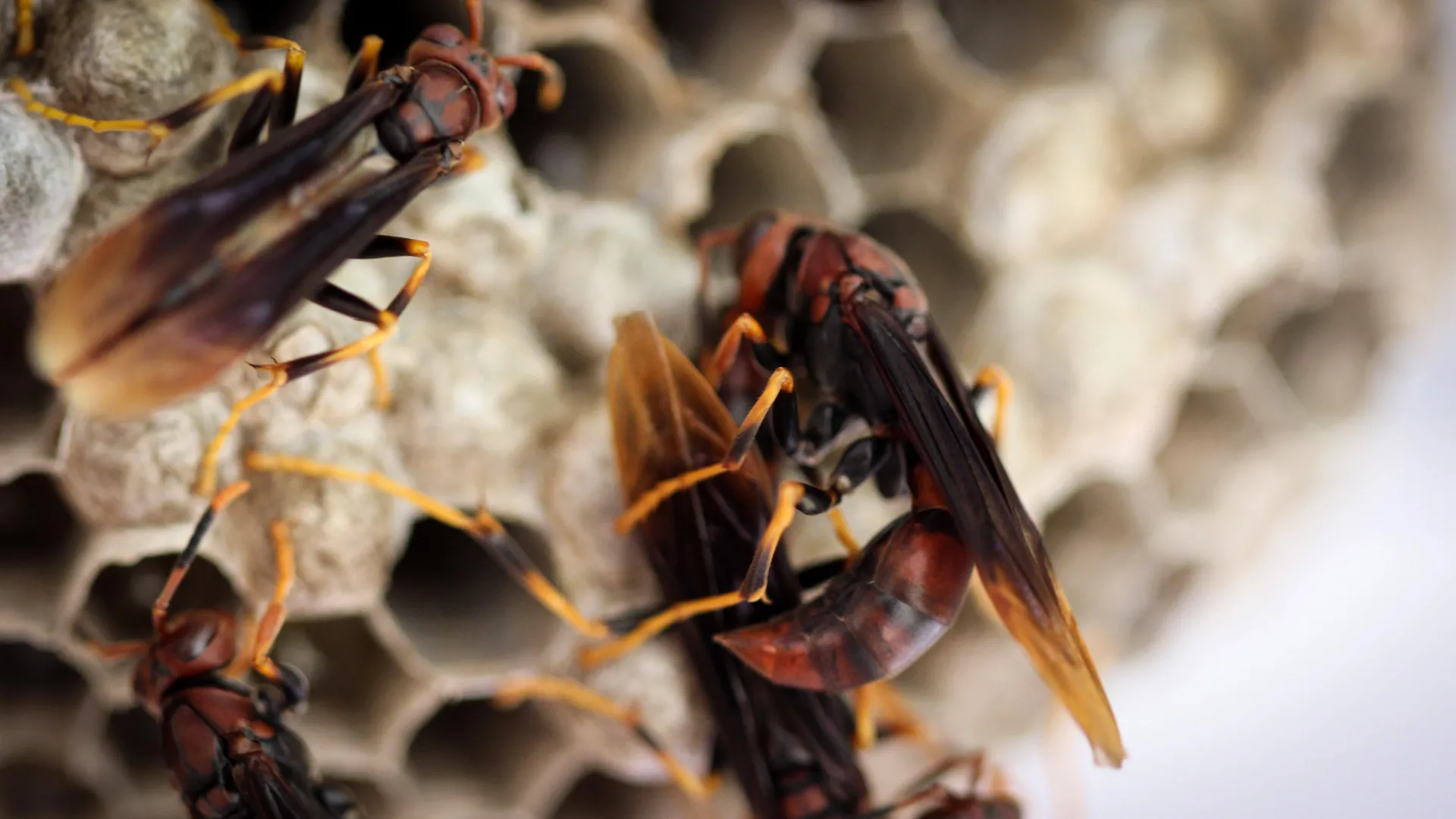
    Losing a queen throws a tropical wasp colony into turmoil, triggering violent power struggles and social breakdowns. But new research led by UCL scientists found that some wasps quietly step in to keep the colony functioning during the chaos.

    The study, published in Animal Behaviour, examined tropical paper wasps (Polistes canadensis) in the Caribbean. These colonies are built around a single dominant breeding female, but unlike some social insects, the other females are still capable of reproducing themselves. That means if the queen disappears, several wasps may compete to take her place.

    To investigate what happens after a queen is lost, researchers removed queens from established colonies and watched how the insects responded.

    Violent Fights Break Out After the Queen Disappears

    The effects were immediate. Female wasps began aggressively competing for dominance, and the colony’s normal social structure quickly unraveled. Instead of an orderly transfer of leadership, the colonies entered a period of intense conflict involving many individuals.

    Despite the upheaval, the colonies did not collapse.

    Researchers discovered that a separate group of wasps took on a crucial role during the unrest. Rather than joining the fights, these individuals focused on essential tasks such as collecting food and caring for developing young. The scientists called these wasps “compensators” because they helped offset the damage caused by the conflict.

    By continuing to feed larvae and maintain daily colony functions, the compensators helped the society survive even while leadership battles were unfolding around them.

    Cooperation Continues Even During Conflict

    The study found no clear biological differences between the wasps involved in aggressive competition and those acting as compensators. According to the researchers, that suggests these behaviors may reflect strategic choices instead of fixed social roles.

    Some wasps may see fighting for dominance as their best chance to reproduce in the future. Others may gain more by helping ensure the survival of the brood, which often includes their siblings.

    Lead author Dr. Owen Corbett (UCL Centre for Biodiversity & Environment Research, UCL Biosciences), who carried out the study during his PhD at UCL, said: “The conflict after queen removal was intense, but it wasn’t the whole story.

    “While some individuals fought over dominance, others completely avoided the conflict and quietly stepped up to keep the colony running. Cooperation didn’t disappear; it was redistributed.”

    A Different Kind of Wasp Society

    Most previous research on cooperative insect societies has focused on temperate species found in Europe or North America. Those species often have more rigid dominance hierarchies and predictable succession systems.

    This study instead examined tropical wasps with a far less orderly social structure, where leadership changes are driven by aggression and competition. The findings expand scientists’ understanding of the many ways animal societies can handle leadership crises.

    The research was based on a new analysis of behavioral data originally collected during fieldwork in Panama in the early 2000s by members of the research team.

    What Wasps Can Teach Us About Cooperation

    The findings challenge the idea that societies can only remain stable through orderly, rule based leadership transitions. Although aggressive succession systems are often considered too costly to last, the study suggests they can still work if some individuals compensate by maintaining essential tasks.

    Senior author Professor Seirian Sumner (UCL Centre for Biodiversity & Environment Research, UCL Biosciences) said: “Understanding how animal societies manage conflict can help us think differently about cooperation more broadly. In times of turmoil, society depends on those who keep doing the essential work in the background. In many ways, we may be more like wasps than we realize.”

    The research was funded by the Natural Environment Research Council (NERC) and the Smithsonian Institution.

    ​


    Source link

    Author

    • Admin

      NewsPublicly.com is News & Articles Platform that creating SEO-focused articles on travel, lifestyle, and digital trends.

    Admin
    • Website

    NewsPublicly.com is News & Articles Platform that creating SEO-focused articles on travel, lifestyle, and digital trends.

    Related Posts

    Deadly fungus and lung parasites are hammering wild rattlesnakes

    May 27, 2026

    NASA’s Webb telescope discovers a planet where rock clouds vanish every night

    May 27, 2026

    New laser heat treatment could stop blindness before it starts

    May 27, 2026
    Leave A Reply Cancel Reply

    Demo
    Top Posts

    “Inside Gemini Robotics 1.5: How Robots Learn to Reason & Act

    November 22, 202525 Views

    How US Tariffs Are Reshaping the Global Growth Landscape?

    November 21, 202518 Views

    Pakistani Journalist Laughing at Tejas Fighter Jet Crash at Dubai Airshow Sparks Massive Outrage Worldwide

    November 23, 202517 Views

    Vibe-Coding Boom: How Non-Coders Build Apps With AI Agents

    November 22, 202515 Views
    Don't Miss

    Foodgrain output seen rising 5% to 376.5 MT

    May 27, 20262 Mins Read0 Views

    New Delhi: India’s total foodgrain production is projected to rise 5% to 376.56 million tonnes…

    IndiGo, Air India cut flights as fuel costs bite; fares set to rise

    May 27, 2026

    China’s next export shock walks on two legs — and costs less than a used car

    May 27, 2026

    Too hot to handle: Heatwave in North India slows textile, rice supply chains

    May 27, 2026
    Stay In Touch
    • Facebook
    • Twitter
    • Instagram
    • YouTube
    • LinkedIn
    • WhatsApp

    Subscribe to Updates

    Get the latest creative news from SmartMag about art & design.

    Demo
    NEWSPUBLICLY
    Facebook X (Twitter) Instagram LinkedIn

    Home

    • About Us
    • Leadership
    • Advertise & Partner With Us
    • Pitch Your Story
    • Media Kit & Pricing
    • Career
    • FAQs

    Guidelines

    • Editorial & Submission
    • Partnership
    • Advertising & Sponsor
    • Intellectual Property Policy
    • Community & Comment
    • Security & Data Protection
    • Send Your Opinion

    Quick Links

    • Cookie Policy
    • Payment & Billing Terms
    • Refund & Cancellation
    • Copyright Policy
    • Complaint & Support
    • Sitemap
    • Contact Us

    Subscribe Us

    Get the latest news and updates!

    Copyright © 2026 Newspublicly (DIGITALIX COMMUNICATION). All Rights Reserved.
    • Privacy Policy
    • Terms of Use
    • Disclaimer