

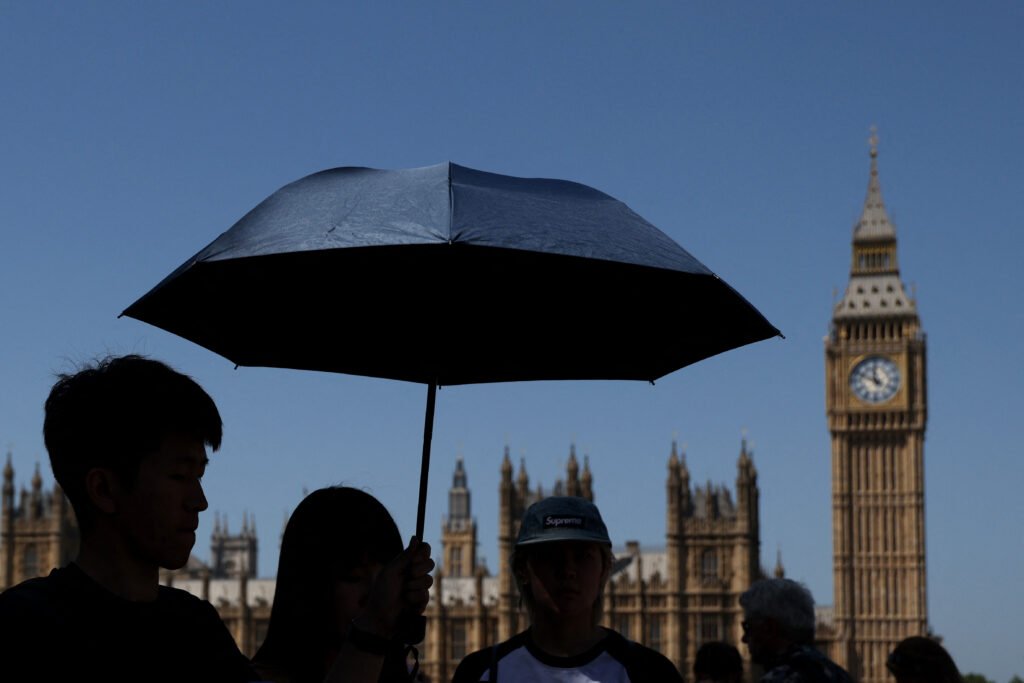
Extreme heat is one of the most dangerous climate change risks in the United Kingdom, according to a new government-backed report that warned the nation is “built for a climate that no longer exists.”
Right after it came out, the U.K. recorded its hottest day on record for the month of May.
The temperature at Kew Gardens in London on Monday hit nearly 95 degrees Fahrenheit, more than 30 degrees higher than average for this time of year. Tuesday broke the record once again, with the temperature inching up a bit more to 95.2 degrees.
Other countries, including France and Spain, are seeing similar highs amid an unusually early heat wave in Western Europe. Experts say extreme heat events are becoming more common as the continent heats up roughly twice as fast as the global average.
This extreme heat has wreaked havoc across the region and was linked to several deaths in France, authorities say. It’s also illustrating many of the problems the recent report flagged with the U.K.’s ability to adapt to climate change as water systems are pushed to the brink and outdated infrastructure fails to protect the public from the hottest temperatures, experts say.
An Early Season European Heat Wave
The extreme heat gripping western Europe is driven by a weather phenomenon known as a heat dome, which is trapping warm air from northern Africa over the region. Europe has seen more frequent and intense heat waves in recent years, but the early timing of this event is upping its threat level in many ways.
In France, sweltering temperatures arrived before lifeguards typically start their watches at popular beaches, where many sought reprieve over the weekend, The Associated Press reports. A French government spokesperson told the outlet that at least seven recent deaths were likely heat related, including five drownings.
Human-caused climate change likely played a role in the extreme temperatures, experts say.
“This is an unprecedented event with a one in 1,000 chance of happening at this time of year based on the climate from 1979 to 2025 and virtually impossible in the preindustrial era,” Christophe Cassou, a climate scientist, told Le Monde.
The heat event has also coincided with high-intensity sporting events across the country, including several competitive races and the French Open in Paris. As temperatures topped 90 degrees at the iconic tennis tournament in recent days, players used bags of ice in between sets to cool off. Heat is a growing risk across all competitive outdoor sports and activities, whether it’s marathon running or the Olympics, as I’ve reported on in past newsletters.
At the French Open, some competitors said the gameplay itself was also different because heat can cause the ball to move faster through the air and bounce differently on clay courts.
“I don’t remember the last time it was so hot at Roland-Garros,” tennis player Daria Kasatkina told the press after a match, using the proper name for the French Open. “Maybe one day. But we’re going to have it for the whole week.”
Forecasts show Spain and Portugal will get hit the hardest by the heat dome later this week, with temperatures likely to pass 100 degrees. Meanwhile, the U.K. has issued heat health alerts across many areas of England until Wednesday as temperatures hover in the 90s. These conditions can be especially dangerous for young children, elderly people and those without access to adequate cooling—a growing problem in the nation, according to the new report.
Beating the Heat in the UK
Many of Britain’s homes were built to withstand cold weather, trapping heat to survive the bitter winters that have long characterized this region. The problem? These homes also trap heat during sweltering summers, increasing the risk of health problems for many residents.
This was a major issue last summer, England’s warmest on record. Government data showed an estimated 1,504 heat-associated deaths during the five heat episodes that season.
The problem is likely to get worse as climate change accelerates, with hotter heat waves potentially causing overheating in more than 90 percent of homes in the U.K. by 2050, according to the new report. It’s part of a climate analysis required every five years under the country’s Climate Change Act of 2008, which also looks at a range of other warming-related risks such as floods, droughts and wildfires.
“Extreme heat is certainly the most deadly of the climate impacts on the U.K., so we need to see cooling rolled out at scale,” report co-author Julia King, the chair of adaptation for the U.K. Climate Change Committee, told The Guardian. “Sometimes this will mean shading, but sometimes it will mean air conditioning.”
At the same time, aging infrastructure is straining under scorching temperatures. Bloomberg News reported last year that London underground tube carriages can be nearly 9 degrees Fahrenheit hotter than the street during a heat wave. Energy and water systems can also struggle to meet increased demand as heat spikes; a surge in water usage over the weekend in the U.K. caused system failures that left around 800 households in Kent and Sussex without access or with low pressure, the BBC reports.
While the Climate Change Committee report acknowledges that “not every possible adaptation will be affordable,” the authors stressed that cooling for hospitals, care homes and schools should be prioritized, given that young children, people with certain medical conditions and elderly populations face outsized risks from heat. Other recommendations for the government included setting maximum temperature regulations for workplaces—both indoors and outside—and offering incentives to help low-income households install cooling technology.
“By 2050, at around 2°C of global warming, the UK’s climate will be fundamentally different from the climate of today — which itself has already been altered by climate change,” the report says. “If left unmanaged, climate hazards that are already threatening health, lives, livelihoods, and nature will rise further.”
Inside Scoop: I checked in with my U.K.-based colleague Johnny Sturgeon to see how people are coping with the heat this week. Here’s what he said:
Looking out from a small balcony in coastal Yorkshire, I could see family after family traipsing off crammed beaches, all red in the face and unable to cope with the unpleasantness of an almost 100°F day. Outdated infrastructure struggled under the strain as cancelled trains left many travelers stranded nationwide. A wildfire broke out on Scotland’s famous Arthur’s Seat, sending plumes of smoke over the city of Edinburgh.
And you could hardly turn on the television without seeing a news story about a local town experiencing its hottest May on record, or watching sweaty tube-goers desperately fanning themselves with magazines, caps or whatever they had on hand.
For a country where a favored national pastime is complaining about wet weather, this weekend was simply the other side of the same coin. Given how few people own air conditioning units and that hospitals respond to these kinds of heat waves by handing out free popsicles, it’s safe to say Brits aren’t prepared to deal with these temperatures. By the end of the day, I suspect most will be convincing themselves that rain isn’t too bad after all.
More Top Climate News
Scientists are still working to uncover all the ways the COVID-19 pandemic lockdowns changed how animals behave, but a new study helps provide a clearer picture, Emily Anthes reports for The New York Times. Researchers in this space have dubbed the pandemic the “anthropause” due to the decrease in human activity as people sheltered in place and many industries ground to a near halt. In this latest analysis, tracking data from 37 species of wild birds and mammals and cellphone location data revealed wide variation in species’ reactions to the absence of human presence. One example: Coyotes, moose and wild turkeys expanded their range when fewer people were present, while gray wolves used more space when people were around.
The Trump administration announced last week it was relaxing some of the rules designed to phase out the use of high-emissions refrigerants commonly used in grocery store equipment, Lisa Held reports for Civil Eats. The Biden-era regulations aimed to reduce the food industry’s carbon footprint, but President Donald Trump claimed they put a “tremendous burden” on grocers and were part of the reason for high food prices at supermarkets. However, David Doniger, senior strategist for climate at the Natural Resources Defense Council, told Civil Eats that thousands of grocery stores already made the switch, and other experts say that refrigeration doesn’t have much impact on overall consumer costs at a market.
Cities and towns across the United States are testing out alternatives to asphalt parking lots that can better handle flooding and extreme heat, Aya Diab and Alexa St. John report for The Associated Press. Traditional parking lots are largely impermeable, so rainwater mostly runs off rather than being absorbed. To counter this, cities like New Orleans are trying permeable paving or peppering rain gardens around the area. For heat, other local governments and other entities, including Lincoln Financial Field in Philadelphia, are putting solar panels above their parking lots for shade—and the added bonus of renewable energy.
Postcard From … Venice, Italy
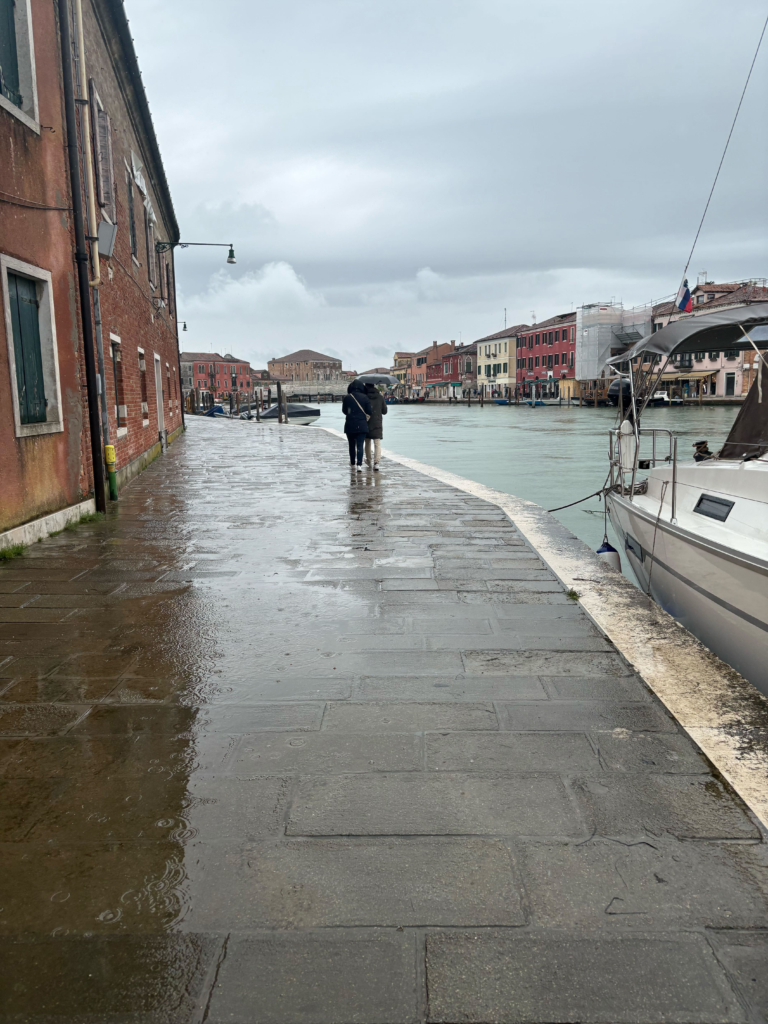

Today’s installment of “Postcards From” is courtesy of ICN reporter Kiley Bense, who witnessed evidence of climate change firsthand on a trip to Venice, Italy. Low-lying, waterlogged Venice is especially vulnerable to sea-level rise and extreme weather.
“You can see discoloration on the columns of St. Mark’s Basilica where the water rose during an exceptional flood in 2019,” Kiley said. “Since then, the city has built glass walls around the cathedral to keep water out.” A massive flood barrier built in 2020 also protects the city from acqua alta—high waters—but as sea-level rise accelerates, officials worry that the system will soon be inadequate.
About This Story
Perhaps you noticed: This story, like all the news we publish, is free to read. That’s because Inside Climate News is a 501c3 nonprofit organization. We do not charge a subscription fee, lock our news behind a paywall, or clutter our website with ads. We make our news on climate and the environment freely available to you and anyone who wants it.
That’s not all. We also share our news for free with scores of other media organizations around the country. Many of them can’t afford to do environmental journalism of their own. We’ve built bureaus from coast to coast to report local stories, collaborate with local newsrooms and co-publish articles so that this vital work is shared as widely as possible.
Two of us launched ICN in 2007. Six years later we earned a Pulitzer Prize for National Reporting, and now we run the oldest and largest dedicated climate newsroom in the nation. We tell the story in all its complexity. We hold polluters accountable. We expose environmental injustice. We debunk misinformation. We scrutinize solutions and inspire action.
Donations from readers like you fund every aspect of what we do. If you don’t already, will you support our ongoing work, our reporting on the biggest crisis facing our planet, and help us reach even more readers in more places?
Please take a moment to make a tax-deductible donation. Every one of them makes a difference.
Thank you,

Reporter
Kiley Price is a reporter at Inside Climate News, with a particular interest in wildlife, ocean health, food systems and climate change. She writes ICN’s “Today’s Climate” newsletter, which covers the most pressing environmental news each week.
She earned her master’s degree in science journalism at New York University, and her bachelor’s degree in biology at Wake Forest University. Her work has appeared in National Geographic, Time, Scientific American and more. She is a former Pulitzer Reporting Fellow, during which she spent a month in Thailand covering the intersection between Buddhism and the country’s environmental movement.