

This story is the first in a series celebrating soccer cultures around the world—and the communities shaped by them. Read more 2026 World Cup coverage here.
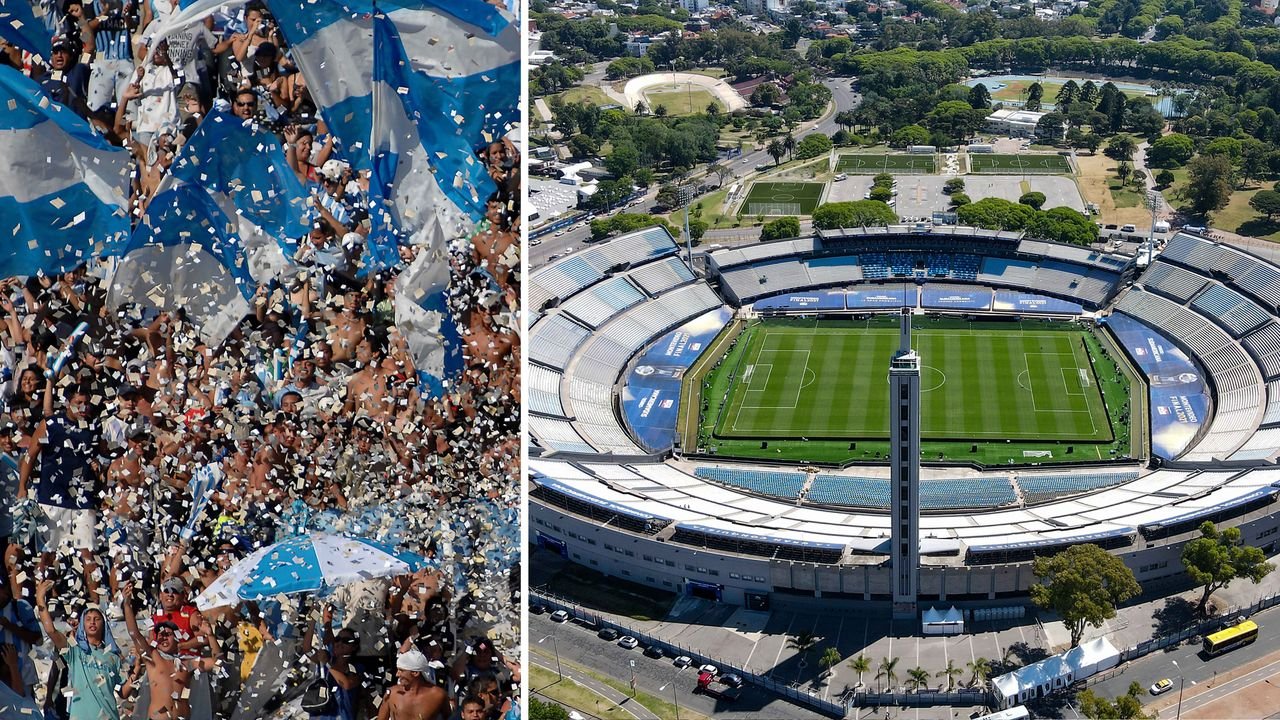
On July 18, 1930, a 38-year-old public-works director named Juan Antonio Scasso stood inside the still-wet Estadio Centenario while his crew dried the floors with braziers. FIFA had given him under a year to build the place, and he’d refused any pay beyond his municipal salary, promising to finish on time.
He missed by five days.
While the concrete cured, the starting eight matches of the first-ever World Cup were relocated to Pocitos and Gran Parque Central, the home grounds of capital rivals Peñarol and Nacional, who’d been bickering since their first meeting in July 1900. Saving Scasso’s skin, the Centenario opened in time to host both the inaugural semifinals and FIFA finals, the latter of which Uruguay won 4–2 against Argentina in an emotional hometown victory.
Uruguay was already the best football nation on Earth—taking Olympic gold in Paris in 1924, gold again in Amsterdam in 1928—and by 1929, FIFA was 25 years old and still tournament-less, a problem Uruguay solved by offering to fly and house every team that entered.

Small, mighty Uruguay, often overshadowed by the powerhouse teams of neighboring Argentina and Brazil, is an essential part of World Cup history—and, year-round, arguably the most soccer-crazy. The country, with a population of 3.5 million, has produced two World Cups and 15 Copa Américas wins, and Montevideo itself is home to 13 of the national league’s 16 first-division clubs. (Buenos Aires, a city nearly 10 times the size, has 5.) Classrooms in Uruguay lose students to football on ordinary afternoons—but when the national team plays, the rest of the country follows them out the door: offices empty, banks shutter, the panadería line dissolves by halftime. The soccer-over-everything-else instinct is older than the tournament itself.
Ahead of the 2026 FIFA World Cup, with Uruguay drawn against Spain, Cape Verde, and Saudi Arabia in Group H, the question is how a country the size of greater Brooklyn has been punching above its weight for 100 years.
