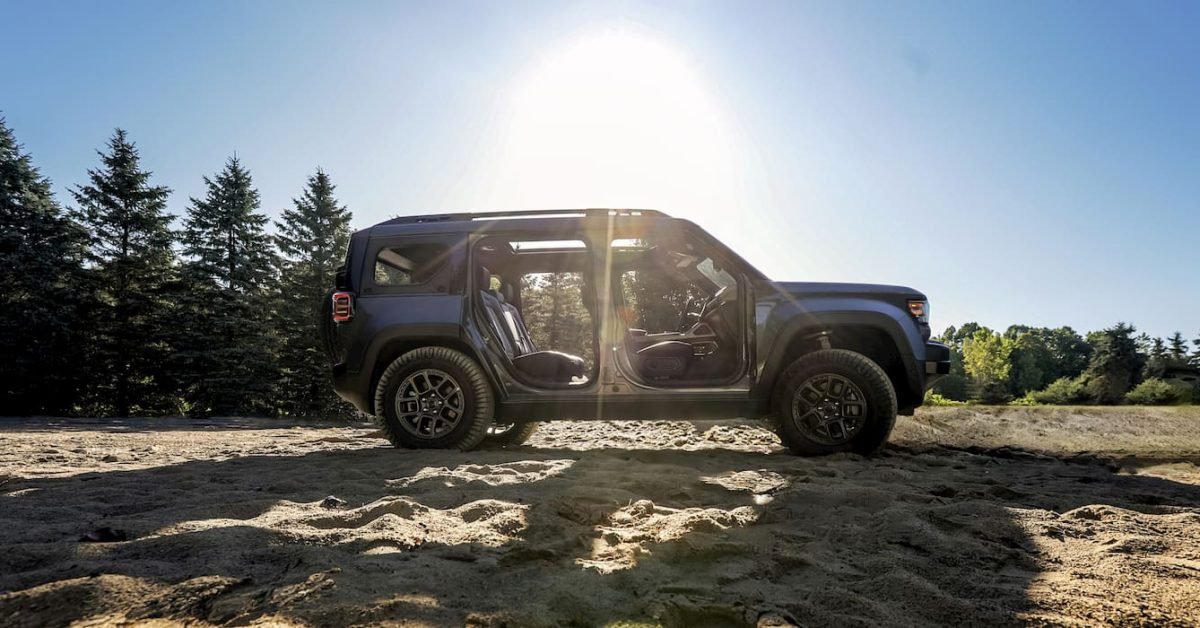
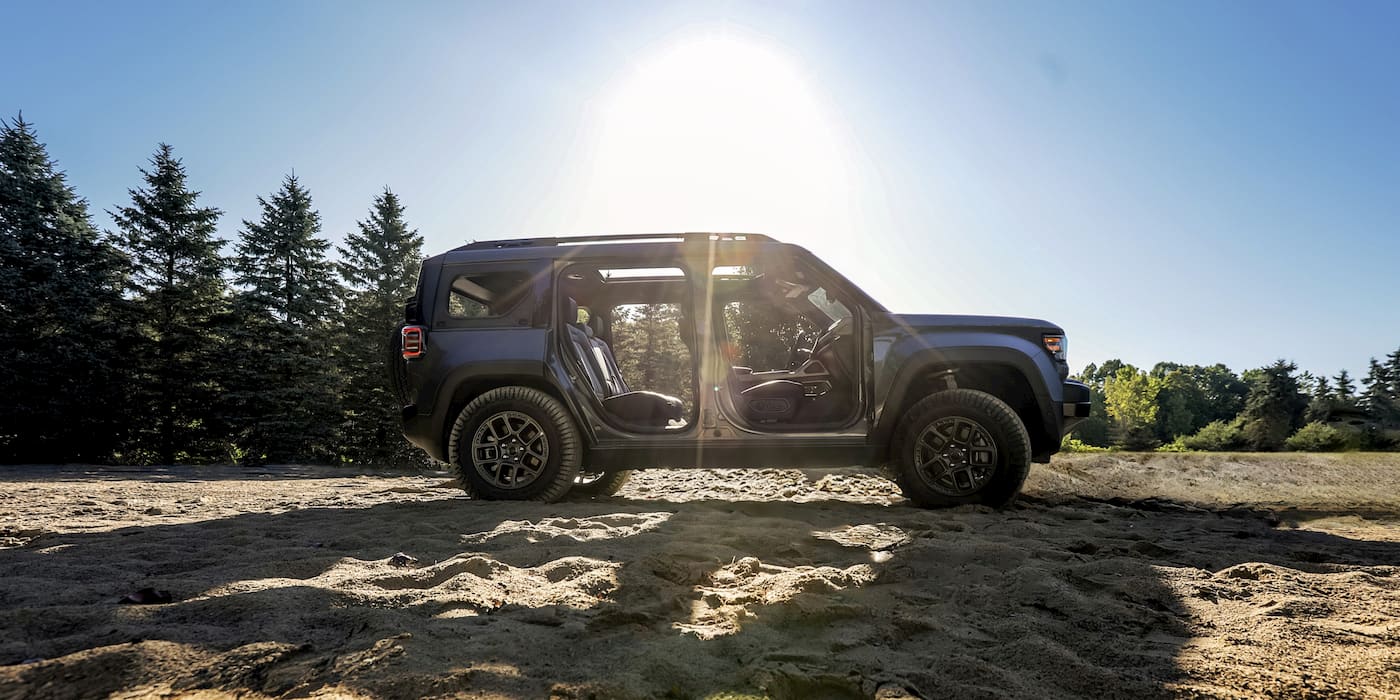
Stellantis plans to launch seven new Jeep, Ram, and Chrysler vehicles priced under $40,000, and two that will cost less than $30,000.
More affordable Jeep, Ram vehicles launching by 2030
As part of its new FaSTLAne 2030 business plan, Stellantis will invest $69.5 billion (€60 billion) over the next five years to boost growth and profits.
The new plan, revealed during its Investor Day at Stellantis’ North American Headquarters in Auburn Hills, Michigan, on Thursday, includes a complete overhaul of its current lineup.
Between now and 2030, Stellantis will launch 60 new vehicles, and another 50 will be significantly updated. The new vehicles will span all powertrains, including 29 purely electric vehicles (EVs), 15 plug-in hybrids (PHEVs) or range-extended electric vehicles (REEVs), 24 hybrids (HEVs), and 39 ICE or mild-hybrid models.
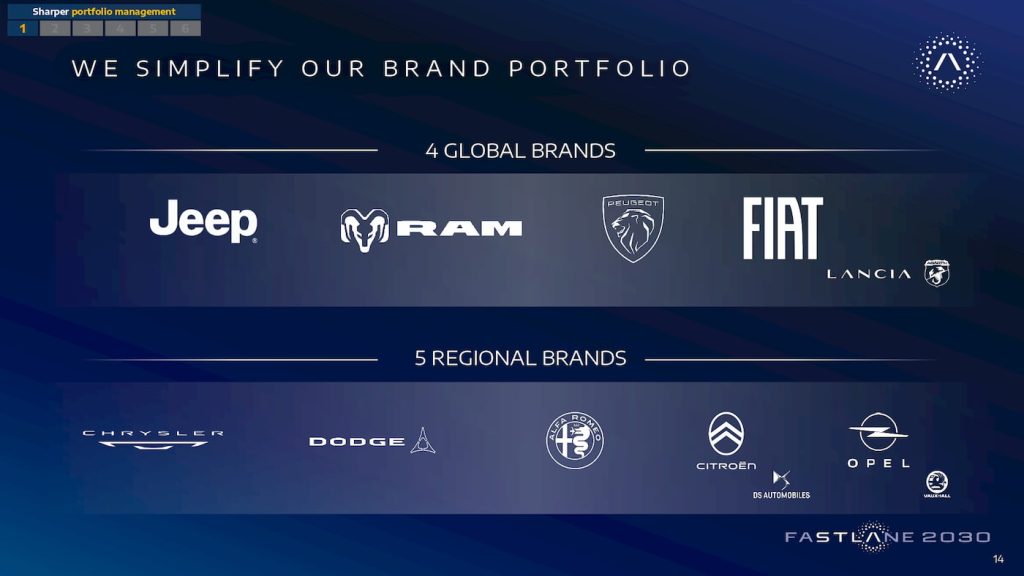
Stellantis said it will focus on four global brands that have the highest potential for profitability: Jeep, Ram, Peugeot, and FIAT. Around 70% of Stellantis’ new investments will be allocated to brand growth.
Its five regional brands, Chrysler, Dodge, Citroën, Opel, and Alfa Romeo, will “increase brand distinctiveness” in their respective markets. DS and Lancia will now be managed by Citroën and FIAT as specialty brands.
Meanwhile, the luxury Maserati brand will introduce two new E-segment vehicles. Stellantis said more details will be shared in December 2026.
“Every brand in Stellantis will play a clear role in delivering our FaSTLAne 2030 commitments,” CEO Antonio Filosa said during the Investor Day event.

In North America, the company aims to expand market coverage by 50% with 11 new vehicles. Stellantis confirmed that seven new Jeep, Ram, Dodge, Chrysler, or Fiat vehicles will be priced under $40,000, and two more will cost less than $30,000.
Stellantis plans to compete with BYD and other low-cost EV brands in Europe with its “groundbreaking” E-Car. The entry-level EVs will be built at its Pomigliano, Italy, plant, starting in 2028, with prices expected to start at around 15,000 euros ($17,500).
New STLA One platform and partnerships to drive growth
By 2030, the company aims for 50% of vehicle sales to be produced on three global platforms, including its new STLA One, revealed at the conference on Thursday.
The STLA One platform is a flexible, modular vehicle architecture that supports multiple powertrains and vehicle sizes. It’s also the first to integrate STLA Brain, STLA SmartCockpit, and steer-by-wire technology, enabling more personalized features that roll out much faster.
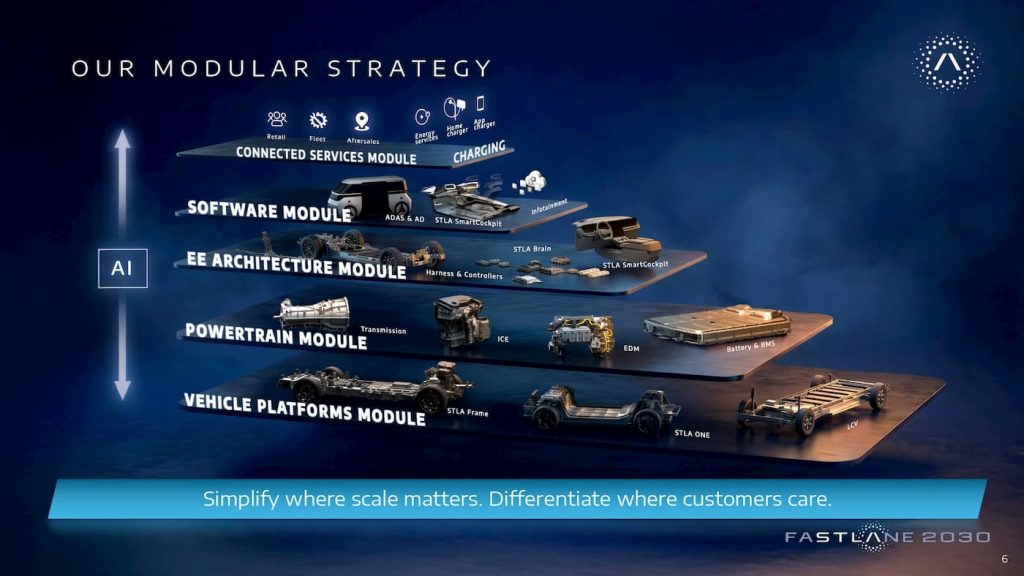
In collaboration with “first-tier partners,” Stellantis plans to open “a new chapter” with AI embedded across the entire stake. The new tech includes:
- STLA Brain: A scalable central compute and software architecture, or “the digital backbone” of the vehicle.
- STLA SmartCockpit: Powered by STLA Brain to offer navigation, entertainment, and more using AI.
- STLA AutoDrive: A scalable autonomous driving system.
All of them will be launched in 2027, alongside the STLA One platform. By 2030, Stellantis said 35% of vehicles sold globally will be equipped with at least one of the new technologies, rising to over 70% by 2035.
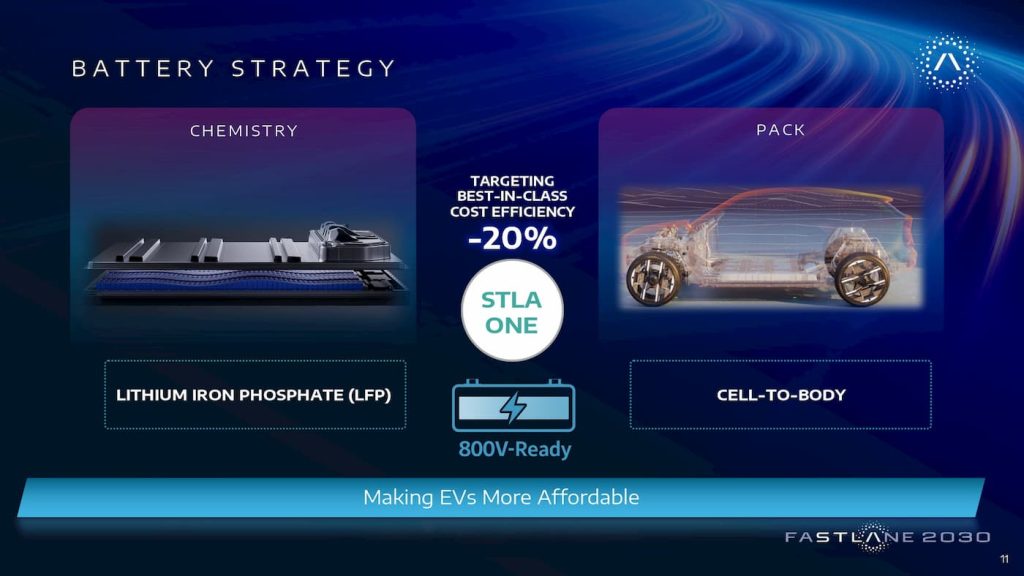
By using lithium iron phosphate (LFP) batteries and a simplified cell-to-body design that integrates the battery directly into the vehicle’s structural frame, Stellantis aims to slash costs by 20% compared to current platforms.
“STLA One is a clear example of a truly modular strategy, giving us the flexibility of a multi-energy platform without carrying inefficiencies from one propulsion system to another,” Stellantis chief engineering and tech officer, Ned Curic, said.
The new platform will be 800-Volt capable for faster charging and a “better real-world BEV experience,” according to Stellantis.
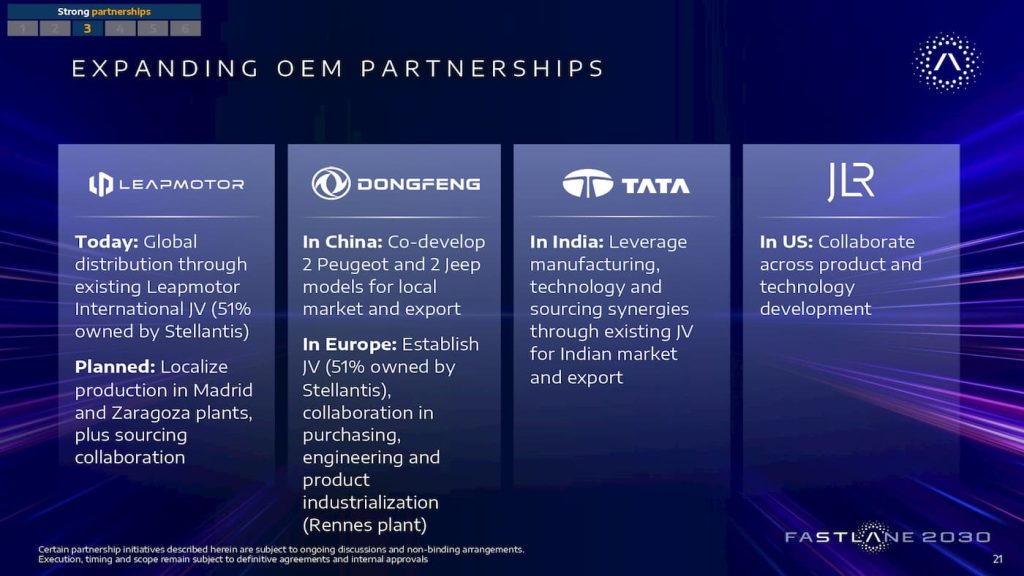
Filosa said that, with the new tech stack and its “win-win partnerships,” Stellantis has all the ingredients to hit its FaSTLAne 2030 targets.
The updated strategy comes after Stellantis announced several new partnerships over the past few days, including one with Jaguar Land Rover on Wednesday to potentially co-develop vehicles for the US.
Stellantis also expanded its collaboration with China’s Leapmotor last month to build several new EVs in Europe. In a partnership with Dongfeng, Stellantis plans to produce two new Peugeot and two Jeep-branded new-energy vehicles in China, to be sold overseas starting in 2027.


FTC: We use income earning auto affiliate links. More.