

Close Menu

    Subscribe to Updates

    Get the latest news information from worldwide businesses.

    What's Hot

    Drinking more water alone may not prevent repeat kidney stones: Lancet Study

    May 20, 2026

    Parents of Auburn grad sue boyfriend’s father in wrongful death lawsuit

    May 20, 2026

    UPSC marks disclosure row reaches CIC, applicants flag misuse by coaching centres | Education News

    May 20, 2026
    Facebook Instagram YouTube LinkedIn X (Twitter)
    Trending
    • Drinking more water alone may not prevent repeat kidney stones: Lancet Study
    • Parents of Auburn grad sue boyfriend’s father in wrongful death lawsuit
    • UPSC marks disclosure row reaches CIC, applicants flag misuse by coaching centres | Education News
    • How to watch SpaceX launch its 1st Starship V3 megarocket on May 21
    • Prescribed Burns and Forest Thinning Averted Millions of Tons of Emissions and Billions in Damages
    • 5 WWE title changes that may happen by Clash in Italy 2026
    • How She Works Out Even on Busy Days
    • Scientists discover strange link between vitamin D and pain
    Newspublicly
    • About Us
    • Advertise & Partner with us
    • Pitch Your Story
    • Contact Us
    Facebook Instagram LinkedIn X (Twitter)
    Subscribe
    • Home
    • World News
      • Asia
      • India
      • USA
      • UK & Europe
      • Middle East
    • Economy & Business
      • Global Economy
      • Corporate & Industry
      • Finance & Markets
      • Policy & Trade
    • Technology
      • Gadgets & Devices
      • Software & Apps
      • AI & Machine Learning
      • Robotics & Automation
    • Health & Medicine
      • Fitness & Nutrition
      • Research & Innovation
      • Disease & Treatment
      • Doctors, Clinics & Patient Care
    • Travel & Tourism
    • Automobile
      • Electric & Hybrid Vehicles
      • Auto Industry Insights
    • Sports
    • More
      • Education
      • Real Estate
      • Environment & Climate
      • Space & Astronomy
      • War & Conflicts
    Newspublicly
    Home»Health & Medicine»Research & Innovation»T. rex’s tiny arms may have evolved for a surprisingly brutal reason
    Research & Innovation

    T. rex’s tiny arms may have evolved for a surprisingly brutal reason

    AdminBy AdminMay 20, 2026No Comments4 Mins Read0 Views
    Share
    Facebook Twitter LinkedIn Copy Link WhatsApp


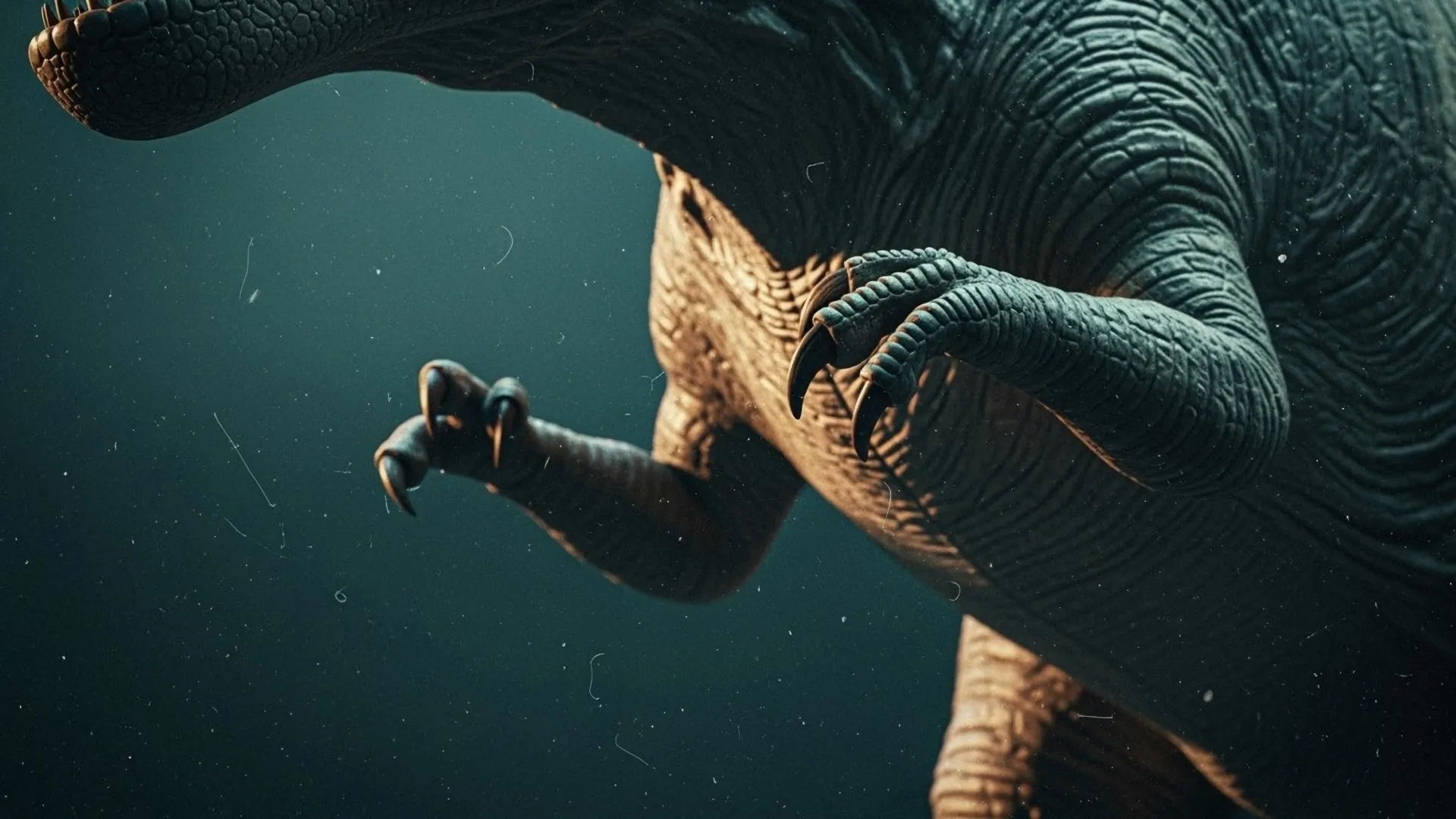
    The famously tiny arms of Tyrannosaurus rex may have been the result of a major shift in how giant meat eating dinosaurs hunted, according to a new study led by researchers from UCL (University College London) and the University of Cambridge.

    The research, published in Proceedings of the Royal Society B, examined 82 species of theropods, a group of mostly carnivorous, two legged dinosaurs. The scientists found that reduced forelimbs evolved independently in at least five dinosaur lineages, including tyrannosaurids, the group that included T. rex.

    Rather than simply being a side effect of growing larger bodies, the study suggests that shrinking arms were closely connected to the evolution of massive, powerful skulls and jaws.

    Giant Skulls Took Over the Hunt

    The researchers discovered that dinosaurs with shorter arms tended to have especially robust skulls. That connection was stronger than the link between tiny arms and overall body size.

    According to the team, this may reflect a major evolutionary shift in hunting strategy. As giant plant eating dinosaurs such as sauropods became more common, predators may have relied less on grasping prey with claws and more on delivering devastating bites.

    Lead author Charlie Roger Scherer, a PhD student at UCL Earth Sciences, said: “Everyone knows the T. rex had tiny arms but other giant theropod dinosaurs also evolved relatively small forelimbs. The Carnotaurus had ridiculously tiny arms, smaller than the T. rex.

    “We sought to understand what was driving this change and found a strong relationship between short arms and large, powerfully built heads. The head took over from the arms as the method of attack. It’s a case of ‘use it or lose it’ — the arms are no longer useful and reduce in size over time.

    “These adaptations often occurred in areas with gigantic prey. Trying to pull and grab at a 100ft-long sauropod with your claws is not ideal. Attacking and holding on with the jaws might have been more effective.”

    Scherer added that the evidence points to skulls becoming stronger before the arms began shrinking.

    “While our study identifies correlations and so cannot establish cause and effect, it is highly likely that strongly built skulls came before shorter forelimbs. It would not make evolutionary sense for it to occur the other way round, and for these predators to give up their attack mechanism without having a back-up.”

    Measuring Dinosaur Skull Strength

    To investigate the relationship between arm size and skull power, the researchers developed a new method for measuring skull robustness. Their approach considered several factors, including bite force, skull shape, and how tightly the bones of the skull were connected. Compact skulls were considered stronger than longer, narrower ones.

    Using this system, T. rex ranked as the most robust skull in the study. Close behind was Tyrannotitan, another enormous theropod that lived in what is now Argentina more than 30 million years before T. rex during the Early Cretaceous period.

    The team believes giant prey animals may have triggered an “evolutionary arms race” in which predators evolved stronger jaws and skulls to overpower increasingly massive herbivores. In many cases, these hunters also grew to enormous sizes themselves.

    Multiple Dinosaur Groups Evolved Tiny Arms

    The researchers compared forelimb length with skull length and identified five dinosaur groups with notably reduced forelimbs. These included tyrannosaurids, abelisaurids, carcharodontosaurids (which included Tyrannotitan), megalosaurids, and ceratosaurids.

    Their analysis showed that tiny arms were more strongly associated with skull robustness than with either skull size or total body size.

    The study also highlighted that not all of these predators were gigantic. Majungasaurus, for example, had a heavily built skull and extremely small arms despite weighing only about 1.6 tons, roughly one fifth the weight of T. rex. The dinosaur lived in Madagascar around 70 million years ago and was still considered an apex predator.

    Different Paths to the Same Result

    The scientists also found that dinosaur groups reduced their forelimbs in different ways over time.

    Among abelisaurids, the hands and lower sections of the arms beyond the elbow became dramatically smaller, with later species such as Majungasaurus developing exceptionally tiny hands. Tyrannosaurids, however, showed a more balanced reduction across the entire forelimb.

    The researchers concluded that separate dinosaur lineages likely reached the same outcome through different evolutionary and developmental pathways.

    The study was carried out by a broader research group focused on dinosaur evolution at UCL, working closely with the Natural History Museum. The group includes research fellows, postdoctoral scientists, and more than 10 PhD students studying dinosaurs and other vertebrates such as crocodiles and birds.


    Source link

    Author

    • Admin

      NewsPublicly.com is News & Articles Platform that creating SEO-focused articles on travel, lifestyle, and digital trends.

    Admin
    • Website

    NewsPublicly.com is News & Articles Platform that creating SEO-focused articles on travel, lifestyle, and digital trends.

    Related Posts

    Scientists discover strange link between vitamin D and pain

    May 20, 2026

    Scientists use DNA from poop to save the world’s rarest marsupial

    May 20, 2026

    Lost for 150,000 years: Rainforest discovery upends human history

    May 20, 2026
    Leave A Reply Cancel Reply

    Demo
    Top Posts

    “Inside Gemini Robotics 1.5: How Robots Learn to Reason & Act

    November 22, 202525 Views

    How US Tariffs Are Reshaping the Global Growth Landscape?

    November 21, 202518 Views

    Pakistani Journalist Laughing at Tejas Fighter Jet Crash at Dubai Airshow Sparks Massive Outrage Worldwide

    November 23, 202517 Views

    Vibe-Coding Boom: How Non-Coders Build Apps With AI Agents

    November 22, 202515 Views
    Don't Miss

    Drinking more water alone may not prevent repeat kidney stones: Lancet Study

    May 20, 20263 Mins Read0 Views

    NEW DELHI: For years, people who have suffered from kidney stones have been advised to…

    Parents of Auburn grad sue boyfriend’s father in wrongful death lawsuit

    May 20, 2026

    UPSC marks disclosure row reaches CIC, applicants flag misuse by coaching centres | Education News

    May 20, 2026

    How to watch SpaceX launch its 1st Starship V3 megarocket on May 21

    May 20, 2026
    Stay In Touch
    • Facebook
    • Twitter
    • Instagram
    • YouTube
    • LinkedIn
    • WhatsApp

    Subscribe to Updates

    Get the latest creative news from SmartMag about art & design.

    Demo
    NEWSPUBLICLY
    Facebook X (Twitter) Instagram LinkedIn

    Home

    • About Us
    • Leadership
    • Advertise & Partner With Us
    • Pitch Your Story
    • Media Kit & Pricing
    • Career
    • FAQs

    Guidelines

    • Editorial & Submission
    • Partnership
    • Advertising & Sponsor
    • Intellectual Property Policy
    • Community & Comment
    • Security & Data Protection
    • Send Your Opinion

    Quick Links

    • Cookie Policy
    • Payment & Billing Terms
    • Refund & Cancellation
    • Copyright Policy
    • Complaint & Support
    • Sitemap
    • Contact Us

    Subscribe Us

    Get the latest news and updates!

    Copyright © 2026 Newspublicly (DIGITALIX COMMUNICATION). All Rights Reserved.
    • Privacy Policy
    • Terms of Use
    • Disclaimer