

Close Menu

    Subscribe to Updates

    Get the latest news information from worldwide businesses.

    What's Hot

    Bariatric Surgery Outperforms GLP-1 Drugs for Weight Loss, Disease Remission, finds study

    May 19, 2026

    Demis Hassabis said this might be the ‘foothills of the singularity.’ What?

    May 19, 2026

    Google just declared itself a contender in AI design at IO 2026

    May 19, 2026
    Facebook Instagram YouTube LinkedIn X (Twitter)
    Trending
    • Bariatric Surgery Outperforms GLP-1 Drugs for Weight Loss, Disease Remission, finds study
    • Demis Hassabis said this might be the ‘foothills of the singularity.’ What?
    • Google just declared itself a contender in AI design at IO 2026
    • Tata Steel UK wins exemption from US steel tariff rules
    • These charts offer a warning to the next generation — a new era of higher Treasury yields may be coming
    • Why more US women are moving abroad: ‘It’s because of Trump, right? Yes and no’ | US news
    • US plans to shrink forces available to NATO during crises, sources say
    • Mission Makeover? Terrorists opt for cosmetic upgrade in India
    Newspublicly
    • About Us
    • Advertise & Partner with us
    • Pitch Your Story
    • Contact Us
    Facebook Instagram LinkedIn X (Twitter)
    Subscribe
    • Home
    • World News
      • Asia
      • India
      • USA
      • UK & Europe
      • Middle East
    • Economy & Business
      • Global Economy
      • Corporate & Industry
      • Finance & Markets
      • Policy & Trade
    • Technology
      • Gadgets & Devices
      • Software & Apps
      • AI & Machine Learning
      • Robotics & Automation
    • Health & Medicine
      • Fitness & Nutrition
      • Research & Innovation
      • Disease & Treatment
      • Doctors, Clinics & Patient Care
    • Travel & Tourism
    • Automobile
      • Electric & Hybrid Vehicles
      • Auto Industry Insights
    • Sports
    • More
      • Education
      • Real Estate
      • Environment & Climate
      • Space & Astronomy
      • War & Conflicts
    Newspublicly
    Home»More»Space & Astronomy»Lasers in moon craters could create a lunar GPS system
    Space & Astronomy

    Lasers in moon craters could create a lunar GPS system

    AdminBy AdminMay 19, 2026No Comments4 Mins Read0 Views
    Share
    Facebook Twitter LinkedIn Copy Link WhatsApp


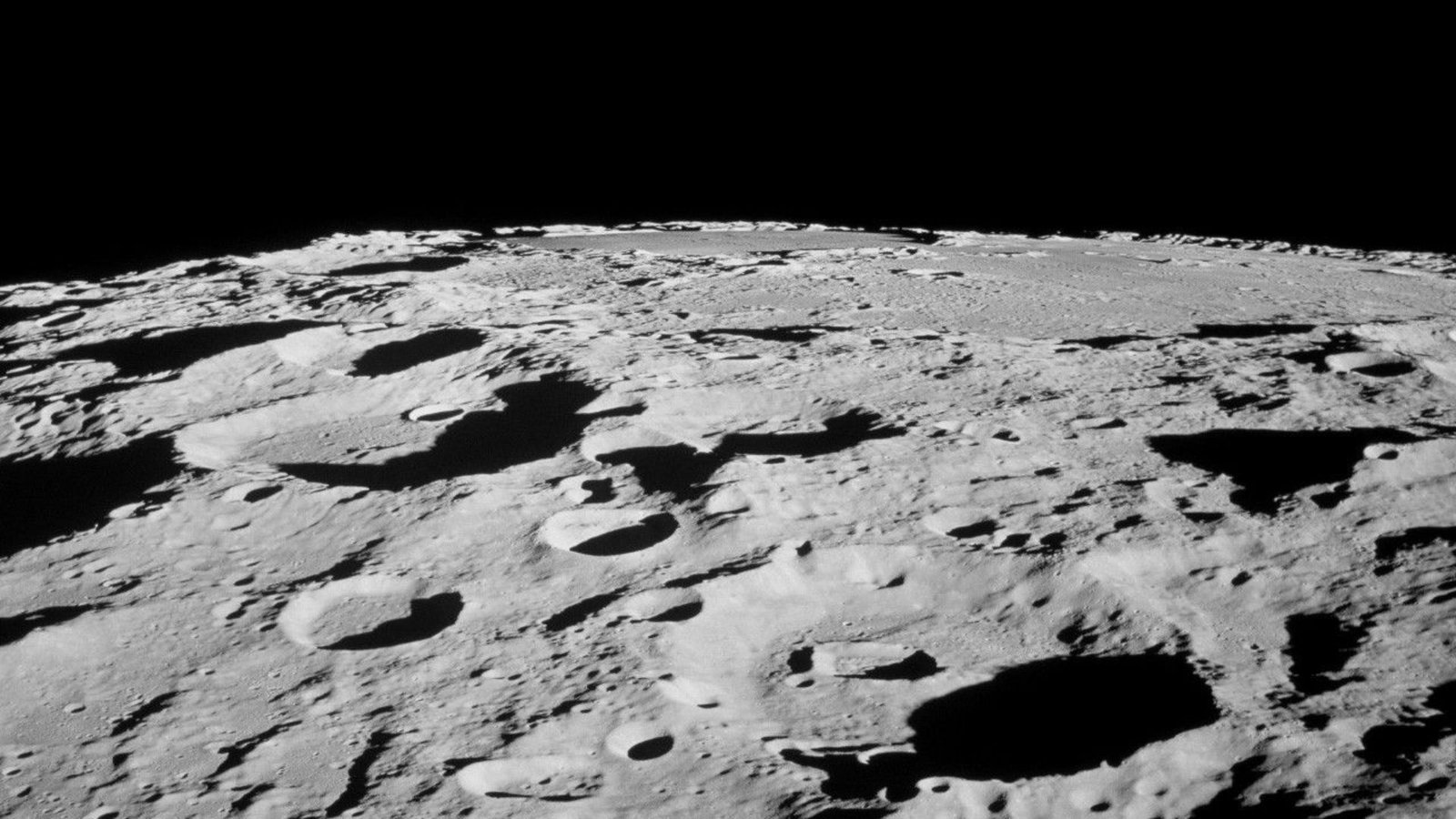
    Placing ultrastable lasers inside some of the coldest, darkest lunar craters could help scientists establish a GPS-like navigation system on the moon, allowing future Artemis astronauts and spacecraft to navigate the lunar surface more easily.

    Researchers at the National Institute of Standards and Technology (NIST) have proposed that permanently shadowed craters near the moon’s south pole may offer the perfect natural environment for extraordinarily precise laser systems. Those lasers could one day provide the timing backbone needed for future astronauts, rovers and spacecraft to navigate the moon without relying so heavily on Earth-based tracking systems, according to a statement from the NIST.

    Lunar GPS (which stands for Global Positioning System) concepts have gained increasing attention as NASA prepares for long-term Artemis missions and future lunar bases. Scientists and space agencies have spent years developing ideas for moon-based positioning, navigation and timing systems, with proposed concepts including navigation satellites orbiting the moon, radio beacons and atomic clocks similar to the technology behind Earth’s GPS network.


    You may like

    The new study builds on those broader efforts, adding an unusual twist: ultrastable lasers housed inside the moon’s permanently shadowed craters. A highly stable laser produces light with an almost perfectly constant frequency, allowing multiple lasers to precisely measure distances between objects — a capability that could eventually support navigation systems across the lunar surface.

    Permanently shadowed craters never receive direct sunlight because of the moon’s low axial tilt. Hidden in perpetual darkness, these craters remain colder than Pluto, with temperatures dipping to around minus 370 degrees Fahrenheit (minus 223 degrees Celsius). Scientists have long targeted them as potential reservoirs of frozen water that could support future lunar settlements.

    Now researchers think those same harsh conditions could make the craters ideal natural laboratories for precision laser systems. The study suggests using a silicon optical cavity — a device that stabilizes laser light by reflecting it between mirrors separated by an incredibly precise distance.

    On Earth, these systems require complex cryogenic cooling and vibration isolation because even tiny temperature shifts can destabilize the laser. However, inside a permanently shadowed lunar crater, nature may do much of that work for free.

    Space

    The frigid temperatures inside the craters, combined with the moon’s naturally high-vacuum environment and relatively low levels of vibration compared to Earth, could allow silicon optical cavities to operate with almost no thermal expansion — providing the stability needed for navigation systems that rely on precise laser frequencies to calculate positions and track spacecraft movement across the lunar surface, according to the statement.

    “As soon as I understood what the permanently shadowed regions can offer, I felt that this would be the most ideal environment for a super-stable laser,” Jun Ye, lead author of the study, said in the statement.

    Today, Earth’s GPS satellites continuously broadcast timing signals generated by onboard atomic clocks. Receivers calculate their position by measuring how long those signals take to arrive from multiple satellites.


    What to read next

    A diagram showing how a laser in a crater could work.

    A lunar laser locked to an ultrastable silicon cavity in a permanently shadowed crater could serve as a precision reference for a future lunar GPS-like navigation network. (Image credit: J. Ye/NIST with lunar background image produced by NASA’s Visualization Studio)

    Spacecraft around the moon still rely heavily on Earth-based tracking systems, but as lunar activity ramps up, that approach may no longer be practical — especially around the rugged lunar south pole, where difficult lighting conditions complicate navigation for both astronauts and robotic explorers.

    Instead, the researchers suggest ultrastable lasers housed inside permanently shadowed craters could serve as master timing references for future lunar satellites and communication networks, effectively acting as part of a lunar GPS infrastructure.

    Once deployed inside or near a permanently shadowed lunar crater, the optical cavity would stabilize a nearby laser by locking its light to a single, highly precise frequency. Researchers say the resulting signal could function like a GPS beacon for lunar spacecraft, while also linking with satellite-based atomic clocks to help form the “backbone of the first optical atomic clock on an extraterrestrial surface,” officials said in the statement.

    Their findings were published May 8 in the journal Proceedings of the National Academy of Sciences.


    Source link

    Author

    • Admin

      NewsPublicly.com is News & Articles Platform that creating SEO-focused articles on travel, lifestyle, and digital trends.

    Admin
    • Website

    NewsPublicly.com is News & Articles Platform that creating SEO-focused articles on travel, lifestyle, and digital trends.

    Related Posts

    New ‘The Mandalorian and Grogu’ clip reveals how Mando’s Razor Crest spaceship was resurrected (video)

    May 19, 2026

    Worker dies at SpaceX’s Starbase in leadup to Starship V3 megarocket launch

    May 19, 2026

    Vast, builder of private space stations, launches line of high-power satellites

    May 19, 2026
    Leave A Reply Cancel Reply

    Demo
    Top Posts

    “Inside Gemini Robotics 1.5: How Robots Learn to Reason & Act

    November 22, 202525 Views

    How US Tariffs Are Reshaping the Global Growth Landscape?

    November 21, 202518 Views

    Pakistani Journalist Laughing at Tejas Fighter Jet Crash at Dubai Airshow Sparks Massive Outrage Worldwide

    November 23, 202517 Views

    Vibe-Coding Boom: How Non-Coders Build Apps With AI Agents

    November 22, 202515 Views
    Don't Miss

    Bariatric Surgery Outperforms GLP-1 Drugs for Weight Loss, Disease Remission, finds study

    May 19, 20261 Min Read0 Views

    Bariatric Surgery Outperforms GLP-1 Drugs for Weight Loss, Disease Remission, finds study We use cookies…

    Demis Hassabis said this might be the ‘foothills of the singularity.’ What?

    May 19, 2026

    Google just declared itself a contender in AI design at IO 2026

    May 19, 2026

    Tata Steel UK wins exemption from US steel tariff rules

    May 19, 2026
    Stay In Touch
    • Facebook
    • Twitter
    • Instagram
    • YouTube
    • LinkedIn
    • WhatsApp

    Subscribe to Updates

    Get the latest creative news from SmartMag about art & design.

    Demo
    NEWSPUBLICLY
    Facebook X (Twitter) Instagram LinkedIn

    Home

    • About Us
    • Leadership
    • Advertise & Partner With Us
    • Pitch Your Story
    • Media Kit & Pricing
    • Career
    • FAQs

    Guidelines

    • Editorial & Submission
    • Partnership
    • Advertising & Sponsor
    • Intellectual Property Policy
    • Community & Comment
    • Security & Data Protection
    • Send Your Opinion

    Quick Links

    • Cookie Policy
    • Payment & Billing Terms
    • Refund & Cancellation
    • Copyright Policy
    • Complaint & Support
    • Sitemap
    • Contact Us

    Subscribe Us

    Get the latest news and updates!

    Copyright © 2026 Newspublicly (DIGITALIX COMMUNICATION). All Rights Reserved.
    • Privacy Policy
    • Terms of Use
    • Disclaimer