

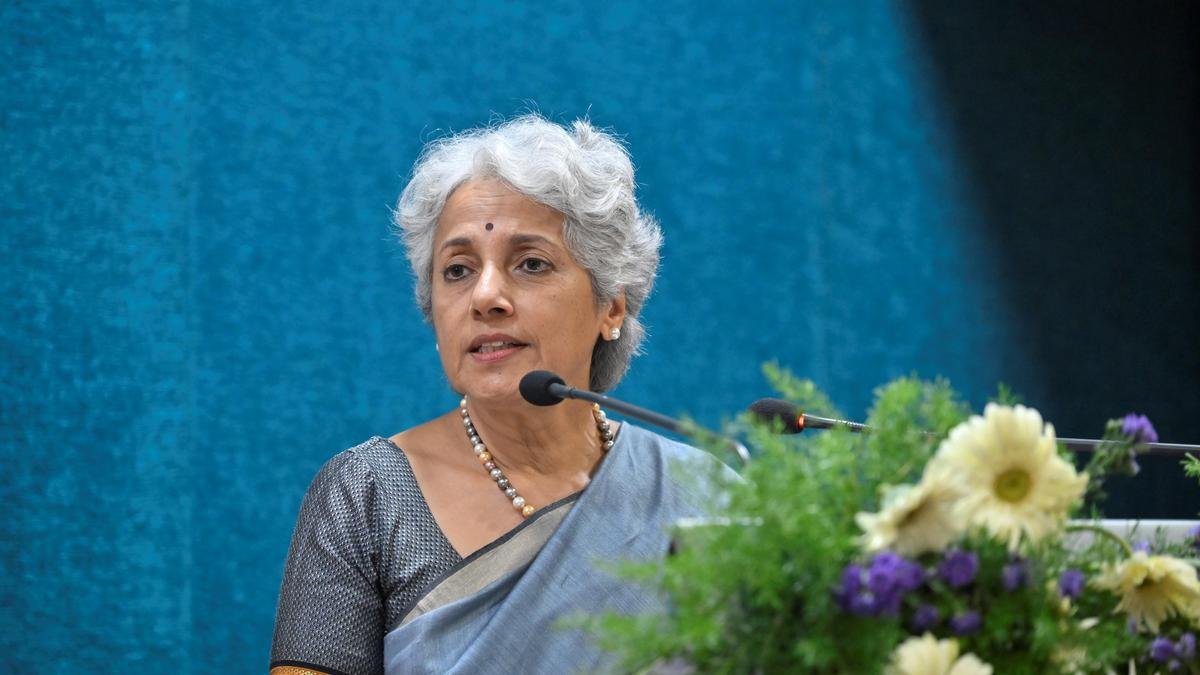
Soumya Swaminathan, chairperson of the M.S. Swaminathan Research Foundation, said on Monday (May 18, 2026) that gains in global health achieved over recent decades are becoming increasingly fragile, while progress in maternal and child health is being reversed due to geopolitical challenges and declining development funding.
Delivering the keynote address at the inauguration of the sixth annual Philanthropy Asia Summit (PAS) here, she said, “Some of the gains we have made in maternal and child health are getting reversed because of geopolitics and loss of development funding in many countries.”

Increase domestic violence
“Gender-based violence and domestic violence increase significantly with climate change, particularly during prolonged periods of heat and drought. People have also reported lower incomes during summer,” she said.
“A lot of work that we and others have done at the Foundation has shown that women are disproportionately impacted by climate change. And when women are impacted, their children are also affected. So this is also about the next generation and human capital,” the Swaminathan Foundation chairperson added.

Dr. Soumya Swaminathan said that many countries tend to focus on hospitals and primary healthcare centres when thinking about health systems, while overlooking the broader determinants of health, including social, environmental and economic factors.
“Metabolic risks, obesity and poor diets are going up around the world. This is driving diabetes and all its complications,” she said, adding that income inequality and low levels of education are also contributing to poor health indicators in many parts of the world.
Highlighting the impact of climate change on public health, Dr Swaminathan said, “I truly believe that climate change and all the threats we face today are not only about our health, but also about our survival.”
She noted that climate change is making living conditions increasingly difficult in many parts of the world and is contributing to both internal migration within countries and migration across borders.
Referring to India’s recent heat conditions, she said many Indian cities experienced extreme heat in April 2026, increasing vulnerability among populations. “So, I think the future of cities and how we become climate-resilient is something that we really need to think about,” she said.

Pointing to the environmental risks affecting health and the economy, Dr Swaminathan said air pollution and natural disasters are closely linked to climate change. “The health outcomes are shaped by multiple interconnected pathways — mainly the air, food systems, ecosystems and, of course, climate,” she said.
Dr Swaminathan said current responses to climate-related health risks remain fragmented, even as many of the threats are directly linked to extreme weather events.
Heat impacting immune system
“Now the issue is not just temperature but also humidity and direct exposure to sunlight. As temperatures rise with global warming, we are going to be exposed to prolonged periods of extreme heat lasting weeks or even months. When that happens, it starts impacting the cardiovascular system and the immune system, and it also has mental health impacts,” she said.

Speaking about vulnerability factors, Dr. Swaminathan said climate change does not affect everyone equally. “Everyone doesn’t get impacted in the same way. It depends on demography, geography, where you live, and your underlying biological factors. We know that the poor are always the first and the worst to be impacted,” she said.
Earlier, Edmund Koh, chairman of the Philanthropy Asia Alliance, said that philanthropists, policymakers, entrepreneurs, scientists, researchers and community leaders from around the world are participating in the three-day event being held from May 18 to 20.
The Philanthropy Asia Summit is the flagship event supported by Temasek Trust, Singapore.
Published – May 18, 2026 06:18 pm IST