

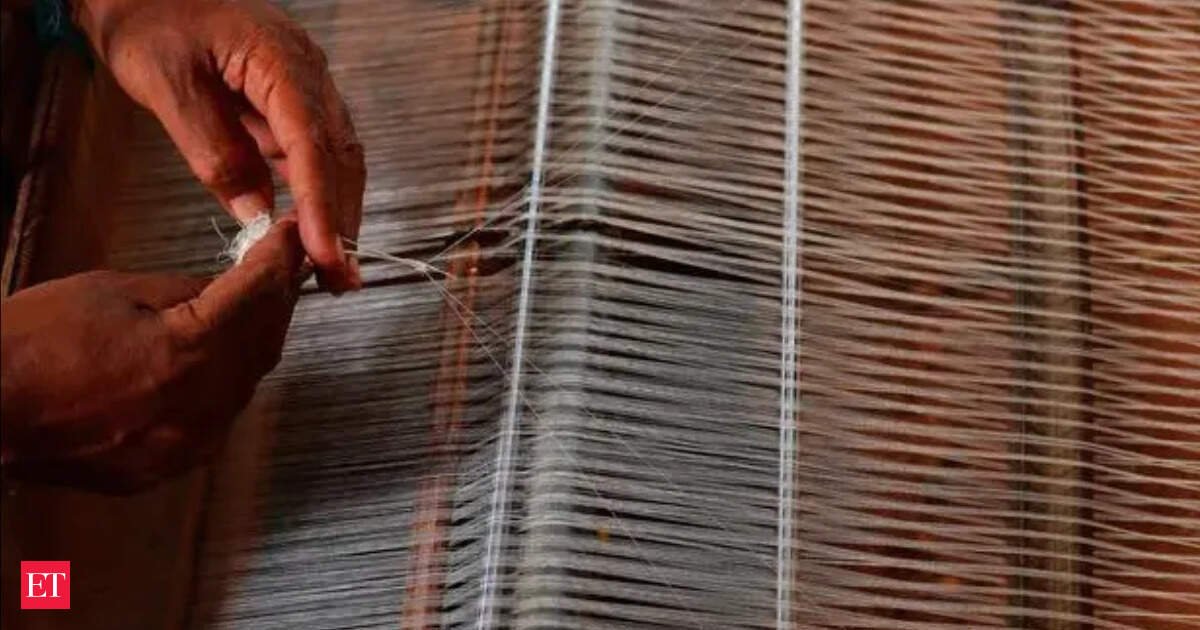
Covering Assam, Rajasthan, Tamil Nadu, Uttar Pradesh and West Bengal, the study found that handloom and handicraft enterprises contributed 0.17% to national gross domestic product (GDP) and 1.31% to total manufacturing gross value added (GVA) in 2023-24.
The report showed that four out of 10 manufacturing establishments in the five states were engaged in the handloom and handicraft sector, while one in four manufacturing workers was employed in this sector.
Worker earnings, however, remain a concern. The average daily income of workers in this sector stood at about Rs 270. “This amount can be considered as the daily average income of a worker and it falls far short of the prescribed daily minimum wage,” the report said.
The report also noted the absence of e-commerce adoption and no contact with export agencies among the surveyed units.

Financial constraints, lack of market access, rising input costs, shortage of raw materials, competition from factory-made and imported products, lack of space, and shortage of skilled workers were some of the key challenges identified by the sector, according to the study.
Over the past decade, over 50% of the handloom units in Assam (50.4%), Tamil Nadu (66.3%) and Uttar Pradesh (51.4%) and the handicraft units in Assam (53.7%) reported a decline in the current scale of production. In contrast, 32.1% of handloom units in Rajasthan, 32.6% in West Bengal, and 21.5% of the handicraft units in Assam and 24.8% in Rajasthan reported a growth. The study recommended greater awareness and integration of government schemes, continuous skill upgradation, expansion of market access for artisan products, and easier access to financial support and insurance.
It also called for targeted interventions to improve access to raw materials, finance, and social security, especially for women and other vulnerable communities that depend heavily on the sector for livelihoods.