

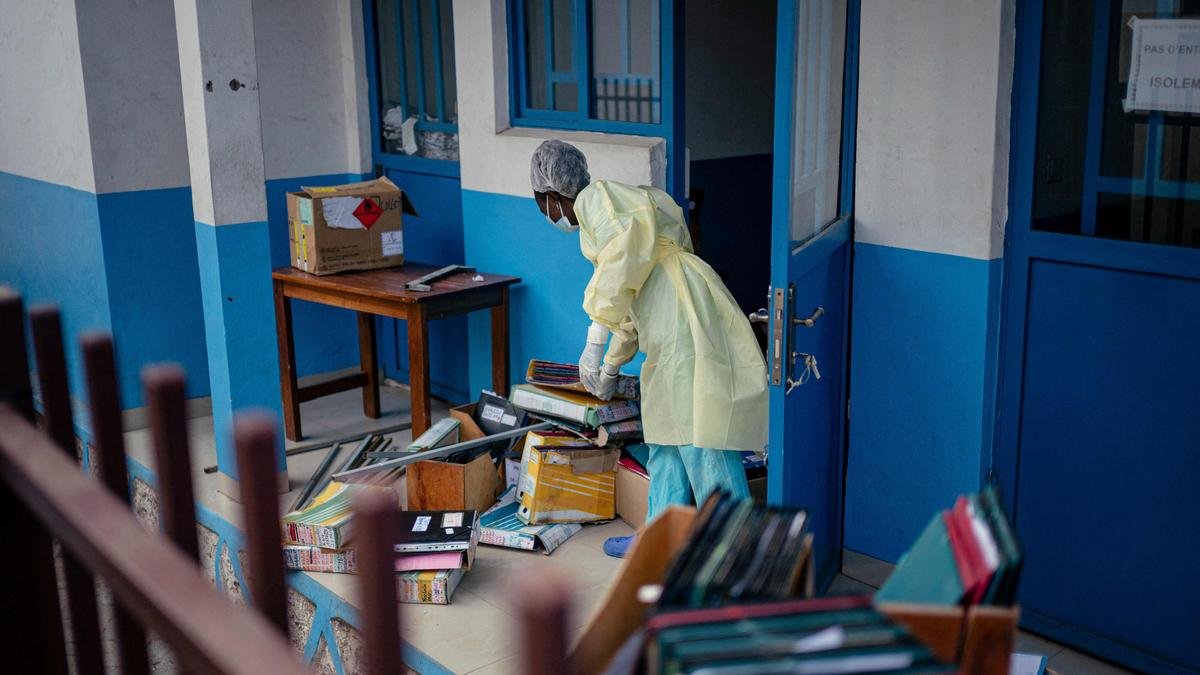
The story so far : On May 16, the World Health Organization (WHO) declared the Ebola outbreak in the Democratic Republic of the Congo (DRC) and Uganda, a ‘public health emergency of international concern (PHEIC). Just ahead of that, the Ministry of Public Health, Hygiene and Social Welfare, DRC, and the Ufanda Ministry of Health declared the outbreak of Ebola.

What is a PHEIC?
A PHEIC is the WHO’s highest level of global health alert, formally declared under the International Health Regulations, whenever the health event is serious, sudden, unexpected or unusual, and poses a public health risk to other countries through spread. The declaration of the PHEIC also calls for a co-ordinated global response to tackle the current outbreak.
A new Ebola outbreak was notified in eastern DRC and Uganda, reportedly driven by the Bundibugyo ebolavirus strain. Unlike in the past, this outbreak is said to be smaller and confined to a cross‑border region. According to the WHO report, as of 16 May 2026, eight laboratory-confirmed cases, 246 suspected cases and 80 suspected deaths have been reported in Ituri Province of the DRC. In addition, two laboratory confirmed cases (including one death) with no apparent link to each other have been reported in Kampala, Uganda, within 24 hours of each other, among two individuals travelling from the Democratic Republic of the Congo. However, it is the ongoing conflict and displacement in this region raises concerns about undetected spread and access to care.
What is Ebola?
Ebola virus disease (EVD), is a zoonotic disease that can be severe and often fatal in humans. It is caused by the eponymic Ebola virus, and has spilled over to humans from wild animals including fruit bats and non-human primates, but is now capable of spreading between humans whenever there is direct contact with blood, secretion, bodily fluids of those infected and even contaminated surfaces. The average fatality from Ebola is estimated at 50 %, but chances of recovery depend on the strain of the virus and the quality of care.
According to the WHO, three different viruses are known to cause large Ebola disease outbreaks: Ebola virus, Sudan virus and Bundibugyo virus. This current epidemic involves the last variant.
The classic symptoms of Ebola are sudden high fever, muscle and joint pains, weakness, sore throat and chills, severe headache, and sometimes conjunctivitis. These are characterised as the ‘dry’ symptoms occurring within the first four days. Later, ‘wet’ symptoms, including persistent vomiting and diarrhoea, abdominal pain and rash, soon leading to impaired kidney and liver function and internal and external bleeding, breathing difficulty, chest pain even seizures.
Ebola symptoms usually appear about 8–10 days after exposure, but the actual range could be anywhere between 2 and 21 days. A person infected with Ebola is not contagious during the incubation period (2–21 days); they only spread the virus once symptoms appear.
Ebola has been known since 1976, with most early outbreaks occurring in remote villages of Central Africa, near the tropical rainforests. However, things changed dramatically with the worst Ebola outbreak in history occurred in West Africa from 2014 to 2016 that swept across Guinea, Liberia, and Sierra Leone, resulting in over 28,600 reported cases and 11,325 deaths. This devastating epidemic surpassed all previous outbreaks in scale and complexity due to its rapid spread into densely populated urban centers.
But this outbreak served as a milestone turning point for the way in which the world treated Ebola, it catalysed unprecedented global support for research and development into vaccines for Ebola. As a result, there are two vaccines in the market that have been approved for Ebola, in single and double dose regime. Both are being used for targeted “ring vaccination” for all contacts and frontline workers dealing with the cases, as post-exposure prophylaxis. There are monoclonal‑antibody treatments in the market that reportedly significantly improve survival when given early to patients.

What are the measures in place now?
The WHO‑led response now focuses on rapid isolation of a patient and immediate provision of an intensive supportive care (rehydration, symptom management) in order to reduce mortality. But what will be crucial in actually containing this outbreak is to initiate rapid case tracing, contact tracing, ensuring safe burials, and establishing strict infection‑control measures in all the health facilities where people are being treated. The WHO’s plan also includes deploying approved vaccines and monoclonal antibodies to at‑risk groups where feasible. An essential part of the strategy is to also launch social mobilisation campaigns to build trust, reduce stigma, and encourage early care‑seeking among the people in the affected zones.
According to the WHO, “outbreak control relies on a package of interventions including intensive supportive care of patients, infection prevention and control, disease surveillance and contact tracing, laboratory services, safe and dignified burials, vaccination if relevant, and social mobilisation.”
Published – May 18, 2026 01:03 pm IST