

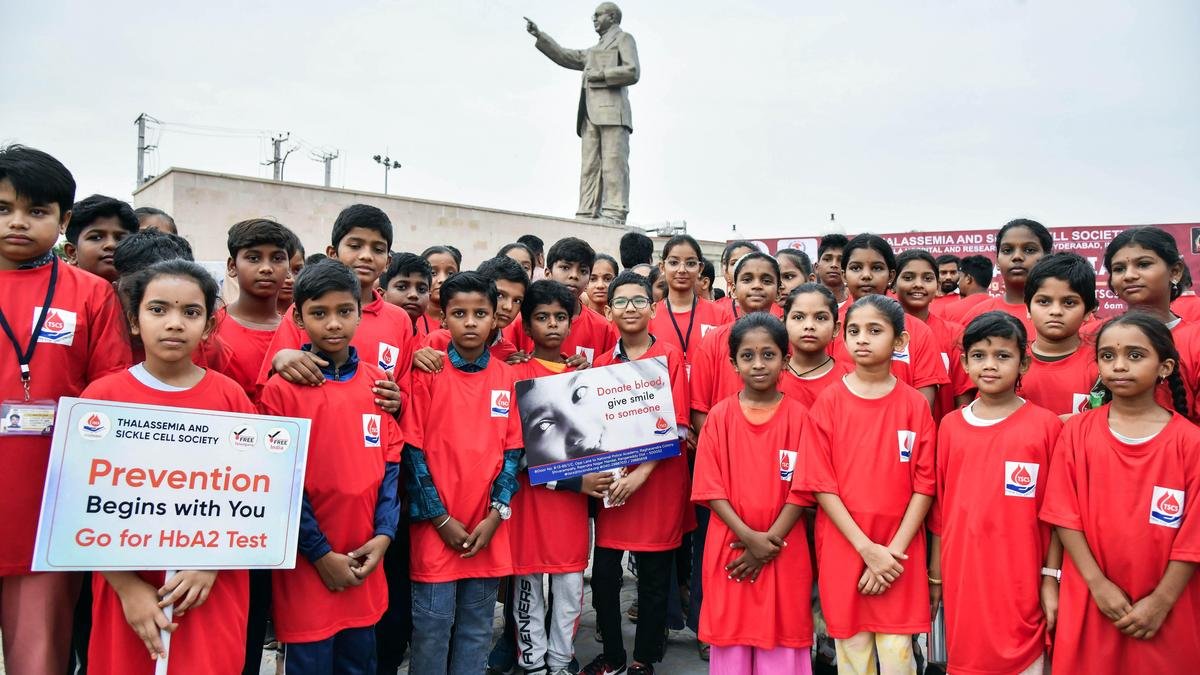
Each year on May 8, World Thalassemia Day marks a moment of global reflection on one of the most significant genetic disorders in human history. In India, that reflection carries particular weight. With an estimated 35 to 45 million beta thalassemia carriers and approximately 10,000 to 12,000 children born with Thalassemia Major every year, India accounts for a substantial share of the global burden. As clinical understanding and reproductive technology continue to advance, the conversation around thalassemia is beginning to shift in an important direction, from treatment towards prevention.
The clinical reality of Thalassemia Major is severe and lifelong. Children born with the condition require blood transfusions every two to four weeks. The iron overload that accumulates from repeated transfusions causes progressive damage to the heart, liver, and endocrine system, requiring chelation therapy to manage it. Despite this, only 5% to 10% of children born with Thalassemia Major in India currently receive optimal treatment, highlighting how urgent it is to strengthen both care pathways and, wherever possible, prevention strategies.

Prevention is key
Prevention operates at an entirely different point in the chain, and its impact is proportionally greater. The foundational challenge is carrier identification. Beta thalassemia is an autosomal recessive disorder. If both parents are carriers, there is a 25% risk their children could be affected and a 50% risk of them being carriers. However, if one parent is affected and the other is a carrier, there is a 50% risk of their child being affected and a 50% risk of the child being a carrier. The carrier state itself, known as thalassemia minor or thalassemia trait, produces no significant clinical symptoms. Carriers feel healthy and often remain undiagnosed for their entire lives. The average carrier prevalence in India is 3% to 4%, with certain ethnic communities recording rates between 4% and 17%. When two carriers conceive a child naturally, each pregnancy carries a 25% probability of producing a child with Thalassemia Major.
In South India, where the beta thalassemia trait prevalence has been recorded between 8.5% and 37.9% across different population groups, this is no longer an abstract risk. It is a clinical reality that fertility specialists and haematologists encounter regularly, and one that a structured prevention strategy could address systematically.

We have the tools
The tools for that strategy already exist. Carrier screening is the first intervention point. A simple blood test such as high-performance liquid chromatography, or HPLC, can identify beta thalassemia carriers accurately and inexpensively. Countries that have built national carrier screening programmes into their preconception or antenatal pathways have achieved measurable reductions in new Thalassemia Major births. Cyprus, which mandated premarital carrier screening in the 1970s, reduced its incidence of new cases to near zero. Iran achieved similar results through a structured national programme. In India, National Health Mission guidelines recommend antenatal screening for pregnant women and screening for high-risk populations. Early antenatal screening and genetic counselling empower couples to make fully informed reproductive decisions, whether that means preparing for a child with special healthcare needs or considering medical termination of pregnancy in cases of diagnosed Thalassemia Major.
The second intervention point is where reproductive medicine enters. When both partners are identified as carriers, the clinical options depend on when that identification occurs. If it occurs before conception, the couple has access to a full range of reproductive choices, including IVF with Preimplantation Genetic Testing for Monogenic Disorders, or PGT-M.
Understanding PGT-M
PGT-M involves creating embryos through IVF, biopsy of a small number of cells from each embryo at the blastocyst stage, and screening those cells for the specific genetic mutation responsible for thalassemia. Embryos confirmed to be free of the disease are then selected for transfer. The clinical significance of this is considerable. Couples who are both carriers but have no difficulty conceiving naturally can, through IVF with PGT-M, access the highest level of certainty currently available that their child will not be born with Thalassemia Major, and in some cases, completely eradicate the causative gene from their family tree across future generations.
This is a distinction that is frequently misunderstood. IVF in the public imagination is associated almost exclusively with infertility. For thalassemia carrier couples, it serves an entirely different purpose. The fertility of the couple is not in question. What is in question is the genetic status of the embryo, and PGT-M answers that question with a precision that no other currently available method can match.
The clinical complexity of PGT-M varies by case. In couples with sufficient ovarian reserve and an adequate number of embryos generated in a single retrieval cycle, the process is relatively straightforward. In cases where embryo yield is limited, whether due to the woman’s age, ovarian reserve, or response to stimulation, strategies such as embryo pooling across multiple retrieval cycles allow for a larger number of embryos to be accumulated before testing, improving the probability of identifying at least one unaffected embryo for transfer. This requires careful individualisation of the ovarian stimulation protocol, close coordination between the clinical, embryology, and genetics teams, and a clear counselling framework that prepares couples for the range of possible outcomes.
The outcomes, when the process is well managed, are significant. Genetically healthy embryos are transferred, pregnancies proceed, and children are born free of a condition that would otherwise define their entire medical lives.

The path ahead
The broader opportunity is clear. India’s thalassemia burden is a public health challenge of significant scale, and it is also a challenge with a well-validated prevention pathway. That pathway requires two things to function: the identification of carriers through systematic screening before conception is planned, and the availability of reproductive options including PGT-M for carrier couples who choose to use them. Neither requires new science. Both represent an important and achievable step forward for families, clinicians, and the healthcare system alike.
(Dr. Varsha Samson Roy is head of embryology at Birla Fertility & IVF, Bengaluru. Varsha.Roy@birlafertility.com)
Published – May 09, 2026 08:15 pm IST