

Close Menu

    Subscribe to Updates

    Get the latest news information from worldwide businesses.

    What's Hot

    Even leftover food will taste like a wedding meal

    July 24, 2026

    Aurora’s New Autonomous Truck Hardware Is Designed To Last One Million Miles

    July 24, 2026

    FDA panel narrowly backs unapproved peptide drugs favoured by RFK Jr and wellness influencers

    July 24, 2026
    Facebook Instagram YouTube LinkedIn X (Twitter)
    Trending
    • Even leftover food will taste like a wedding meal
    • Aurora’s New Autonomous Truck Hardware Is Designed To Last One Million Miles
    • FDA panel narrowly backs unapproved peptide drugs favoured by RFK Jr and wellness influencers
    • When Should You Be Concerned?
    • Google’s Gemini nears billion-user milestone
    • India’s Manipal Health to spend $414.4 million to expand capacity
    • From Bhadohi to Brooklyn: India’s small towns are set to go global
    • Gaza faces ongoing food crisis despite ceasefire
    Newspublicly
    • About Us
    • Advertise & Partner with us
    • Pitch Your Story
    • Contact Us
    Facebook Instagram LinkedIn X (Twitter)
    Subscribe
    • Home
    • World News
      • Asia
      • India
      • USA
      • UK & Europe
      • Middle East
    • Economy & Business
      • Global Economy
      • Corporate & Industry
      • Finance & Markets
      • Policy & Trade
    • Technology
      • Gadgets & Devices
      • Software & Apps
      • AI & Machine Learning
      • Robotics & Automation
    • Health & Medicine
      • Fitness & Nutrition
      • Research & Innovation
      • Disease & Treatment
      • Doctors, Clinics & Patient Care
    • Travel & Tourism
    • Automobile
      • Electric & Hybrid Vehicles
      • Auto Industry Insights
    • Sports
    • More
      • Education
      • Real Estate
      • Environment & Climate
      • Space & Astronomy
      • War & Conflicts
    Newspublicly
    Home»More»Space & Astronomy»The world’s biggest rocket: How SpaceX’s new Starship ‘V3’ differs from its predecessors
    Space & Astronomy

    The world’s biggest rocket: How SpaceX’s new Starship ‘V3’ differs from its predecessors

    AdminBy AdminMay 14, 2026No Comments5 Mins Read0 Views
    Share
    Facebook Twitter LinkedIn Copy Link WhatsApp


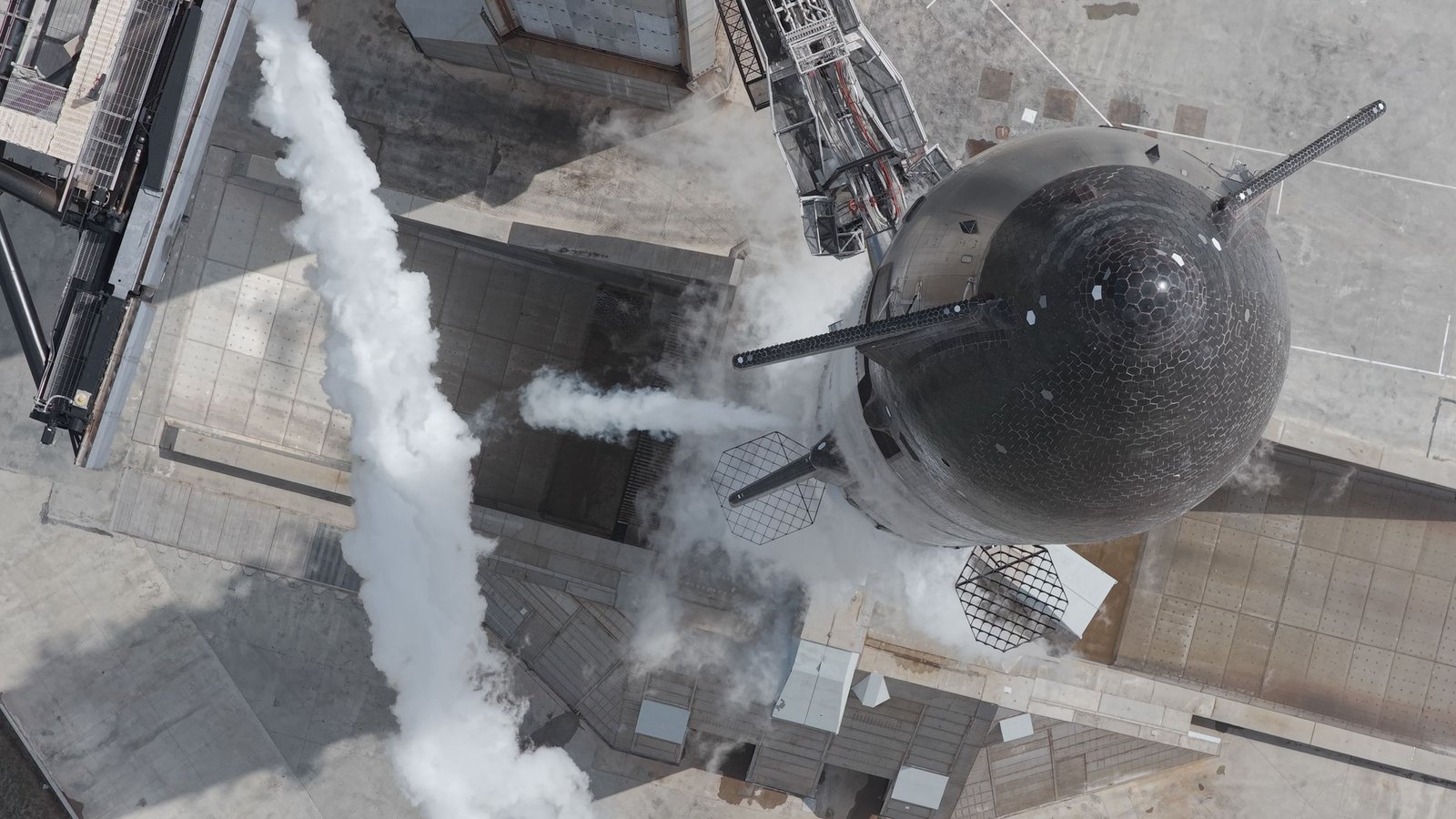
    You’ll have to crane your neck just a little farther to look up at SpaceX’s new Starship rocket.

    The company is gearing up for the planned May 19 debut launch of Version 3 (V3) of Starship, which has undergone a complete design overhaul since its last liftoff seven months ago.

    The first fully stacked Starship rocket, which flew the combined Super Heavy booster and Ship upper stage, launched in April 2023. Three years and 10 additional test flights later, SpaceX has introduced Starship V3 — the culmination of successes, failures and lessons learned over those 11 launches. The rocket’s new, refined design is more powerful, more resilient and more capable than its antecedent iterations, and a step closer to a fully reusable launch vehicle.


    You may like

    Starship V3 will also launch from SpaceX’s newest pad, the second the company has erected at its Starbase site in South Texas. The upgraded hardware is meant to mature Starship’s design, moving the vehicle from test flights toward an operational architecture that can support the rapid reuse, high flight rates and orbital refueling necessary for missions like the ones Starship plans to fly for NASA’s Artemis program, which will land astronauts on the moon.

    V3 stands about 5 feet (1.5 meters) taller than previous Starship builds and packs a much heavier punch. Both stages —Super Heavy and Ship — have been equipped with SpaceX’s new Raptor 3 engine — sleeker, more powerful and more reliable upgrades over the previous Raptor 2. For the Super Heavy booster, that means 33 engines firing with a combined thrust of over 18 million pounds at liftoff.

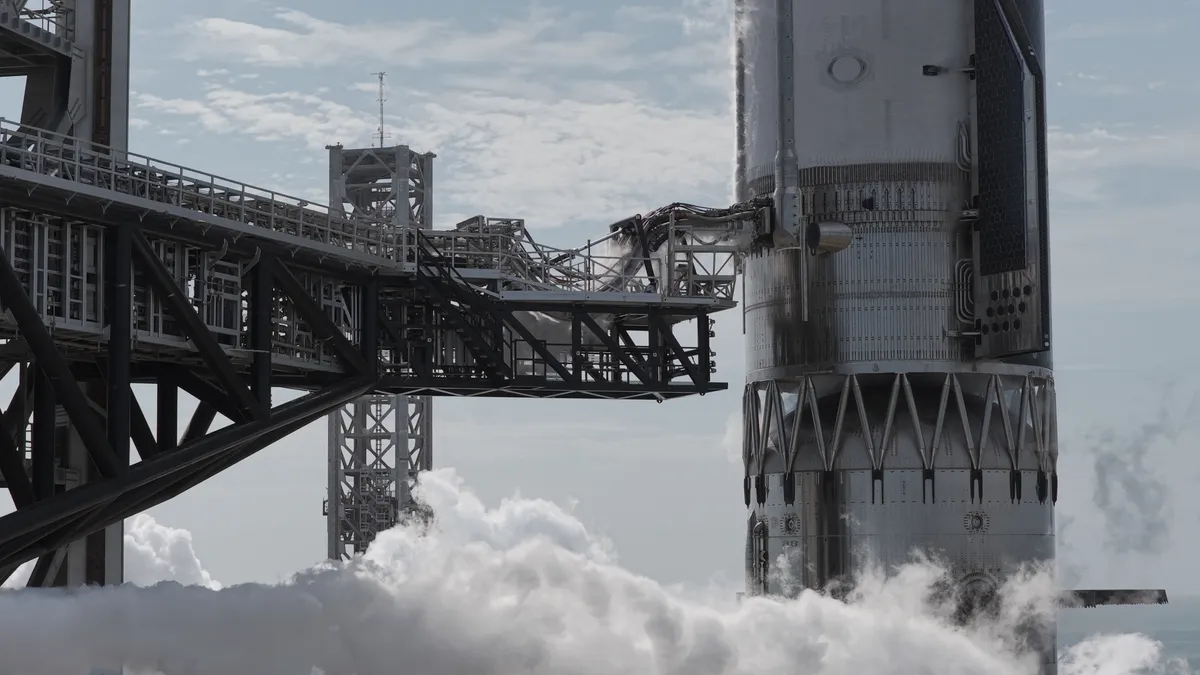
    The V3 Super Heavy has three grid fins — lattice-like structures that help it steer back to Earth for pinpoint touchdowns — rather than the previous three, according to a May 12 SpaceX update. Each one is about 50% larger than before and situated lower on the booster’s trunk to avoid heat from “hot-fire” staging procedures when separating from its Ship counterpart in flight. (A “hot stage” separation means Ship begins firing its engines before actually separating from Super Heavy). The vehicle’s hot stage ring has also been redesigned and attached to the top of the booster; the Starship V2 hot stage ring was an interstage piece that detached from both vehicles and fell back to Earth during flight.

    Inside Super Heavy, a redesigned fuel transfer tube that’s now “roughly the size of a Falcon 9 first stage” will allow the booster’s 33 Raptor 3s faster and simultaneous ignitions for launch and landing burns, according to the update. SpaceX also made changes to the aft end of the rocket that supports those engines to better protect the area from heat with tightened integration of its fuel transfer, power and computer systems.
    Space

    closeup of the middle portion of a silver rocket on the pad

    Another view of the May 11 launch rehearsal, focusing on Starship’s interstage region. (Image credit: SpaceX)

    The Ship upper stage has a list of upgrades as well, including plumbing and wiring layout changes in its own aft section, a larger propellant tank and an improved reaction control system. SpaceX also made significant improvements to how Ship handles cryogenic fuels, adding four docking ports along Starship’s body and a dedicated system for managing cryogenic propellant in zero-g.

    Storing the spacecraft’s cryogenic propellants and transferring them between vehicles is a capability SpaceX has yet to attempt, but it’s a critical technology for Starship’s design. For Ship to fly beyond low Earth orbit (LEO), the spacecraft will require refueling missions using other Starships to top off its tanks. And it’s an ability that SpaceX needs to demonstrate soon if it wants to meet NASA’s timeline for landing astronauts on the moon (in late 2028, on the Artemis 4 mission, if all goes to plan).

    SpaceX is one of two companies contracted to provide lunar landers for the Artemis program, and it needs to meet NASA’s qualifications for crewed flights before astronauts can fly on board Starship. That includes the aforementioned cryogenic fuel challenges, as well as the completion of an uncrewed moon landing and launch back safely to lunar orbit, where, on an actual mission, it would rendezvous and transfer astronauts back aboard NASA’s Orion spacecraft.

    NASA is targeting late 2027 for the Artemis 3 mission, which will launch Orion to LEO to practice docking procedures with Starship and/or the Artemis program’s other lander, Blue Origin‘s Blue Moon. NASA has indicated a willingness to fly with either or both landers, depending on their respective readiness when it comes time for the mission.

    So there’s a lot riding the upcoming debut flight of Starship V3. A successful mission would include the deployment of 22 Starlink mass simulator payloads, upgraded heat tile dispersion and testing (which involves cameras on two of the simulator payloads inspecting Ship’s underside for missing or damaged tiles), an in-space relight of a Ship Raptor 3, various test maneuvers to stress Ship during reentry, and deceleration burns of both stages for soft, offshore landing splashdowns. It’s a long list, and any setbacks could have deep implications for both SpaceX and NASA.


    Source link

    Author

    • Admin

      NewsPublicly.com is News & Articles Platform that creating SEO-focused articles on travel, lifestyle, and digital trends.

    Admin
    • Website

    NewsPublicly.com is News & Articles Platform that creating SEO-focused articles on travel, lifestyle, and digital trends.

    Related Posts

    Hubble discovers unique nova explosion is firing cosmic ‘bullets’ through the Milky Way at 20 million mph

    July 24, 2026

    ‘Star Trek: Strange New Worlds’ Season 4: Release date, cast & how to watch Paramount+’s sensational sci-fi series

    July 23, 2026

    Vulcan Centaur swapped out again: NASA goes with SpaceX Falcon Heavy rocket for launch of space weather mission

    July 23, 2026
    Leave A Reply Cancel Reply

    Demo
    Top Posts

    The Blue Moon rises on May 30— Where and when to see the second full moon of the month

    May 30, 202640 Views

    New SOCOM rifle allows barrel swapping and cartridge changes

    June 1, 202633 Views

    “Inside Gemini Robotics 1.5: How Robots Learn to Reason & Act

    November 22, 202527 Views

    525 pounds of cocaine seized after Nebraska K9 alerts troopers on I-80

    May 28, 202624 Views
    Don't Miss

    Even leftover food will taste like a wedding meal

    July 24, 20263 Mins Read0 Views

    Former Indian opener Sadagoppan Ramesh believes Team India’s opening T20I win over Zimbabwe warranted celebrations…

    Aurora’s New Autonomous Truck Hardware Is Designed To Last One Million Miles

    July 24, 2026

    FDA panel narrowly backs unapproved peptide drugs favoured by RFK Jr and wellness influencers

    July 24, 2026

    When Should You Be Concerned?

    July 24, 2026
    Stay In Touch
    • Facebook
    • Twitter
    • Instagram
    • YouTube
    • LinkedIn
    • WhatsApp

    Subscribe to Updates

    Get the latest creative news from SmartMag about art & design.

    Demo
    NEWSPUBLICLY
    Facebook X (Twitter) Instagram LinkedIn

    Home

    • About Us
    • Leadership
    • Advertise & Partner With Us
    • Pitch Your Story
    • Media Kit & Pricing
    • Career
    • FAQs

    Guidelines

    • Editorial & Submission
    • Partnership
    • Advertising & Sponsor
    • Intellectual Property Policy
    • Community & Comment
    • Security & Data Protection
    • Send Your Opinion

    Quick Links

    • Cookie Policy
    • Payment & Billing Terms
    • Refund & Cancellation
    • Copyright Policy
    • Complaint & Support
    • Sitemap
    • Contact Us

    Subscribe Us

    Get the latest news and updates!

    Copyright © 2026 Newspublicly (DIGITALIX COMMUNICATION). All Rights Reserved.
    • Privacy Policy
    • Terms of Use
    • Disclaimer