Florida has temporarily halted importation of sloths following the deaths of dozens of the wild-born mammals at a now-shuttered Orlando business, a move with national implications.
The two-month ban, which the Florida Fish and Wildlife Conservation Commission (FWC) ordered on Wednesday, is a significant roadblock for people attempting to import the tree-dwelling mammals from the wild for exhibition or as pets. The impact will extend far beyond Florida: More than 98 percent of total U.S. sloth imports from 2011 to 2021 entered through the port of Miami, according to government data analyzed by The Sloth Institute, a conservation group.
In April, an Inside Climate News investigation revealed that 31 sloths died in a Sloth World warehouse soon after it imported the animals from Peru and Guyana in late 2024 and early 2025. Necropsy records obtained by Inside Climate News showed that the deaths continued to mount, primarily due to stress and illness. The company had planned to display sloths at an attraction where customers could view them up close for $49, according to its now-defunct website.
Following that reporting, Sloth World shut down and is now being criminally investigated by Florida authorities. The owner did not respond to requests for comment on the probe.
In a meeting on Wednesday, FWC Executive Director Roger A. Young described the deaths as a “very sad situation” and said the agency is halting sloth imports into Florida while it reviewed its regulations. He added that the FWC will examine the state’s permitting rules to “ensure that this type of incident can be prevented in the future.”
The ban took effect on Wednesday and will expire at 11:59 p.m. on July 10. Floridians will still be able to acquire sloths legally held in captivity elsewhere in the United States and its territories.
The Sloth World deaths have prompted broader questions over U.S. rules allowing sloths to be pulled from the wild and imported to captive facilities. Florida state Rep. Anna Eskamani, who had called for a criminal investigation into Sloth World, celebrated the step to temporarily halt imports.
“Florida making this decision will send a ripple effect across the country, and we’re hopeful that the pause will also give us the opportunity to craft really intentional rule-making changes,” Eskamani, a Democrat currently running for mayor of Orlando, said in a press conference Wednesday held after the state said a ban would be enacted.
However, she pointed out that Americans have alternatives for obtaining sloths from the wild. “Whenever you block one passage, others are created,” she said.
Sloth conservation groups stressed the profound impact the Florida ban could have on the sloth trade worldwide.
“This is not only a huge step for Florida, it’s a huge step for all of the United States. It’s a huge step for sloths all over the world, because they’re coming from other countries,” Sam Trull, executive director of The Sloth Institute, said at the press conference. But she and Rebecca Cliffe, founder of the Sloth Conservation Foundation, see a long road ahead.
“One thing that’s become very apparent throughout this whole case is that there is a massive lack of sloth expertise in Florida and in the United States, and people, I think, underestimated just how much specialized care and knowledge it takes to really understand them and know when they’re suffering,” Cliffe said.
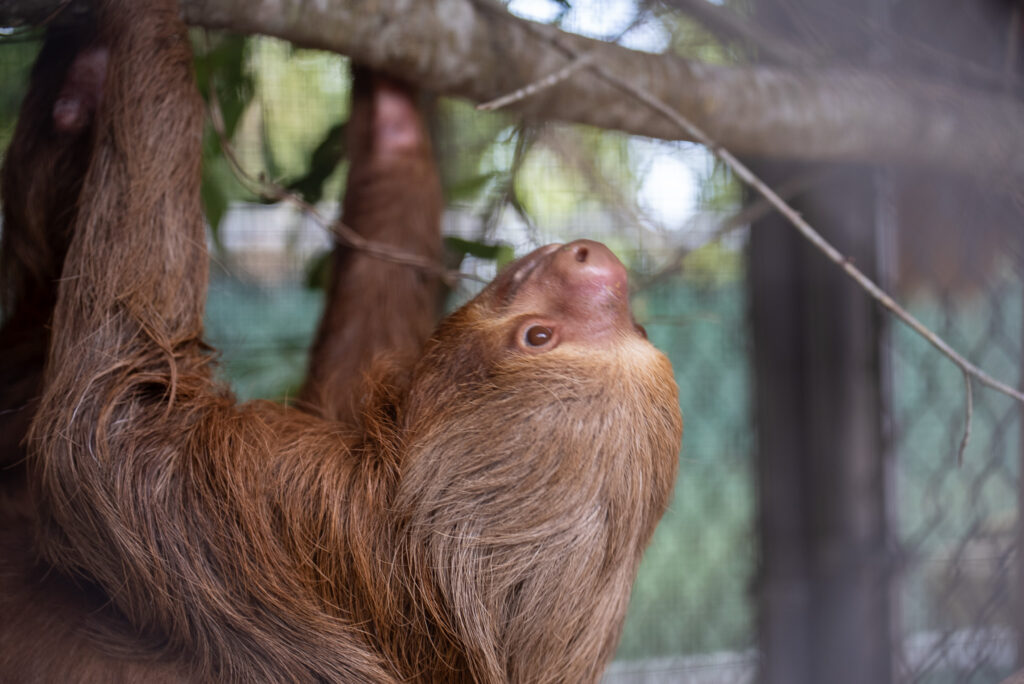
Sloths—slow-moving, tropical mammals adapted to mostly solitary life in rainforest canopies—are very poorly suited to captivity. They lack the fight-or-flight response of other mammals. They may become motionless or curl into a ball while experiencing severe physiological and psychological stress. They also lack the ability to regulate their body temperatures.
FWC’s new order nods to that: “This action is taken in consideration of the unique physiology of sloths and their susceptibility to severe illness caused in part by stress and inadequate husbandry practices.”
Sloths are native to the forests of Central and South America. Of the seven species of sloth, one is considered critically endangered by a global group that monitors wildlife conservation statuses, while the populations of several others are in decline.
FWC’s Young characterized the mass animal deaths at Sloth World as isolated to that business and said his agency contacted other facilities housing sloths and found “no significant issues.”
It’s not clear what was discussed in those communications or if FWC conducted any in-person inspections. The agency did not answer questions from Inside Climate News about that.
Young also said the Sloth World animals had “contracted an intestinal infection that resulted in severe—in many cases, fatal—effects.”
Necropsy reports obtained by Inside Climate News paint a more complex picture. They indicate that the deaths appeared to stem from stress-related illness linked to capture, international transport, cold exposure, captivity, irregular diet and physical trauma, according to those documents and independent veterinarians and wildlife experts who reviewed them.
This story is funded by readers like you.
Our nonprofit newsroom provides award-winning climate coverage free of charge and advertising. We rely on donations from readers like you to keep going. Please donate now to support our work.
The reports show that some necropsied sloths showed signs of viruses, but experts said those viruses were able to take hold because of the “systemic stress” the sloths endured from the moment they were taken from the wild.
In addition to the import ban, the FWC order requires anyone in possession of sloths to report any “severe illness” to the agency.
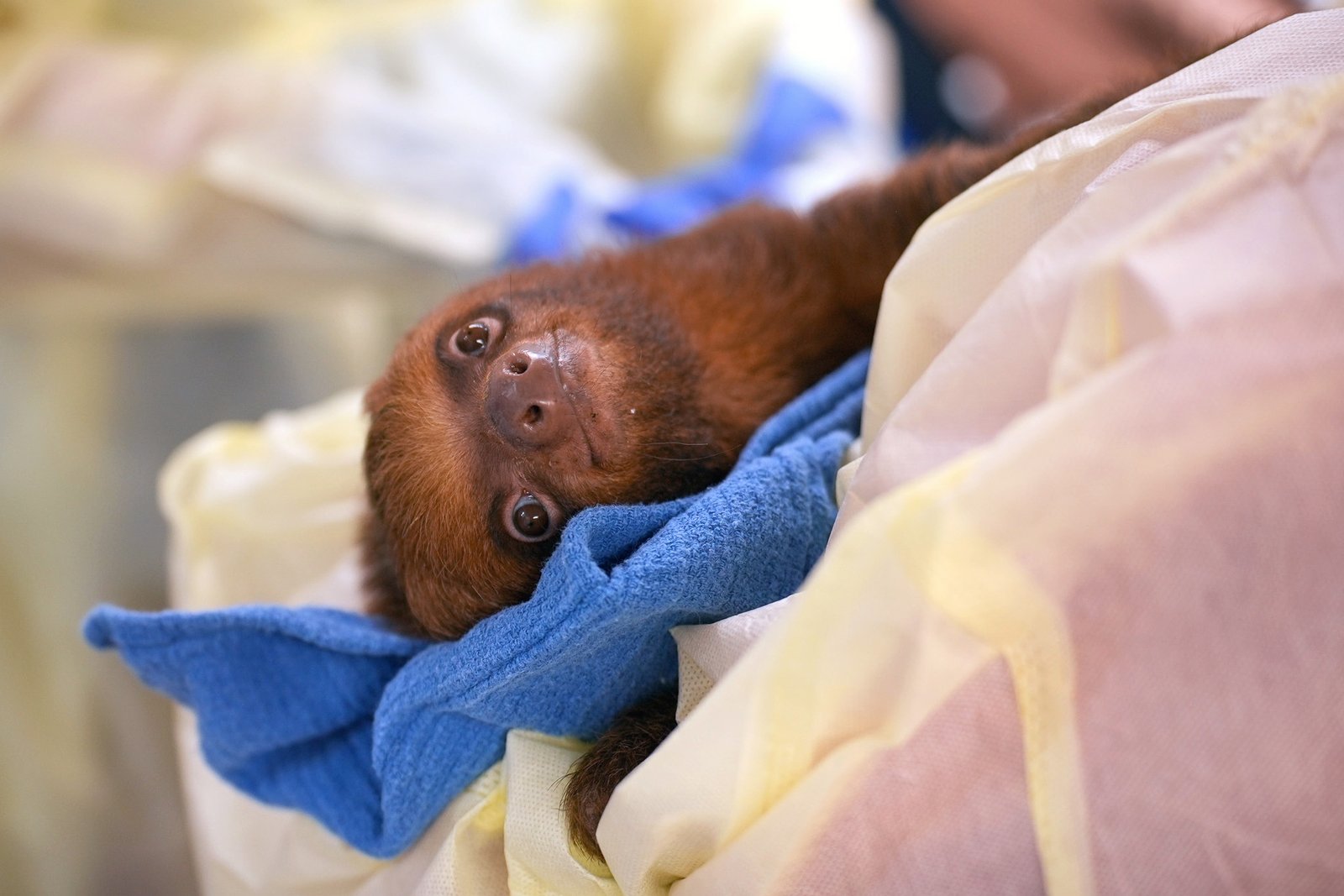
Records show that Sloth World imported more than 60 sloths. In mid-April, the company transferred 13 sloths—the only survivors—to the Central Florida Zoo & Botanical Gardens for care. According to the zoo, the sloths were in poor health when they arrived, and three have since died.
The 10 remaining sloths are being cared for in a quarantine area. The smallest one, Mr. Ginger, is in critical condition, the zoo said in a social media post Wednesday.
Asked about the forthcoming import pause at a separate press conference Wednesday, Republican Gov. Ron DeSantis described Sloth World as a failed tourist attraction, comparing it to other entertainment ventures that “tried” and did not succeed.
DeSantis did not mention the animal welfare concerns at the center of the controversy and referred reporters to FWC. DeSantis’ office also did not respond to a request for comment from Inside Climate News about the matter.
Eskamani and other politicians, including U.S. Rep. Maxwell Alejandro Frost (D-Fla.), have called for stronger state and federal protections surrounding sloth ownership and exhibition. Frost sent a letter in April to the U.S. Department of Agriculture asking the agency to investigate Sloth World.
Last week, Frost said at a press conference that he will be speaking with the agency to work on closing a loophole that allows commercial facilities to house wild animals without a USDA permit prior to displaying them, which was the case for Sloth World. He added that there needs to be “a lot more coordination between state entities and the federal government.”
“My hope is that this tragic situation, at a minimum, can lead to us ensuring that we pass legislation [and] we work with USDA to patch these loopholes to ensure that money isn’t put over the welfare of animals again,” he said.
About This Story
Perhaps you noticed: This story, like all the news we publish, is free to read. That’s because Inside Climate News is a 501c3 nonprofit organization. We do not charge a subscription fee, lock our news behind a paywall, or clutter our website with ads. We make our news on climate and the environment freely available to you and anyone who wants it.
That’s not all. We also share our news for free with scores of other media organizations around the country. Many of them can’t afford to do environmental journalism of their own. We’ve built bureaus from coast to coast to report local stories, collaborate with local newsrooms and co-publish articles so that this vital work is shared as widely as possible.
Two of us launched ICN in 2007. Six years later we earned a Pulitzer Prize for National Reporting, and now we run the oldest and largest dedicated climate newsroom in the nation. We tell the story in all its complexity. We hold polluters accountable. We expose environmental injustice. We debunk misinformation. We scrutinize solutions and inspire action.
Donations from readers like you fund every aspect of what we do. If you don’t already, will you support our ongoing work, our reporting on the biggest crisis facing our planet, and help us reach even more readers in more places?
Please take a moment to make a tax-deductible donation. Every one of them makes a difference.
Thank you,

Reporter
Kiley Price is a reporter at Inside Climate News, with a particular interest in wildlife, ocean health, food systems and climate change. She writes ICN’s “Today’s Climate” newsletter, which covers the most pressing environmental news each week.
She earned her master’s degree in science journalism at New York University, and her bachelor’s degree in biology at Wake Forest University. Her work has appeared in National Geographic, Time, Scientific American and more. She is a former Pulitzer Reporting Fellow, during which she spent a month in Thailand covering the intersection between Buddhism and the country’s environmental movement.