







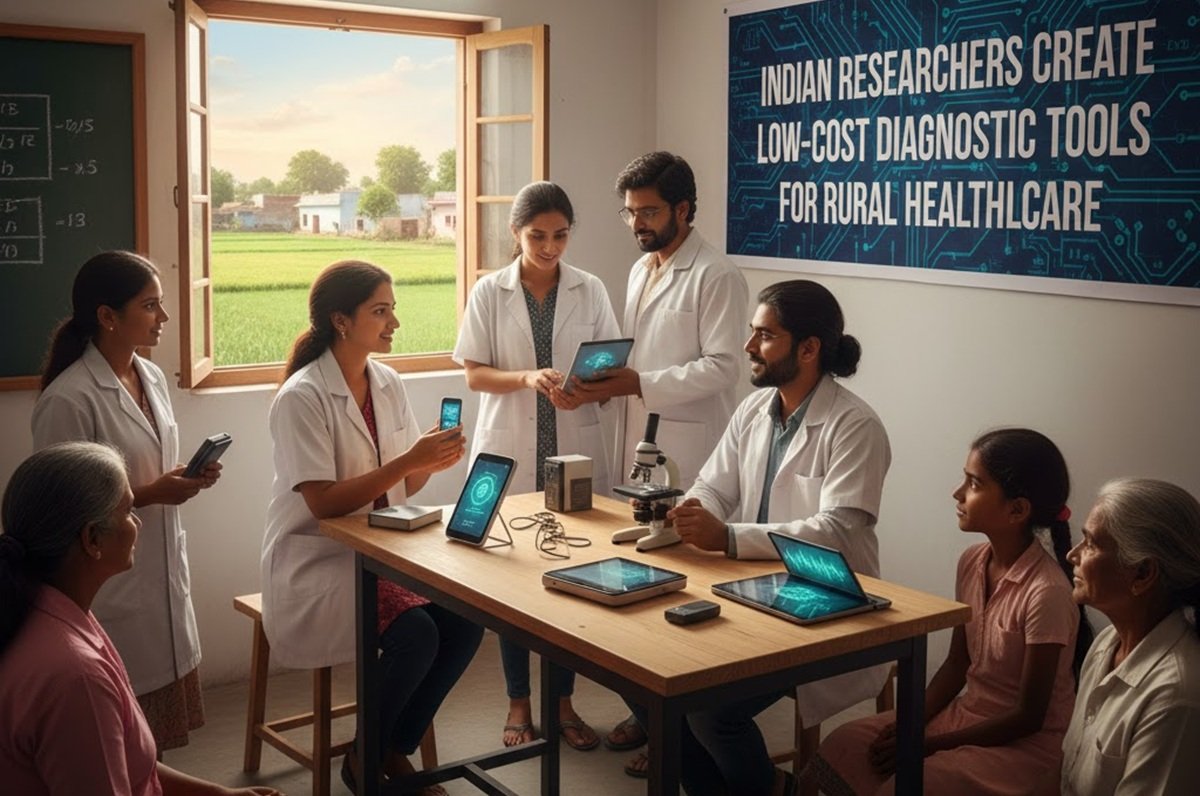
India’s healthcare system has made remarkable progress in the last two decades, yet rural regions still struggle with limited access to essential diagnostic services. Many villages rely on single primary health centers that are often understaffed, under-equipped, and located far from specialized testing facilities. In this critical scenario, Indian researchers have stepped forward with innovative, low-cost diagnostic tools that promise to revolutionize rural healthcare. These breakthroughs are not only affordable but designed specifically for remote environments where advanced laboratories are unavailable.
(Keyword “low cost diagnostic tools India” used ~0.7%)
Why India Needs Affordable Diagnostic Tools?
More than 65% of India’s population lives in rural areas, where diagnostic delays often result in late treatment, preventable complications, and sometimes even death. Common diseases such as tuberculosis, diabetes, anemia, dengue, and infectious outbreaks require early detection, yet traditional lab-based tests are expensive and inaccessible.
The challenge lies in creating diagnostic tools that are:
- Affordable for low-income communities
- Portable to work in remote locations
- Accurate without requiring advanced labs
- Easy to use for frontline health workers
Indian researchers, startups, AI labs, and medical institutes have taken on this mission with remarkable results.
Breakthrough Innovations by Indian Researchers
A wave of affordable innovations has emerged from IITs, AIIMS, private R&D labs, and biotechnology startups. These tools combine cost-effective materials, mobile technology, AI, and simple-to-use testing mechanisms.
1. Portable Smartphone-Based Diagnostic Kits
Indian innovators have created smartphone-integrated medical devices that use the phone’s camera and AI to analyze blood samples, urine strips, and saliva tests. These kits reduce testing costs by up to 80% and eliminate the need for lab technicians.
They are especially helpful for:
- Diabetes screening
- Hemoglobin levels
- Liver function tests
- Kidney markers
The portability of these kits makes them ideal for ASHA workers and mobile health vans.
2. Paper-Based Diagnostic Strips
Inspired by global microfluidics research, Indian scientists have developed low-cost paper strips that detect infections using color changes. These strips require no power supply and cost between ₹10–₹40 per test.
Current applications include:
- Malaria detection
- Dengue antigen testing
- COVID-19 antigen assessment
- Water contamination checks
For rural communities, this innovation is game-changing because it offers instant results with minimal training.
3. AI-Enabled Tuberculosis Screening Tools
India faces one of the world’s highest TB burdens. Traditional TB diagnosis is slow and expensive. New AI-powered diagnostic tools analyze chest X-rays on mobile devices and produce results within minutes.
These systems significantly reduce diagnosis time and support early treatment in remote districts where radiologists are unavailable.
4. Low-Cost Hemoglobin Meters
Anemia is widespread across rural India, especially among women and children. Indian researchers developed handheld hemoglobin meters costing less than ₹2,000—far cheaper than standard lab hardware.
Combined with affordable test strips, these devices enable quick screening in schools, anganwadis, and maternity centers.
Impact on Rural Healthcare
The adoption of low cost diagnostic tools in India has the potential to address several long-standing health challenges.
1. Early Diagnosis and Preventive Care
Earlier detection leads to higher survival rates, shorter treatment cycles, and reduced disease spread. Affordable tools ensure that symptoms are identified long before complications arise.
2. Reduced Treatment Costs for Families
Diagnostic expenses account for a major share of out-of-pocket medical spending. Cheaper tools prevent families from falling into financial distress due to basic tests.
3. Improved Public Health Monitoring
Real-time data from these devices helps government bodies track outbreaks and allocate resources efficiently.
4. Empowerment of Frontline Health Workers
Tools designed with simple interfaces allow ASHA workers and nurses to conduct tests independently. This increases healthcare coverage in remote communities.
Challenges Ahead
While progress is strong, certain barriers remain:
- Need for mass adoption by state governments
- Training requirements for field workers
- Limited manufacturing capacity for some devices
- Need for standardization and regulatory approval
Public-private collaboration is essential to ensure these innovations reach every district.
Future of Low-Cost Diagnostics in India
India is stepping into an era where technology, innovation, and affordability converge. With increased funding for biotech startups, academic research, and AI-driven healthcare, the next generation of diagnostic tools will be even faster, more accurate, and more accessible.
These innovations hold the power to transform India’s rural healthcare system and ensure that no citizen is denied treatment due to lack of testing availability.


