







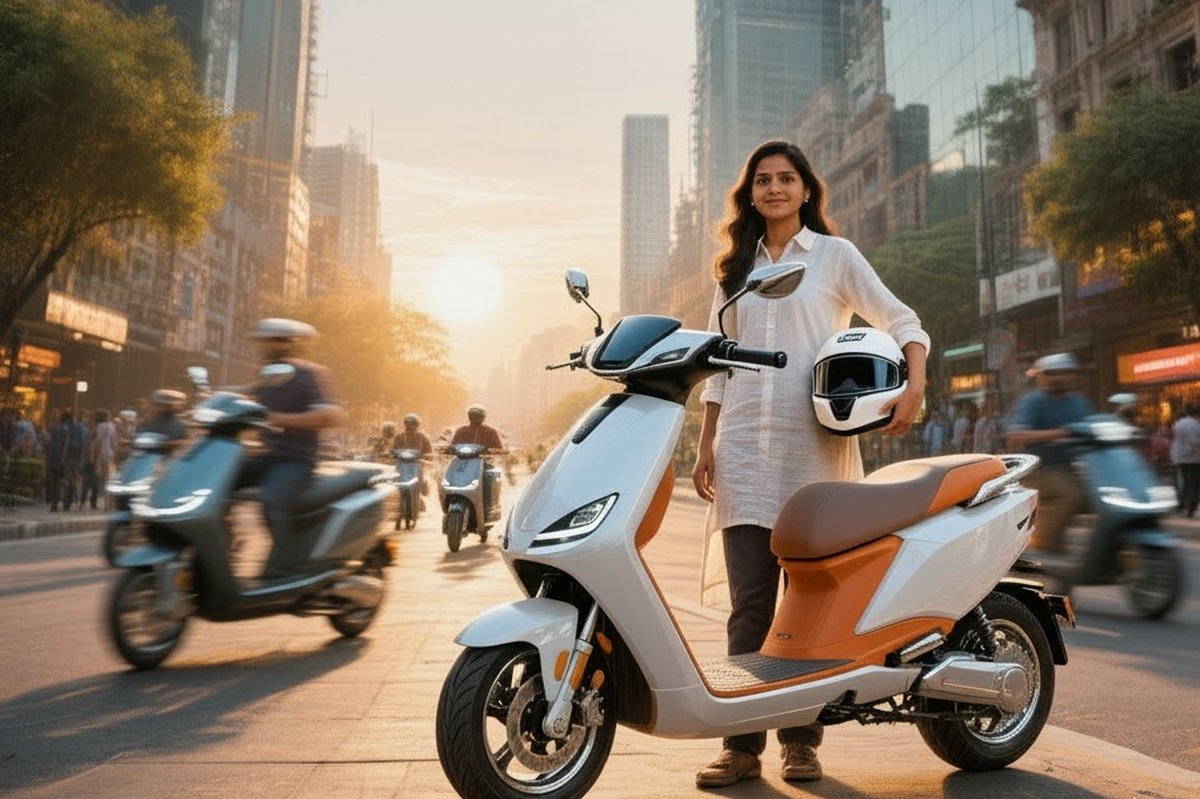
India’s EV journey reached a historic milestone in 2025 as electric two-wheeler sales in India crossed the 1 million mark for the first time. Just a few years ago, EVs were seen as niche, expensive, and limited in performance. But the landscape has changed dramatically—faster charging, improved battery life, rising fuel prices, and aggressive manufacturing growth have accelerated adoption across cities and small towns.
This shift isn’t just a sales record; it signals a long-term transformation of India’s mobility market. Let’s break down the major factors that pushed electric two wheeler sales India 2025 to this record peak.
1. Falling Battery Prices Accelerated EV Affordability
Battery costs dropped by nearly 20–25% in early 2025, making EV models significantly cheaper.
Manufacturers passed the benefit to buyers, offering electric scooters and bikes starting from ₹65,000–₹75,000.
This price correction made EVs competitive with many petrol scooters, pulling in first-time buyers and commuters looking for a low-maintenance option.
2. Government Policies and State Incentives Strengthened Demand
Even after revisions in FAME-II subsidies, several state governments launched additional incentive programs such as:
- Purchase rebates
- Road tax exemptions
- Free registration for EVs
- Scrappage bonuses for old petrol two-wheelers
These measures helped stabilize demand and encouraged customers to switch to cleaner mobility.
3. Rapid Charging Network Expansion Boosted Consumer Confidence
In 2025, India saw one of its fastest EV infrastructure expansions. Key developments included:
- Wider fast-charging networks on highways
- Charging hubs across Tier II & III cities
- Integration of UPI-based smart charging options
With better accessibility, range anxiety reduced dramatically—one of the biggest barriers to EV adoption.
4. Battery Swapping Became Mainstream
Battery swapping stations grew aggressively, especially in metro cities. Delivery companies, gig workers, and daily commuters benefited the most.
Swapping reduced downtime to just 2–3 minutes, making EVs more efficient than petrol scooters for commercial use. This contributed significantly to boosting electric two wheeler sales India 2025.
5. Petrol Prices Pushed Consumers Toward Cost-Efficient EVs
Fuel prices remained consistently high through 2024–2025. Commuters quickly realized that an EV could cut their monthly travel cost by 70–80%.
The cost-per-km difference became a major psychological and financial trigger for choosing electric mobility.
6. Strong Performance and Range Improvements Attracted Young Buyers
Modern electric scooters launched in 2025 offered:
- 100–160 km real-world range
- High torque for quick city rides
- Smart features such as app controls, anti-theft alerts, and GPS
- Lightweight frames
For young riders, EVs became a fashionable and practical choice.
7. E-Commerce & Delivery Giants Shifted to 100% EV Fleets
Food delivery, courier, and e-commerce businesses adopted EV fleets at scale in 2025 to cut fuel costs and meet sustainability commitments.
Their bulk purchases created a significant boost in total EV sales numbers.
8. Brand Trust and Product Reliability Improved
With established brands like TVS, Bajaj, Hero, Ola, Ather, and Suzuki competing intensely, the market gained:
- Better warranty coverage
- Reliable after-sales service
- Improved spare parts availability
This gave buyers long-term confidence in switching to electric mobility.
Conclusion:
India crossing 1 million electric two-wheeler sales in 2025 is more than a number—it marks the beginning of mass EV adoption in the country. As infrastructure grows and costs decline further, experts predict that electric two-wheelers may surpass petrol scooters in sales by the end of this decade.


