

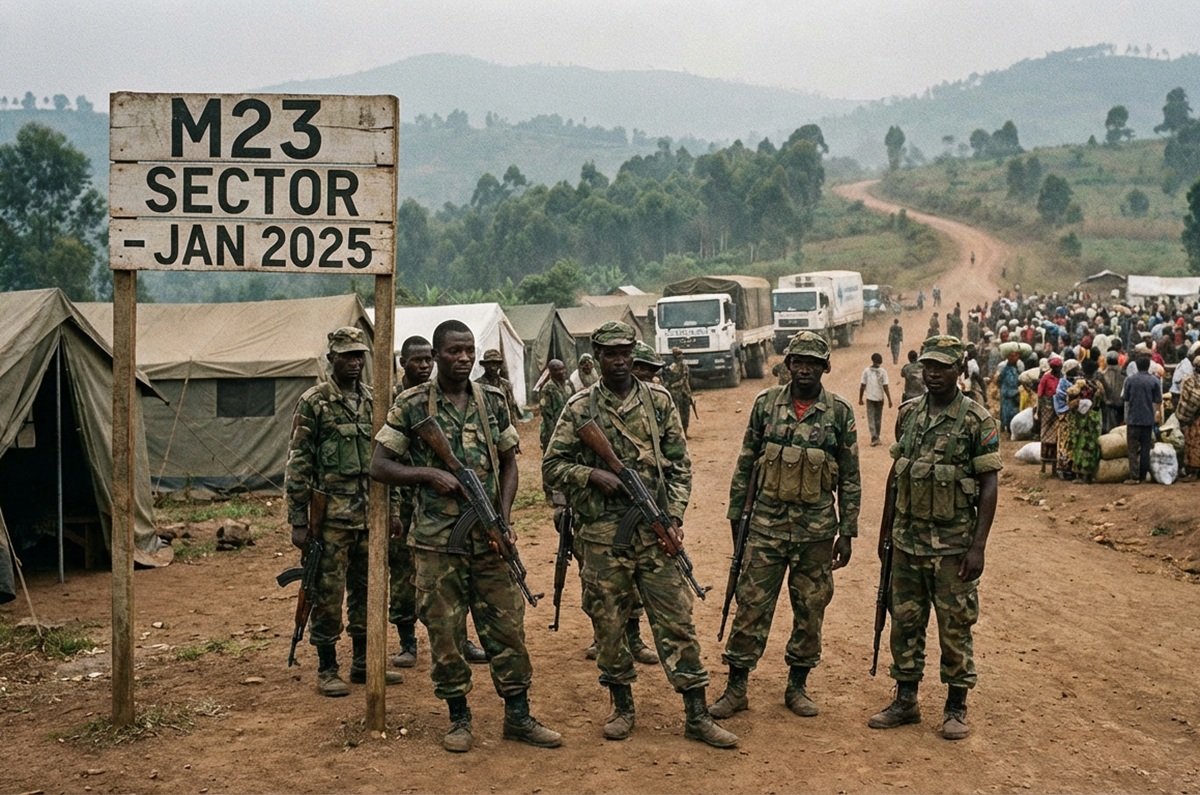
The long-standing tensions between the Democratic Republic of Congo (DRC) and Rwanda escalated dramatically in 2025 as the M23 rebel group launched a new wave of attacks across the eastern provinces of North Kivu. This renewed surge in violence has intensified regional instability, triggered large-scale displacement, and heightened global concerns about the future of peace in Central Africa.
Years of political disagreements, resource competition, and historical grievances have created ideal conditions for conflict. The resurgence of M23 — a rebel group previously defeated in 2013 — reveals how fragile the region remains. As the DR Congo Rwanda war 2025 unfolds, international organizations and African leaders are closely watching, hoping to prevent a broader regional war.
The Root of the Conflict: A Complex Regional History
Eastern Congo has long been plagued by conflict involving rebel militias, ethnic tensions, and foreign interference. Rwanda has faced repeated accusations from the Congolese government of supporting M23, claims which Kigali continues to deny. Meanwhile, Rwanda argues that Congo shelters hostile militias — especially the FDLR — which threaten its national security.
This cycle of accusations, distrust, and military buildup has created a volatile environment.
Key Drivers of the 2025 Escalation:
- M23’s renewed military strength and access to advanced weaponry
- Competition over rare minerals such as cobalt, gold, and coltan
- Weak governance in eastern Congo allowing militias to operate freely
- Cross-border ethnic tensions between Tutsi and Hutu communities
- Security voids created by political instability in both countries
This combination of historical, political, and economic factors fuels the ongoing DR Congo Rwanda war 2025, making any resolution extraordinarily difficult.
Inside the 2025 M23 Rebel Offensive
The latest offensive began early in 2025 when M23 seized strategic towns near Goma, Congo’s bustling eastern hub. Their rapid territorial gains shocked observers and forced Congolese troops to retreat in several areas.
Major Highlights of the 2025 Offensive:
1. Capture of Key Supply Routes
M23 fighters took control of highways leading to Goma, cutting off vital supply lines and humanitarian routes.
2. Civilian Displacement
Over 400,000 civilians were forced to flee their homes, adding to the millions already displaced from years of conflict.
3. Stronger Firepower
Reports suggest the rebels used advanced drones and communication systems, enabling coordinated attacks.
4. Congolese Army Counteroffensive
The Congolese military launched Operation “Safisha Mashariki,” a large-scale counteroffensive, but struggled due to rugged terrain and logistical challenges.
5. Regional Military Posturing
Rwanda deployed additional troops near the border, raising fears of a direct confrontation between the two nations.
The situation remains highly fluid, and ceasefire attempts have so far been unsuccessful.
Humanitarian Crisis Deepens
As violence spreads, the humanitarian condition in eastern Congo is rapidly deteriorating. Aid agencies report overcrowded camps, food shortages, and rising health risks.
Key Humanitarian Challenges:
- Families separated while fleeing conflict zones
- Lack of clean water and medical supplies
- Increased risk of sexual violence
- Measles and cholera outbreaks in displacement camps
- Scarce educational support for children in conflict zones
The international community stresses urgent action, but access to conflict areas remains limited due to ongoing fighting.
International Response: Strong Condemnations but Limited Action
The African Union, United Nations, and regional blocs have issued strong statements expressing concern over the DR Congo Rwanda war 2025, but concrete intervention remains minimal.
Current global responses include:
- UN calls for immediate ceasefire and humanitarian access
- African Union mediation efforts, though with slow progress
- Western powers urging de-escalation, but offering limited military or financial support
- Sanctions discussions against groups accused of fueling the conflict
- Peace talks proposals hosted by regional bodies
Despite international pressure, both DRC and Rwanda maintain strong, conflicting positions, complicating the peace process.
What’s at Stake for Central Africa?
The conflict threatens the stability of the Great Lakes region, one of Africa’s most economically and politically sensitive zones.
Potential consequences include:
- A broader regional war involving neighboring countries
- Economic disruption, especially in mining and cross-border trade
- Increased refugee flows into Uganda, Burundi, and Tanzania
- Deepened ethnic tensions, raising long-term security concerns
- Loss of investor confidence, affecting key mineral exports
Experts warn that unless diplomacy accelerates, the war could escalate beyond M23 and pull in multiple armed groups.
Path to Peace: What Needs to Happen Next?
For long-term stability, several critical steps are essential:
- Genuine political dialogue between DRC and Rwanda
- Regional cooperation to disarm militias
- Strengthening Congo’s military capacity
- International transparency on mineral supply chains
- Humanitarian expansion to support displaced communities
While the road to peace is difficult, coordinated regional and global efforts could help ease tensions and protect millions of lives.
