

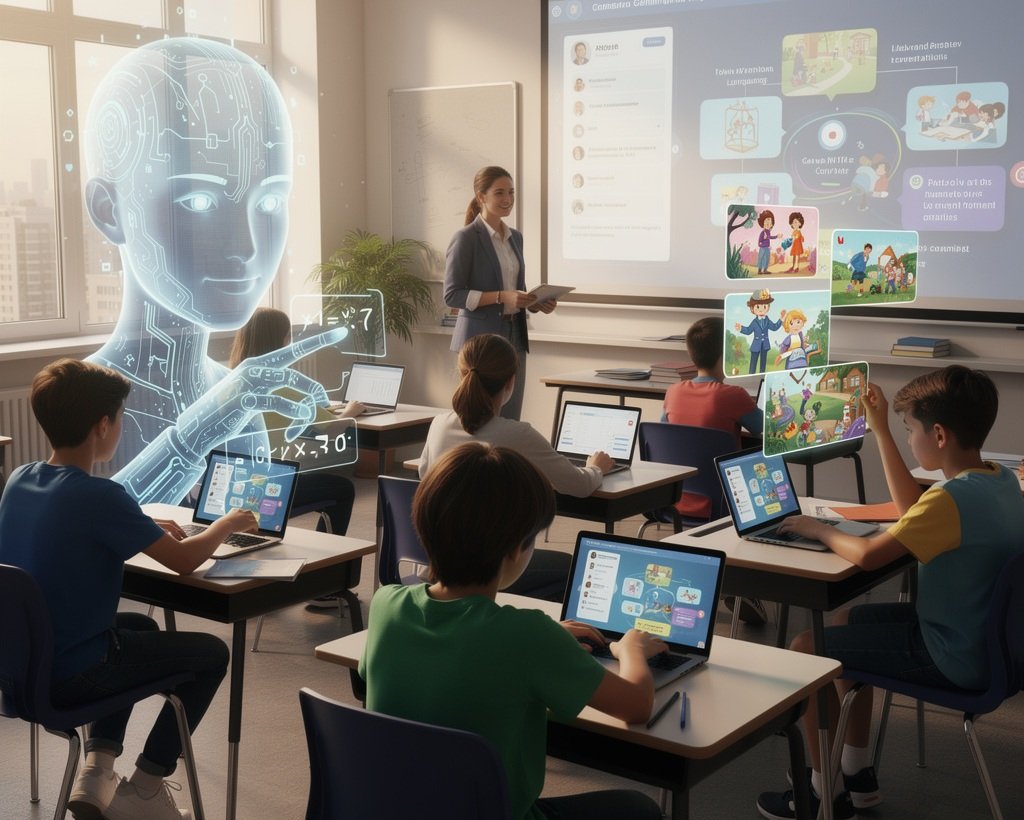
The rapid rise of AI in education is reshaping how students learn, how teachers teach, and how schools operate. From personalized learning paths to AI tutors that explain lessons in simple language, artificial intelligence has become one of the biggest drivers of innovation in the modern classroom. As generative AI tools continue to grow more powerful, education is entering a new era—one that blends technology with human teaching to create more impactful, accessible, and enjoyable learning experiences.
In this blog, we’ll explore how AI tutors and generative AI are transforming classroom learning, the benefits they bring, and what the future of AI in education looks like.
1. The Rise of AI Tutors: A New Era of Personalized Learning
Traditional classrooms often struggle to provide individualized attention because one teacher manages many students with different abilities and learning speeds. AI tutors solve this by offering personalized guidance to each student.
How AI Tutors Work
AI tutors analyze student performance, identify gaps in understanding, and provide customized explanations or practice questions. They offer:
- Step-by-step solutions
- Real-time feedback
- Extra practice materials
- Alternative explanations in simpler language
- Progress tracking and learning recommendations
This ensures that every student—whether fast or slow—can learn at their own pace.
Why Schools Are Adopting AI Tutors?
- Strong learning support for students who need extra help
- 24/7 availability
- Instant answers without waiting for teacher attention
- Boost in confidence and academic performance
AI tutors aren’t replacing teachers—they’re supporting them. Teachers now have more time to focus on creative, emotional, and practical learning instead of routine explanations.
2. Generative AI: Turning Complex Concepts into Interactive Learning
Generative AI tools like ChatGPT, Gemini, and Claude go beyond simple tutoring. They can generate explanations, lesson plans, quizzes, stories, projects, and interactive study materials—all customized to classroom needs.
Generative AI Helps Teachers by:
- Creating lesson plans in minutes
- Designing worksheets, quizzes, and assignments
- Converting difficult topics into simple explanations
- Creating content in multiple languages
- Preparing personalized learning materials
This dramatically reduces workload and allows teachers to focus on human interaction, creativity, and student mentorship.
Generative AI Helps Students by:
- Providing simple, friendly explanations
- Turning complex topics into visuals and stories
- Helping with homework and project ideas
- Offering personalized study schedules
- Improving writing and problem-solving skills
In short, generative AI acts as both a study companion and a creative assistant.
3. Real Classroom Transformations Using AI in Education
Schools worldwide are experimenting with AI-driven tools that enhance teaching outcomes. Here’s how AI in education is creating real impact:
Adaptive Learning Platforms
Platforms like BYJU’S, Khan Academy, and Coursera use AI to adjust difficulty levels based on student performance.
AI-Assisted Writing & Language Tools
Tools like Grammarly and AI writing apps help students improve grammar, vocabulary, and writing style instantly.
AI-Based Assessments
Teachers can use AI to grade assignments automatically, detect plagiarism, and generate analytical performance reports.
Virtual Classrooms With AI Features
AI integrates with virtual classrooms to provide smart attendance, engagement tracking, and personalized revision notes.
Immersive Learning Using AI + AR/VR
Students can explore 3D models, historical simulations, science experiments, and virtual labs powered by AI-enhanced interactivity.
4. Key Benefits of AI Tutors and Generative AI in Education
Personalized Learning
Every student gets a unique learning path based on their strengths, weaknesses, and pace.
Increased Engagement
AI-driven videos, quizzes, and interactive visuals make learning more enjoyable.
Better Classroom Management
Teachers save time on routine tasks and focus on higher-value teaching activities.
Enhanced Accessibility
Students with disabilities benefit from AI-based reading support, voice-to-text, text-to-voice, and multilingual translation.
Data-Driven Insights
AI tools track progress, identify patterns, and offer recommendations for improvement.
Boost in Creativity
Generative AI helps students brainstorm ideas, write content, and solve problems in innovative ways.
Improved Exam Preparation
AI tutors offer instant feedback, practice tests, and personalized revision plans.
5. Challenges and Ethical Questions Around AI in Education
While the rise of AI in education is exciting, it also brings certain concerns:
- Data privacy and security
- Over-dependence on AI tools
- Need for digital literacy training
- Ensuring AI-generated content is accurate
- Balancing AI usage with human interaction
Schools need clear policies and training programs to ensure safe and responsible use of AI tools.
6. The Future of AI in Education: What’s Coming Next?
The next few years will bring even more advanced AI-driven educational tools:
AI-Powered Personalized Classrooms
Every student may get a unique teacher-powered + AI-powered learning ecosystem.
AI Teaching Assistants
Classrooms may soon have AI bots that help teachers answer questions, design activities, and monitor student progress.
Emotion-Detecting AI
Future systems might track student emotions—like confusion or boredom—and personalize learning instantly.
Fully Smart Classrooms
AI will integrate with smart boards, AR/VR labs, and voice assistants to provide fully immersive classroom experiences.
AI will not replace teachers. Instead, teachers will be more like learning coaches, guiding students while AI manages explanation, content creation, and personalized support.
Conclusion
AI tutors and generative AI are transforming classroom learning by making education more personalized, interactive, and accessible. The growing influence of AI in education ensures that students receive better support, teachers save time, and learning becomes more engaging than ever before. With responsible usage, AI can make education more efficient, creative, and future-ready.
